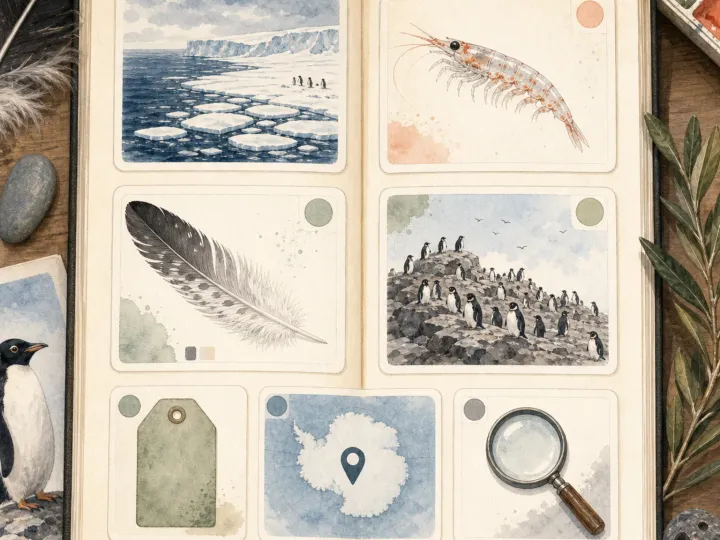
Penguin Glossary: Fast Ice, Krill, Moult, and More
Penguin news and research often use small-looking terms that decide whether penguins can breed, feed, moult, and be protected.
6/3

Penguin news and research often use small-looking terms that decide whether penguins can breed, feed, moult, and be protected.
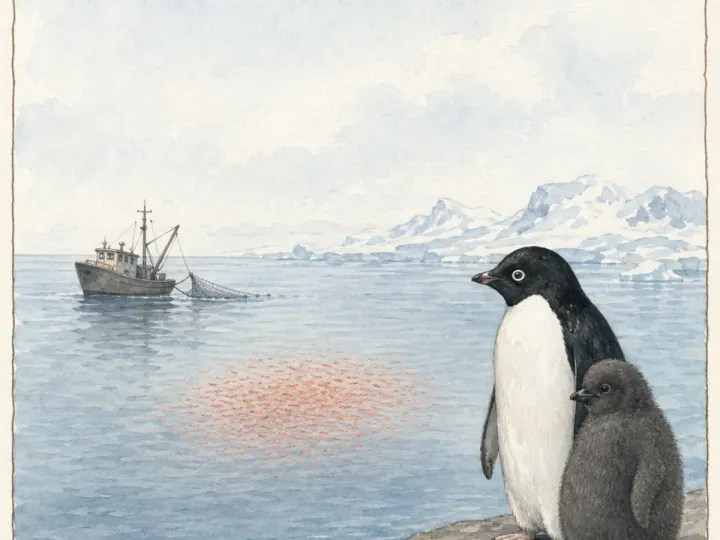
Krill oil pressure is about where fishing concentrates: Antarctic Peninsula hotspots overlap chick-rearing foraging areas, while health benefits do not clearly beat alternatives.
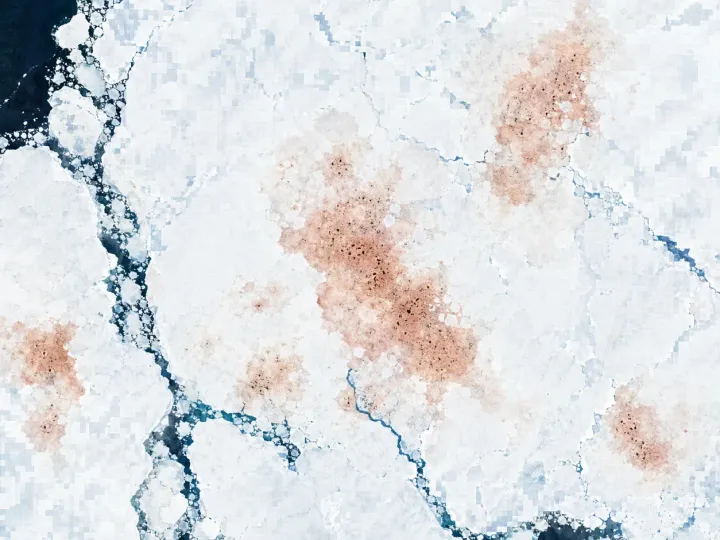
Satellites find emperor penguin colonies by reading guano stains on white sea ice, turning brown pixels into maps of breeding sites and sea-ice risk.
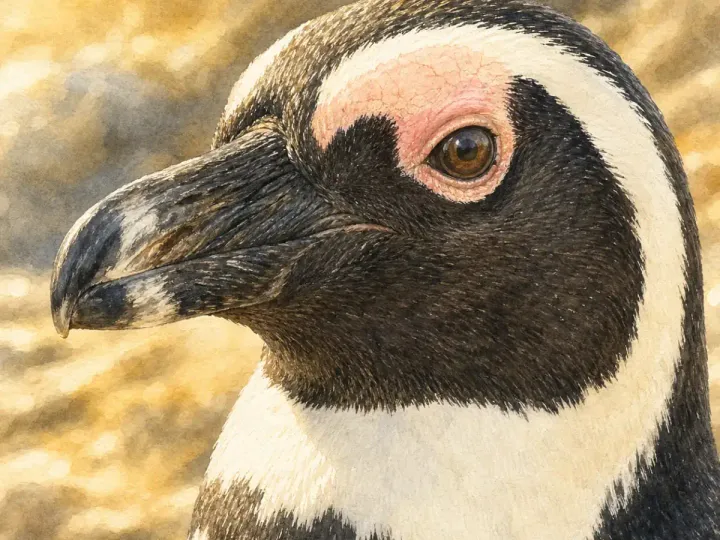
King penguins have no fixed nest, so returning adults must pick family out of massive colonies using two-voice acoustic fingerprints.
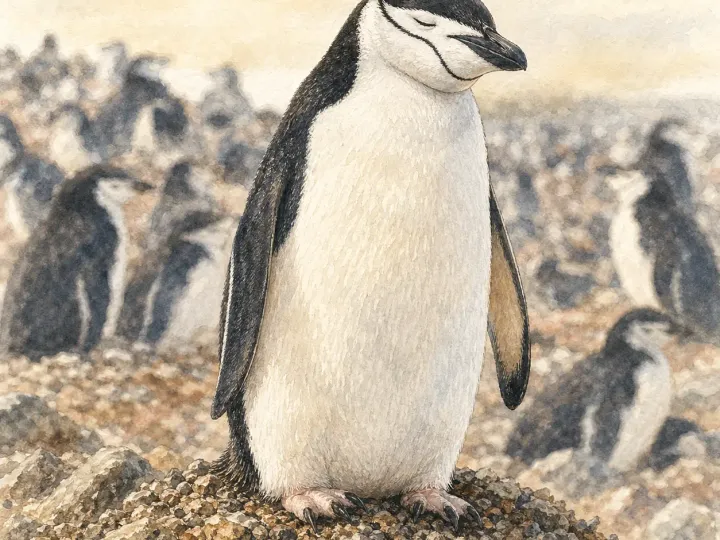
Brooding chinstrap penguins accumulate about 11.4 hours of sleep each day, but split it into more than ten thousand four-second microsleeps.
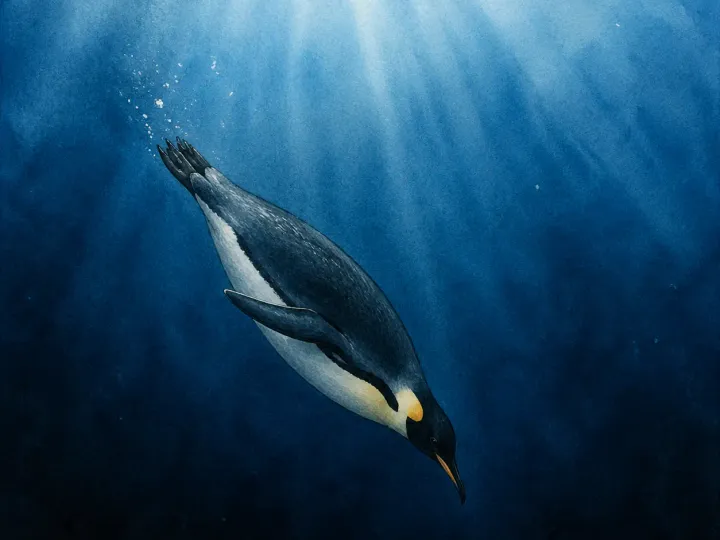
Emperor penguins reach 564 meters and can stay down 27.6 minutes by slowing the heart, redirecting blood flow, and storing oxygen in myoglobin-rich muscle.
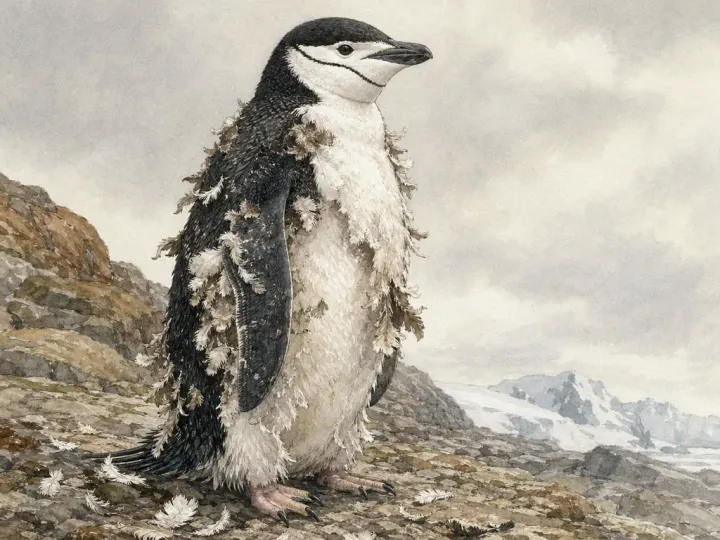
Catastrophic moult leaves penguins unable to swim or feed for 2 to 4 weeks, so the whole annual cycle depends on fat stores and a safe window on land or ice.
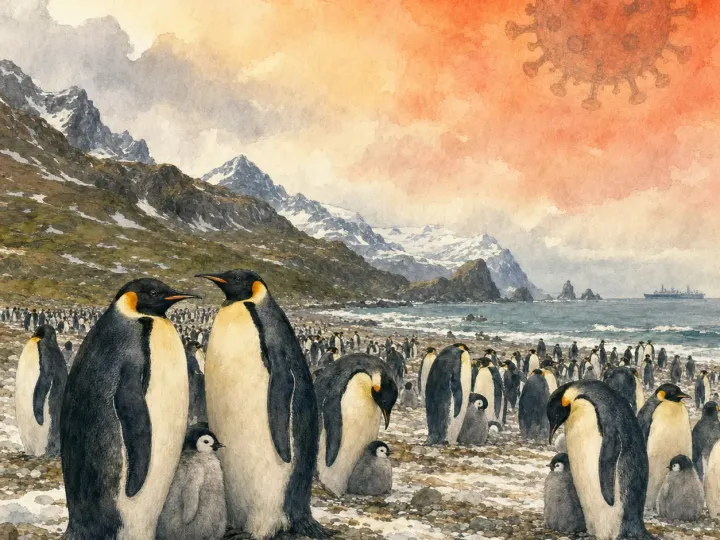
H5N1 has moved from South Georgia to the Antarctic Peninsula, where dense colonies, little immune history, and migrating seabirds create a new disease risk.
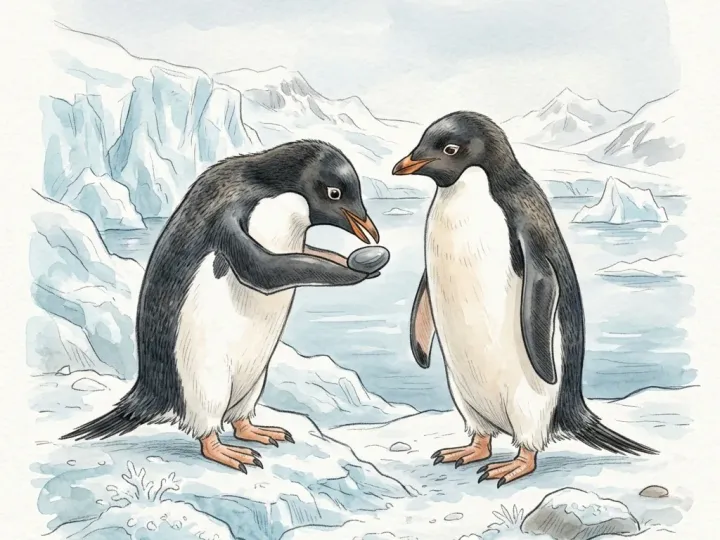
Penguin courtship begins with posture, calls, and stones, but the real test comes in incubation shifts and chick-rearing; under the romantic surface is a cooperative system that cannot afford mistakes.
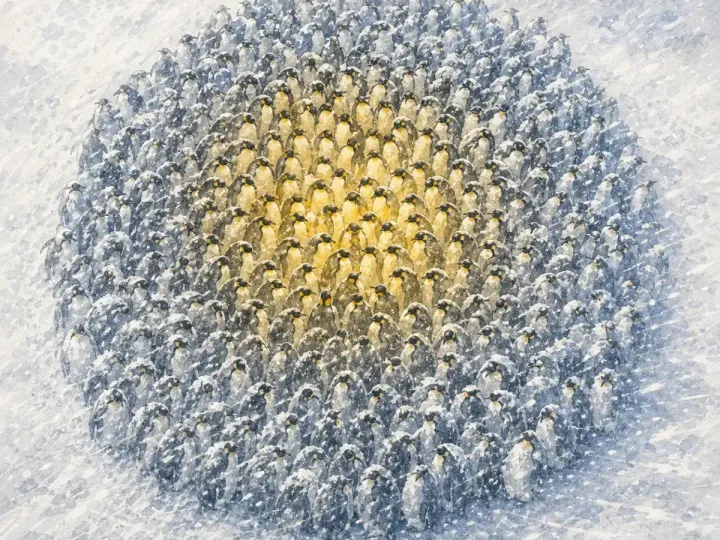
Penguin thermoregulation runs in two directions: emperor penguins conserve heat in -40°C huddles, while African and Galapagos penguins work to shed it.
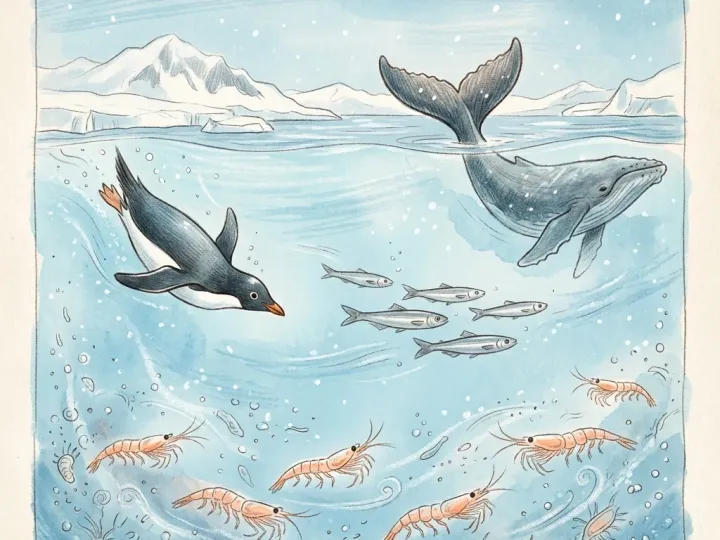
The Antarctic food chain is not a single-line penguin story; krill, sea ice, fish, seals, and whales together decide what penguins eat, and who eats penguins.
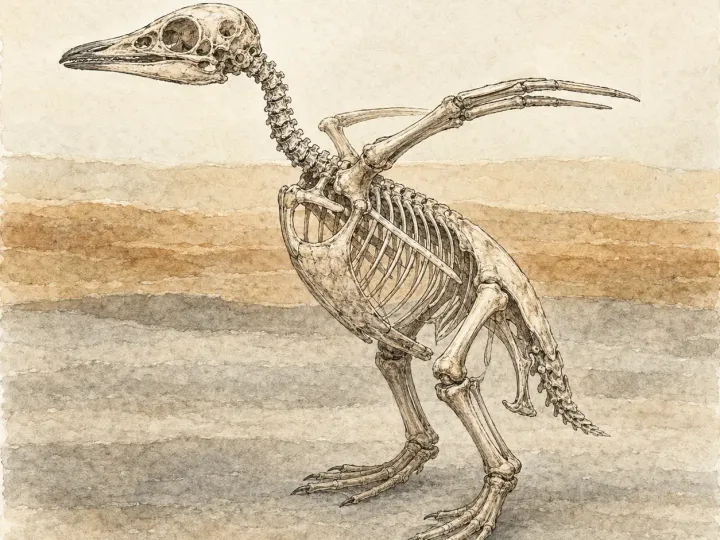
Penguins did not simply lose useful wings; they traded flight for underwater propulsion, a 60-million-year shift visible from Waimanu to modern emperors.
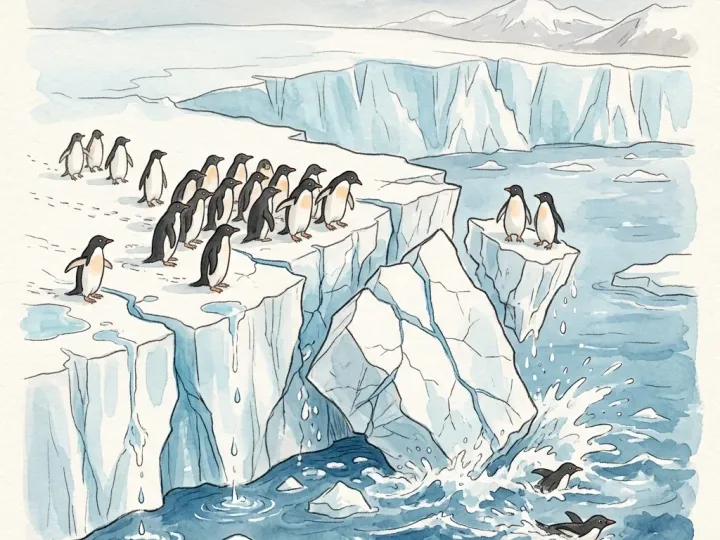
Climate change first alters sea ice, krill, and heavy rain, then changes penguin foraging distance, breeding timing, and chick survival; population decline is usually the last result we notice.
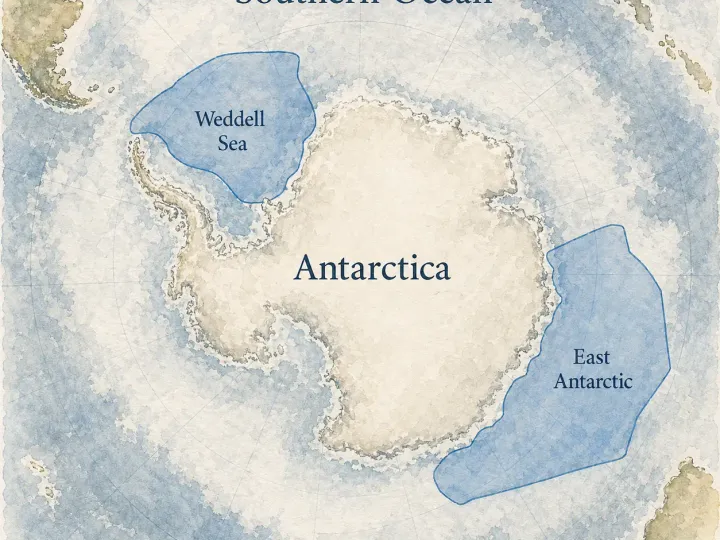
Southern Ocean MPA gridlock is not a lack of science; it is CCAMLR consensus politics colliding with krill fishing and penguin foraging grounds.