During the darkest weeks of the Antarctic winter, emperor penguins, Aptenodytes forsteri, stand on the ice at -40°C and cannot let the egg touch the ice for more than two months.
Wind outside can exceed 200 kilometers per hour. They cannot do anything except stand and wait.
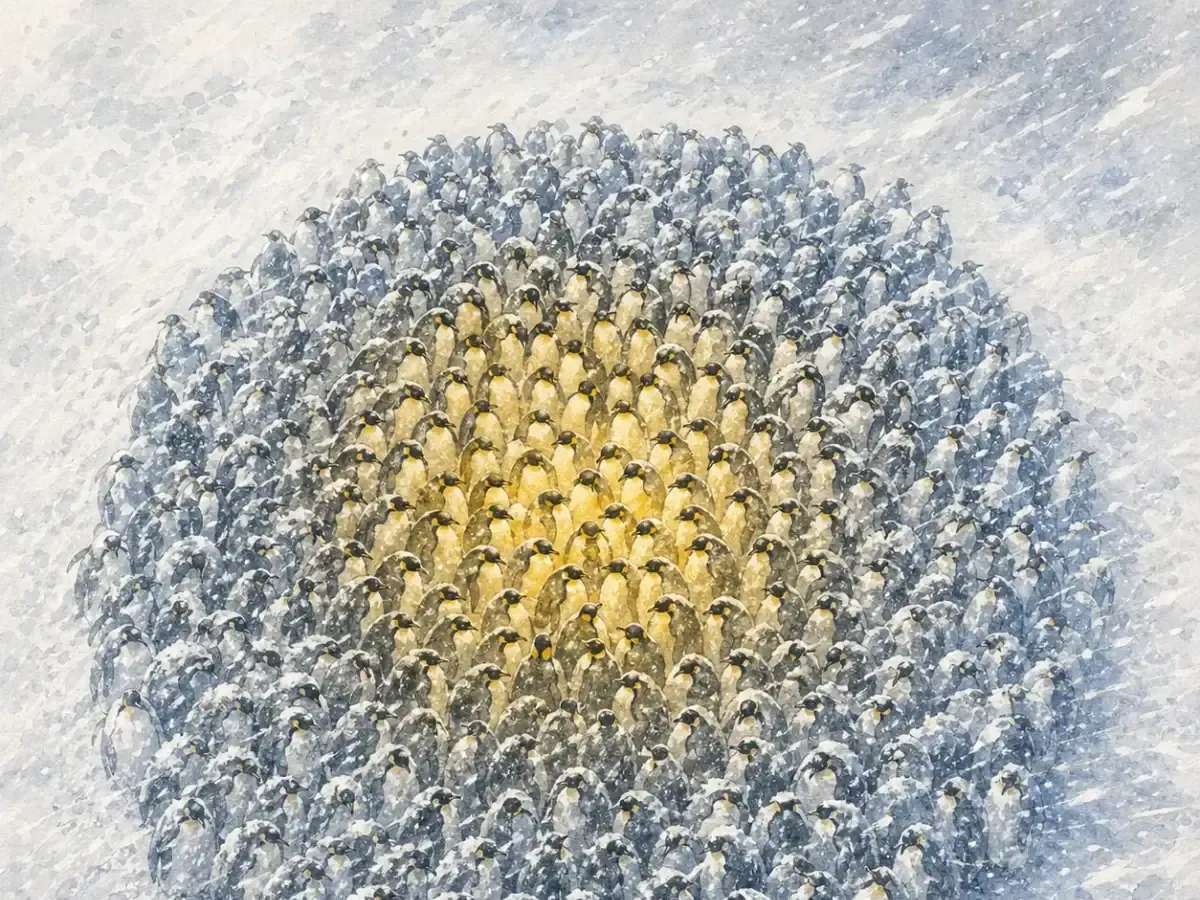
Five thousand penguins press together, shoulder against shoulder, toes against toes. From a distance, the density is so high that you can barely see individual outlines. You see one black mass, slowly rotating in the wind.
That rotation is not random.
Five thousand bodies, one living heater
Gilbert and colleagues at Cambridge tracked emperor penguin huddling behavior from 2006 to 2010 and broke down the mechanism. Related results appeared in Behavioral Ecology in 2006 and PLoS ONE in 2010.
The core of a huddle can reach nearly 37°C while the outside is -40°C. A 77-degree difference is maintained by the group.
When I first saw that number, it took me a while to realize what it meant. There is no extra heat source at the center. The heat comes from those 5,000 living bodies, packed tightly enough to reduce heat loss, each body helping hold up the next. From an engineering point of view, it is close to an optimal solution.
Every few minutes, the whole huddle shifts. Birds on the edge slide toward the inside, and birds inside push outward. The group moves like a living gear, with no winner or loser, only rotation.
The edge is the coldest position, and it is also the position that gets shared most fairly.
Every breath carries heat away
Each time a penguin exhales, it loses heat. At -40 degrees, the air inside the lungs is body temperature; breathing it out is like burning energy for nothing.
Birds usually solve this with turbinate bones, but penguins are especially specialized. Cold air inhaled through the nasal cavity gradually warms in a mesh of passages, while warm exhaled air transfers heat back to those passages. Ancel et al. recorded this mechanism in penguins in Nature in 1997, with heat recovery from exhaled air reaching about 80%.
Exhale 10 parts of heat, recover 8. This is not some dramatic evolutionary leap so much as a precise counter-current heat exchange system installed in the nose, running with every breath.
Feather density, among the highest in birds
There is a third defensive layer on the skin, and it is the most intuitive one.
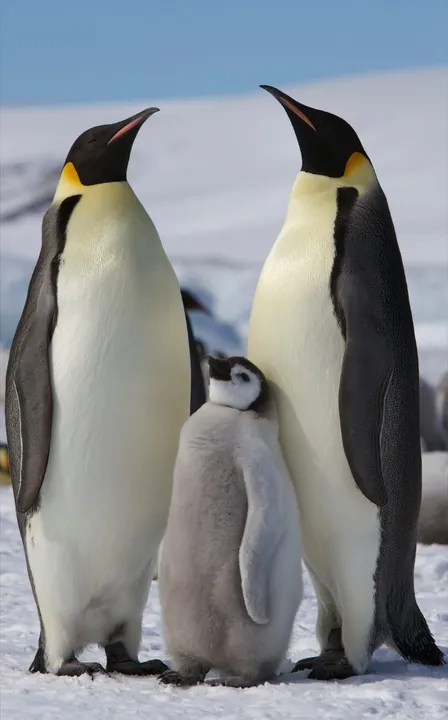
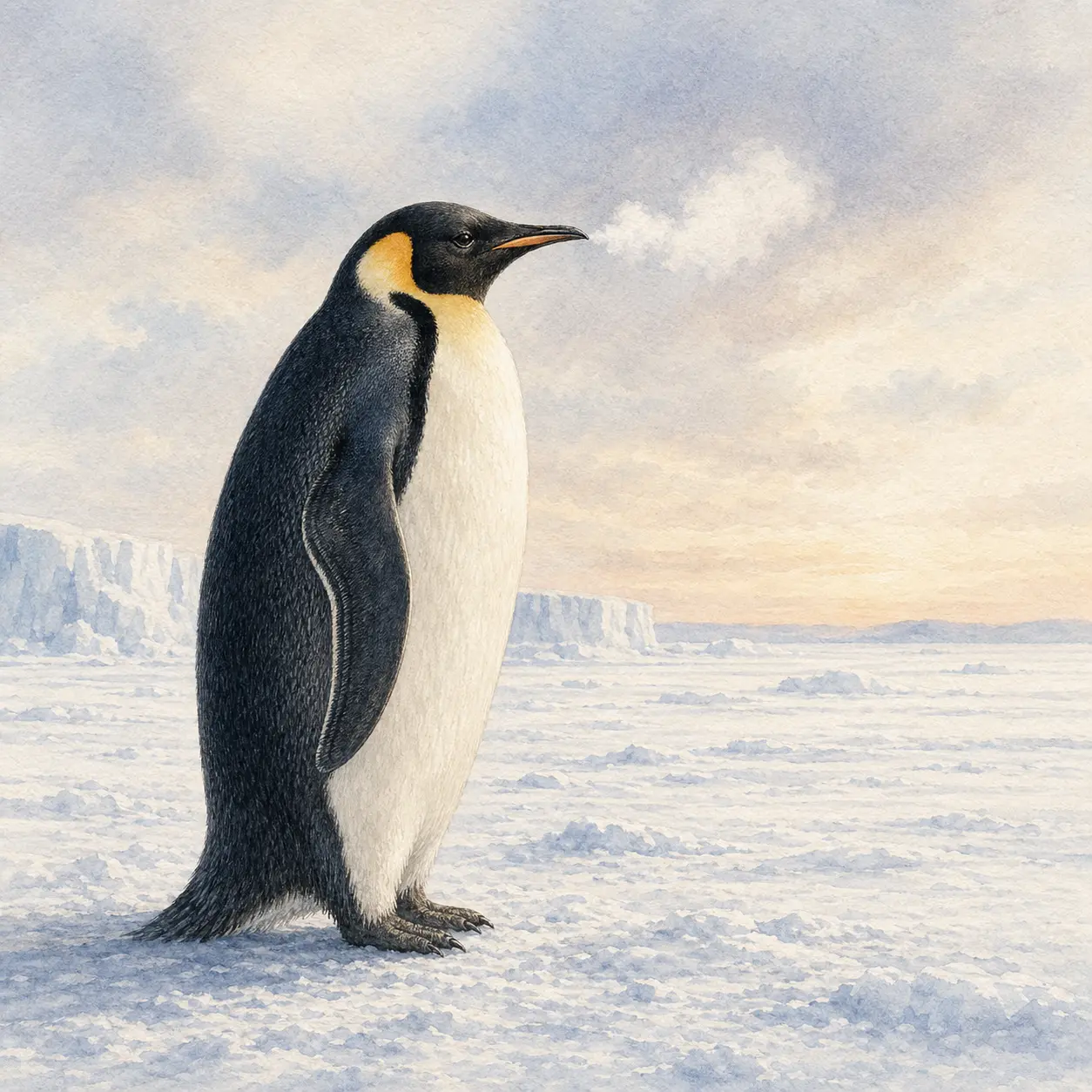
Emperor penguins have about 12 feathers per square centimeter, among the highest densities in living birds. Each feather has two parts: the outer vane blocks wind and water, while down at the base traps a nearly still layer of warm air above the skin. The same waterproof layer is why catastrophic moult becomes such a risky annual window.
Under the feathers is subcutaneous fat. Before the breeding season begins, emperor penguins can push body fat to a very high proportion. They stand on ice for more than two months without eating, burning that fat. By the time the ice opens and the female returns from the sea, the male has lost a third of his body weight.
These three mechanisms, group insulation through huddling, heat recovery in the nasal passages, and the feather-plus-fat insulating layer, all run at once and stack on each other.
Together, they let emperor penguins stay at the breeding site all through the Antarctic winter. It is one of the harshest known bird-breeding scenarios.
The opposite problem near the equator
Penguin ancestors spread outward from Antarctica and reached very distant places.
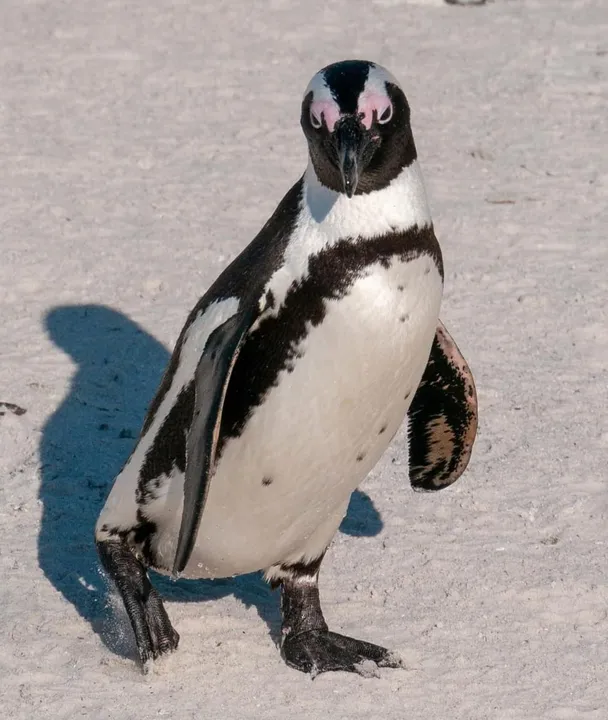
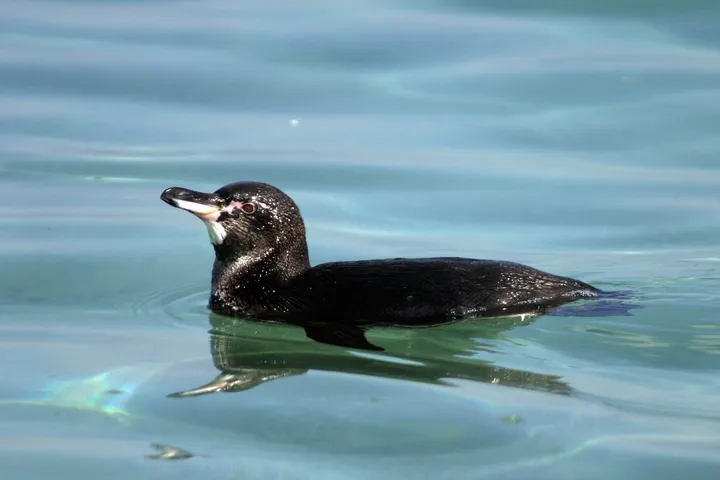
African penguins, Spheniscus demersus, live along the rocky shores of South Africa and Namibia. Galapagos penguins, Spheniscus mendiculus, live right on the equator. For these two species, the daily problem is how to get heat out.
The pink bare skin around an African penguin’s eyes gets its color from tiny blood vessels underneath. These areas are called apteria. In hot weather, blood flow increases and heat leaves directly through the skin. IUCN species accounts record this cooling mechanism.
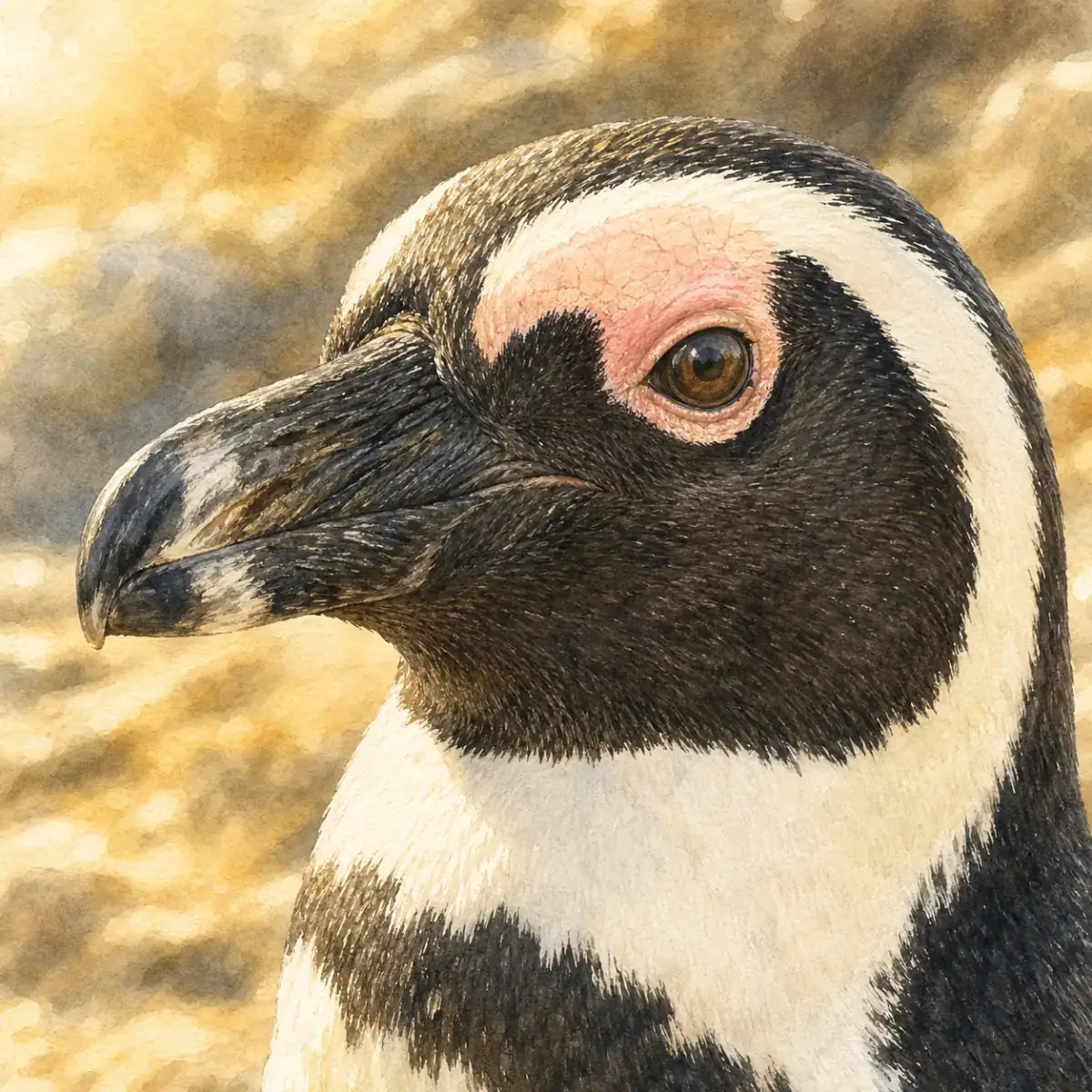
The Galapagos penguin’s cooling solution is even more unusual. It lives near the equator, but the Cromwell Current brings up cold water that keeps surrounding sea temperatures relatively low. On land at midday heat, they spread their wings to expose the blood vessels inside the flippers to the air, while panting in a dog-like way to speed evaporative cooling.
The same beak shape, the same gait. Climate pulled them in completely opposite directions to solve different problems.
The tropical penguin paradox: cold water and hot land
The Galapagos penguin’s problem is subtler than it looks.
They are not cold when they enter the water, because of the Cromwell Current. But after landing, sun-baked rock becomes like a hot pan. A penguin standing there is almost standing on a grill. Feathers are built for insulation, and here they become an obstacle.
They developed a posture: body tilted slightly forward, wings extended outward, exposing the nearly featherless area at the wing base to the wind. The cooling effect is limited, but in that environment every bit of heat loss matters.
The IUCN currently lists the Galapagos penguin as Endangered, with a common estimate of about 1,200 to 1,800 mature individuals and clear year-to-year swings tied to ENSO. Heat events and fishery pressure are both threats. If the Cromwell Current weakens during El Nino years, water temperatures rise, food declines with it, and an animal that has evolutionarily squeezed itself into a very narrow adaptive band has little buffer left.
They are precisely adapted to a narrow set of conditions, which makes every shift in those conditions especially dangerous.
One blueprint, two ends
This whole span makes penguins look like a strange example. Usually when we talk about “evolutionary adaptation,” we mean a species slowly becoming shaped like its environment.
The penguin lineage spread widely enough that the same basic body plan, the same waterproof feathers, and the same swimming architecture are used to solve two completely opposite physical problems.
Emperor penguins stand in -40°C wind by pushing one set of mechanisms to the limit: maximize insulation, maximize heat recovery, and use collective behavior to squeeze down individual losses.
Galapagos penguins sun themselves near the equator by partly bypassing insulation and finding the few bare-skin openings on the body where heat can be led out.
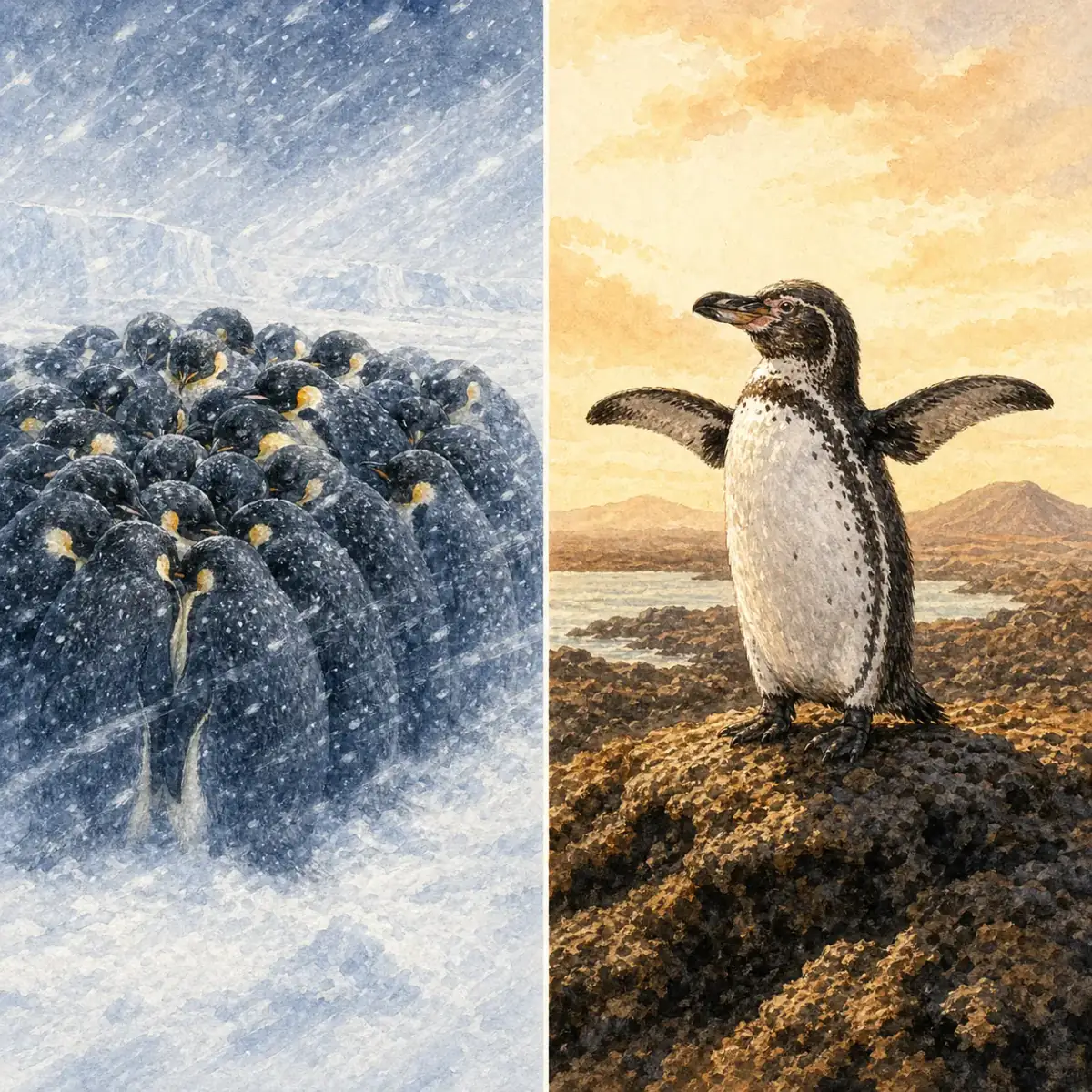
The blueprint is the same. The final solutions differ by 77 degrees.
This “same root, two ends” structure points to a question researchers are very interested in now: climate change is squeezing both ends at once. Antarctic warming is moving faster than predicted, and the stability of the Cromwell Current is affected by El Nino cycles. Whether emperor penguins can keep stable enough ice during breeding, and whether Galapagos penguins can keep water cold enough, are both still unsettled.
After reading the literature, I did not find a conclusion that lets me relax.
How long they can hold on is something I am still reading about.
References
Emperor penguin huddling and thermoregulation
- Gilbert et al., 2006, Physiology & Behavior
- Zitterbart et al., 2011, PLOS ONE
- Waters et al., 2012, PLOS ONE
Tropical penguins and conservation data
- IUCN Red List, 2020, Spheniscus mendiculus assessment
- BirdLife International, Galapagos Penguin species factsheet
FAQ
How do emperor penguins stay warm at -40°C?
They combine huddling, nasal heat recovery, dense feathers, and fat. The huddle core can approach 37°C while the outside remains -40°C.
What is nasal heat recovery in penguins?
Cold air warms inside the nasal passages, and exhaled warm air transfers heat back to those structures. Studies record heat recovery around 80%.
How do warm-climate penguins lose heat?
African penguins use pink bare skin around the eyes, while Galapagos penguins spread flippers, pant, and rely on cold water from the Cromwell Current.