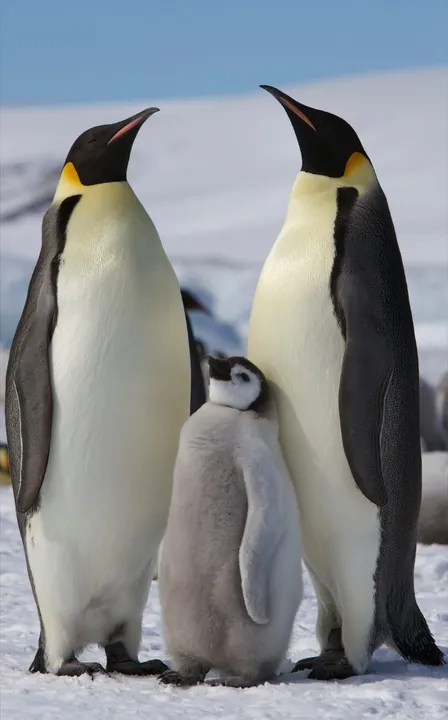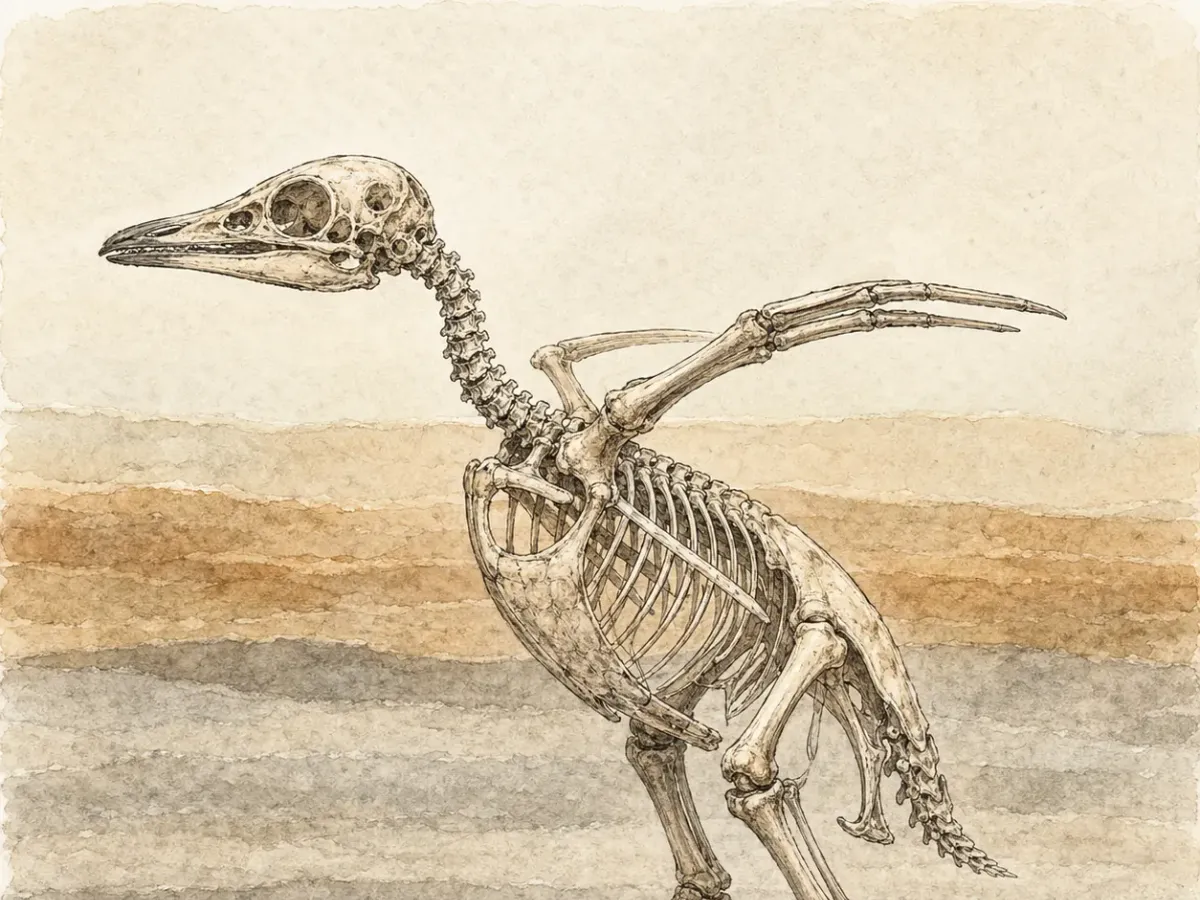
While digging through fossil records, I spent a long time staring at one skeletal line drawing.
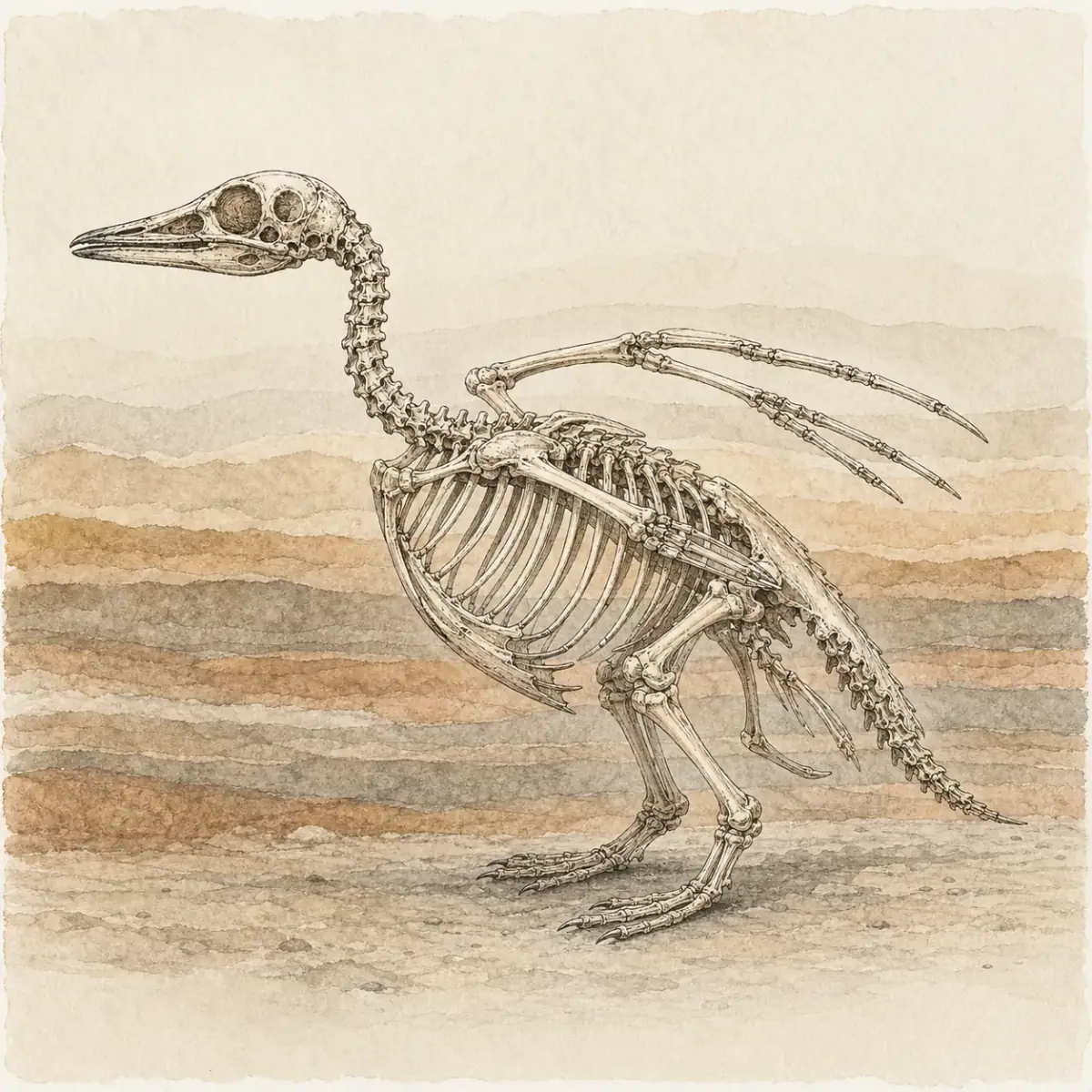
It was Waimanu manneringi, found in the Canterbury region of New Zealand and dated to about 62 million years ago. It is currently the oldest known penguin fossil, dated by Slack et al. in a 2006 Mol Biol Evol paper. That was not long after the dinosaurs disappeared.
At that time, it still had some flight-related features. The skeleton was not fully compressed, and the wing shape sat somewhere between flying and swimming.
Then, over 60 million years, penguins handed flight away completely.
The empty space after extinction
The K-Pg impact around 66 million years ago wiped out three quarters of species. Marine ecosystems collapsed on a huge scale, and huge openings appeared too.
Waimanu appears after that, in Paleocene strata in New Zealand.
Ornithologists have long discussed when penguin ancestors turned toward the ocean, and why. The current mainstream view is that the vacancies after the mass extinction created an opportunity: diving birds found a place as food supplies rebuilt.
Penguins did not take the path of slow adjustment and tiny corrections. Competitors at the sea surface were cleared almost overnight, food remained below, and the birds that entered first ate first.
The price of flattening wing bones
Put the wing bones of a living penguin beside those of a flying bird, and the difference is obvious at a glance.
The humerus, radius, and ulna are tight and flattened, like several plates stacked together. Flying birds have hollow, light bones. Penguin bones are denser and heavier. This makes diving easier, because they spend less energy fighting buoyancy.
The price is that they cannot fly anymore. Heavier wings push the energy required for takeoff beyond what the bird can afford.
For a wing to do both “flight” and “swimming” well, the physical path is extremely narrow.
Elliott et al. used thick-billed murres in a 2013 PNAS study. Murres are among the few birds that can both fly and dive, and their wing loading, body weight per unit wing area, sits between penguins and ordinary seabirds. The conclusion was that keeping both abilities has a very high metabolic cost. To both fly and dive, murres pay several times the flight energy cost of purely flying birds.
Penguins did not take the murre path. They chose one side.
The biggest one
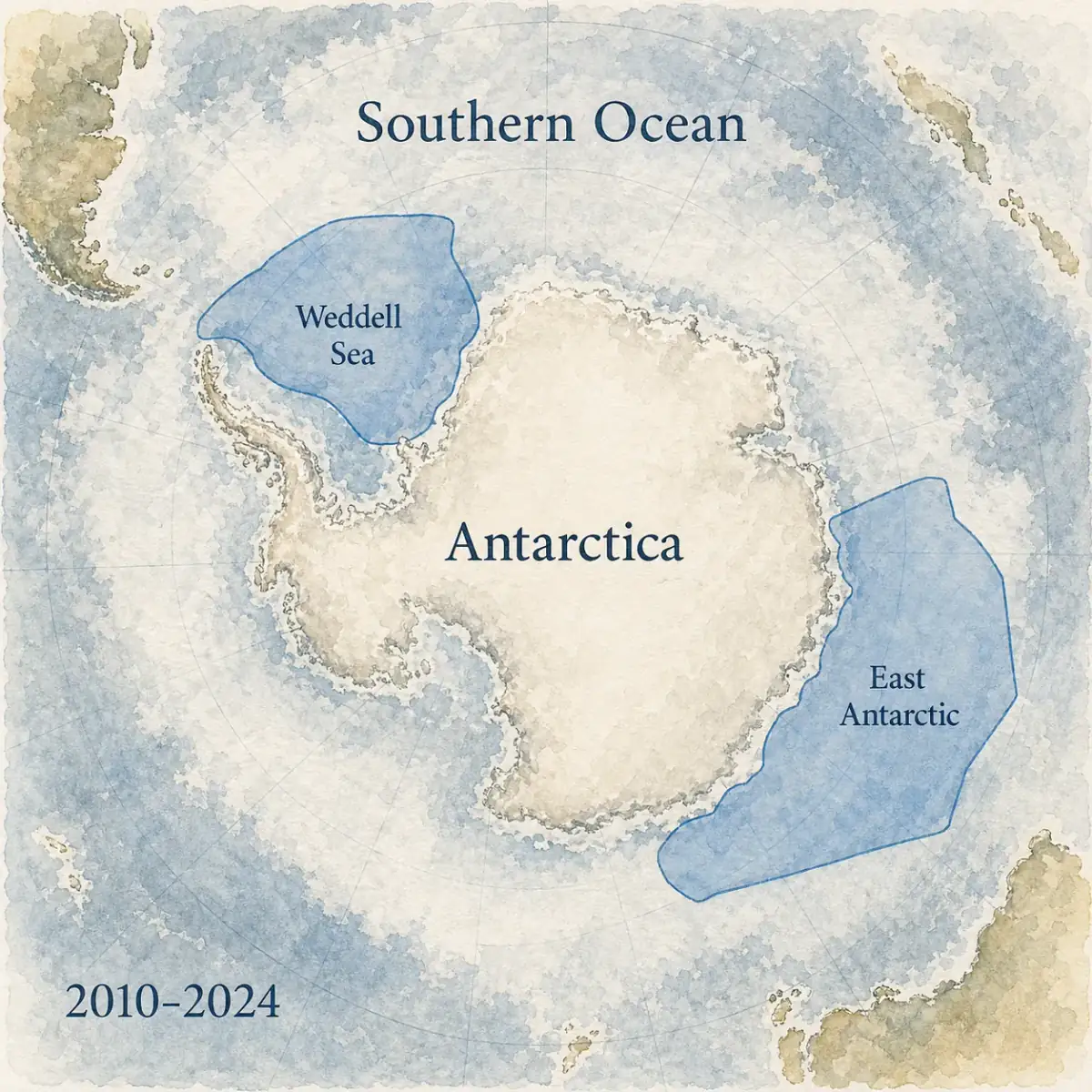
The Eocene Antarctic Peninsula left another set of fossils, from about 37 million years ago.
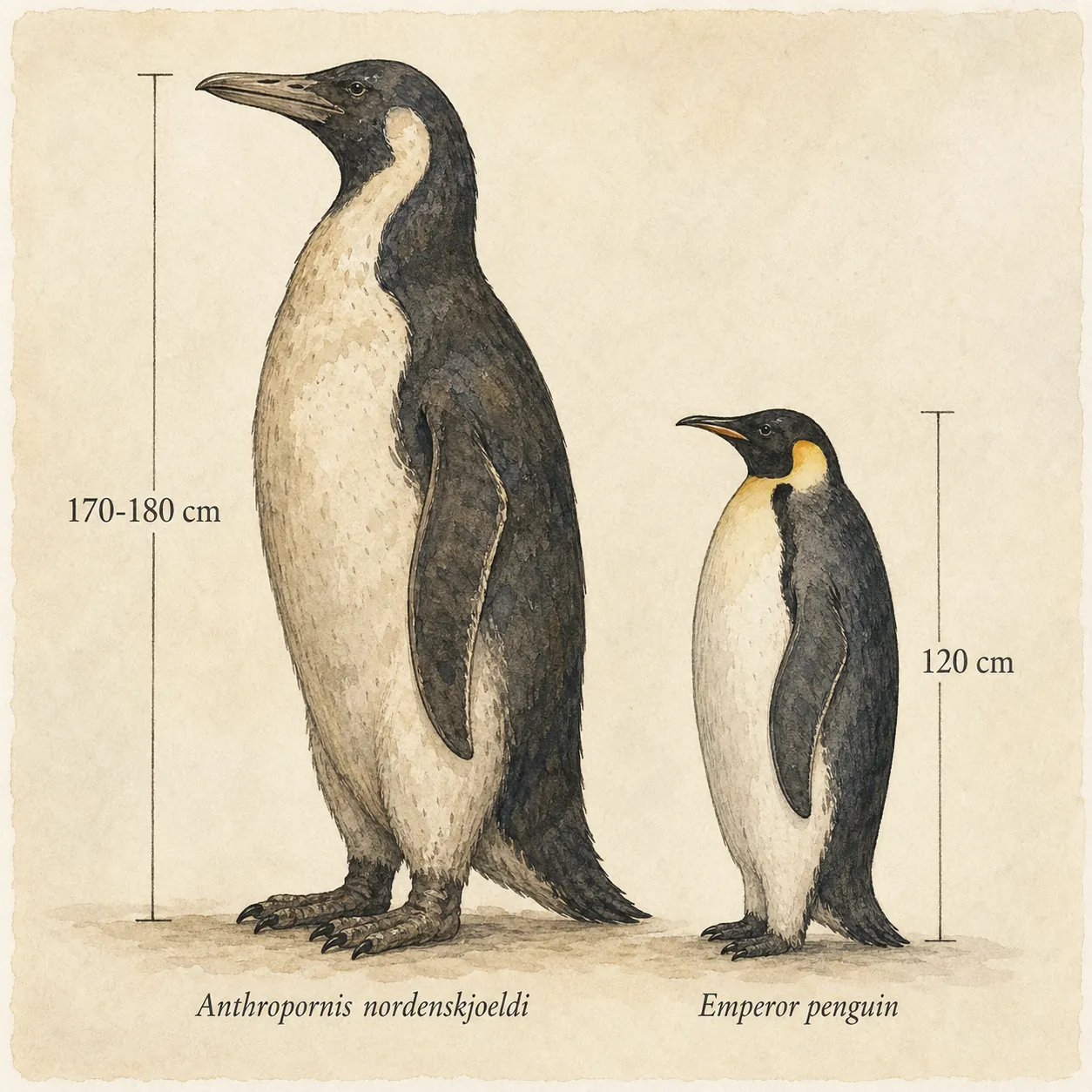
Anthropornis nordenskjoeldi is estimated at 170 to 180 centimeters tall and about 80 to 90 kilograms. It is currently the largest known fossil penguin.
The largest living penguin is the emperor penguin, Aptenodytes forsteri, about 120 centimeters tall and 22 to 45 kilograms. Anthropornis was almost twice as heavy as a modern emperor penguin.
Imagine the two side by side: an adult standing beside an elementary-school child.
Penguins were once larger in the middle of their evolutionary history, then shrank back. Why they shrank is still debated, with predator pressure and changes in prey distribution both involved. Jadwiszczak’s fossil review organizes penguin body-size distributions from the Eocene to the Oligocene, and that period was far more diverse in size than today.
Giant penguins existed, and they existed for a long time. The 18 species alive now are the survivors, not the whole story.
Swimming is the main job
Emperor penguins cruise at about 14 kilometers per hour underwater, and can sprint faster for short bursts. Their underwater maneuverability comes from those flat flipper-like wings, producing thrust with a figure-eight motion.
The wings did not degenerate. Their function fully switched.
The original bird-wing structure, feathers, skeletal levers, and muscle attachment points, all remained. But shape and density were redesigned so the medium of propulsion changed from air to water.
Convergent evolution makes this clearer. The great auk, Pinguinus impennis, was an extinct North Atlantic bird that looked very much like a penguin: black-and-white coloring, upright posture, flightless, short wings. It was not related to penguins. It evolved a similar solution independently.
The same physical problem produced the same answer twice. Underwater propulsion has an optimal solution. Murres still struggle in the middle; penguins and great auks each reached the endpoint.
The invisible ledger
When penguins gave up flight, the evolutionary ledger was a trade: air for water.
Air is one option. Water is another. Doing both well costs too much metabolically. The penguin environment made marine food rich enough for that calculation to work.
But there is one question I still have not found a complete answer to: why do the 18 currently recognized living penguin species cover such a wide geography, from Antarctica to the Galapagos, yet no lineage has moved back toward a land-bird direction?
Structurally, modern penguin wings can no longer shift back toward flight, and their feathers have changed into scale-like waterproof plumage that cannot provide lift. This path was not only abandoned; physically, it was sealed.
The fossil record does not yet give a direct answer to that question.
The accounting since 62 Mya is still running
From Waimanu to modern emperor penguins, 62 million years turned wing function completely around.
Waimanu’s descendants now stand each winter on Antarctic sea ice, at minus 30 degrees, incubating one egg and going two months without food. Their wings cannot flap them into the air, but they can take them 500 meters deep, to chase the fish an emperor penguin needs.
The flight path was still open 60 million years ago.
The fossil record clearly marks when the door closed. Why it closed at that time still has many missing pieces, and I am still reading.
References
Early penguin fossils and phylogeny
- Slack et al., 2006, Molecular Biology and Evolution
- Ksepka & Thomas, 2012, Proceedings of the Royal Society B
- Mayr et al., 2017, The Science of Nature
Flight and diving trade-offs
- Elliott et al., 2013, PNAS
- Ksepka et al., 2015, Journal of Anatomy
FAQ
Could penguin ancestors fly?
The early fossil Waimanu manneringi, about 62 million years old, still shows partial flight-related traits, pointing to a flying-bird ancestry moving into the sea.
Why can penguins no longer fly?
Their wing bones became flattened, dense, and heavy for underwater propulsion and easier diving, making takeoff too costly.
Were there giant prehistoric penguins?
Yes. Anthropornis nordenskjoeldi is estimated at 170 to 180 centimeters tall and 80 to 90 kilograms, far larger than a modern emperor penguin.