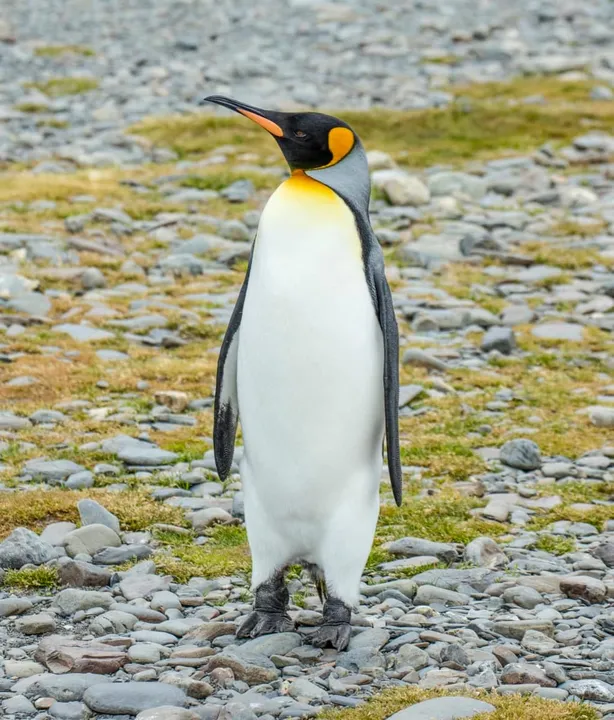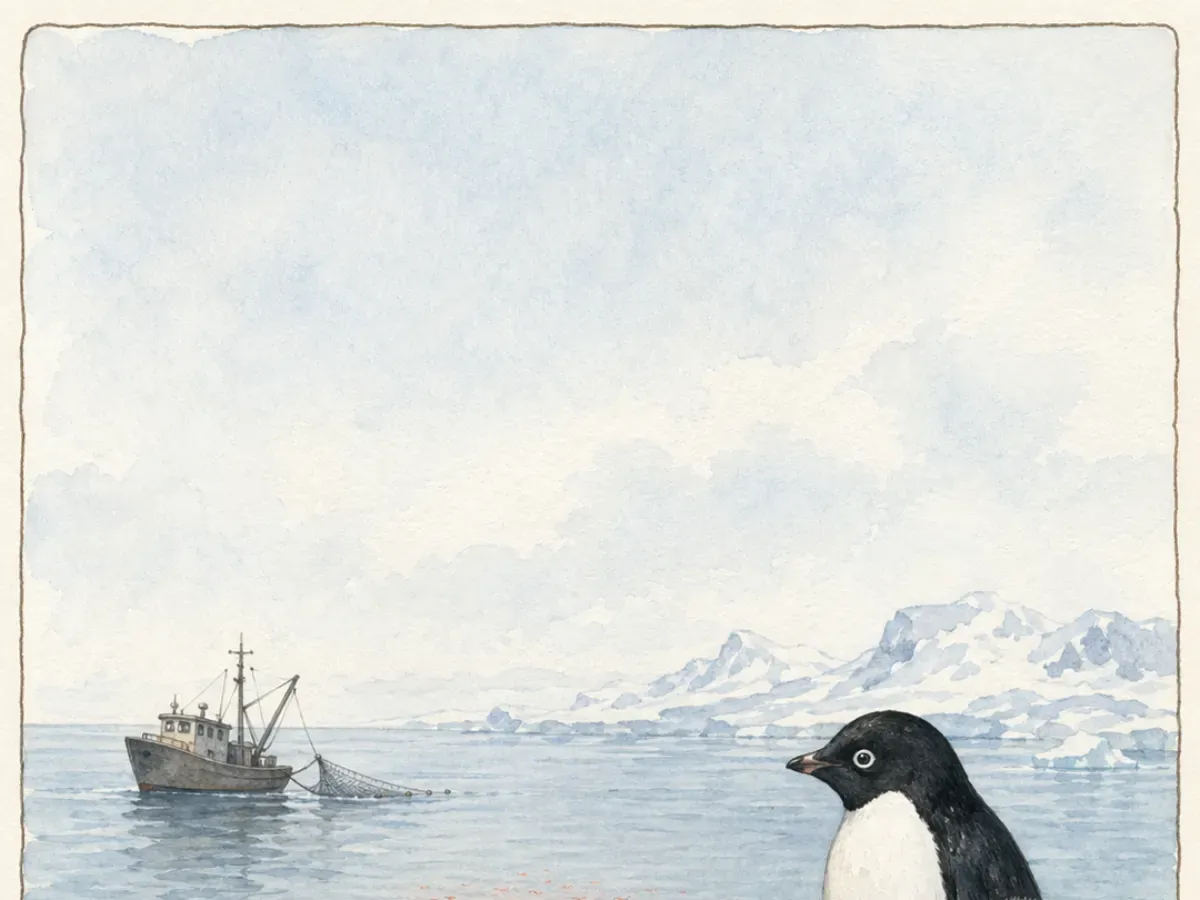
Last week, someone in a penguin-lovers group brought up krill oil.
She had seen people overseas calling for a boycott, and asked me whether the issue was real.
I did not answer right away. Over the next two days I went through the studies and formal documents I could find, and wrote this down.
Here is the conclusion first: I am not calling for an emotional boycott of krill oil. But after checking the evidence, I would not frame it as the better choice. The reason is simple. It does not consistently beat fish oil or algal oil, while the ecological controversy is much heavier than either of those. Without a clear advantage, health language should not be used to smooth over the ecological tradeoff.
The boundary of this article matters: what follows is about public research, fishery management, and the ecological side of consumer choice. It is not medical advice, supplement advice, or a shopping list. If you are taking omega-3, especially with chronic conditions, medication, pregnancy, or surgery nearby, ask a physician, pharmacist, or registered dietitian first.
A 6-centimeter shrimp holding up Antarctica
Adult Antarctic krill are about 6 centimeters long and a little over a gram. They gather in huge swarms, eating phytoplankton and algae under the sea ice. Fish, squid, albatrosses, seabirds, baleen whales, seals, penguins: the stomachs of this whole chain of animals often trace back to the same thing.
I have written before about the Antarctic food chain. This time I want to focus on one newer variable: commercial fishing.
Antarctica has an international management body called CCAMLR. Around the Antarctic Peninsula, in waters officially called Area 48, its annual krill catch limit is 620,000 tonnes. Total Antarctic krill biomass is estimated somewhere between 60 million and 420 million tonnes, so the quota is less than 1%. The industry often points to exactly this: “We catch less than 1%. How could that have an impact?”
If you only look at the total amount, that argument sounds reasonable.
The problem is not the total. It is where the catch happens.
In the 2023 to 2024 fishing season, the actual catch across Area 48 reached 498,000 tonnes.
That is the highest number since records began in 1973.
The more important season is 2024 to 2025. CCAMLR used to have a mechanism that divided the quota among four subareas, so vessels would not all crowd into one place. In 2024, that distribution mechanism was suspended, and the 620,000 tonnes became “catch it anywhere.” The result was that, for the first time, the krill fishery hit its quota early and had to close ahead of schedule. International headlines called it an unprecedented early closure.
At the same time, satellite tracking and internal CCAMLR reports showed that fishing activity doubled in the hotspot called 48.1. In some corners, by the end of June the catch was already 60% higher than the entire previous season.
Where is 48.1? Around the Antarctic Peninsula. In other words, the summer chick-feeding grounds of chinstrap and gentoo penguins.
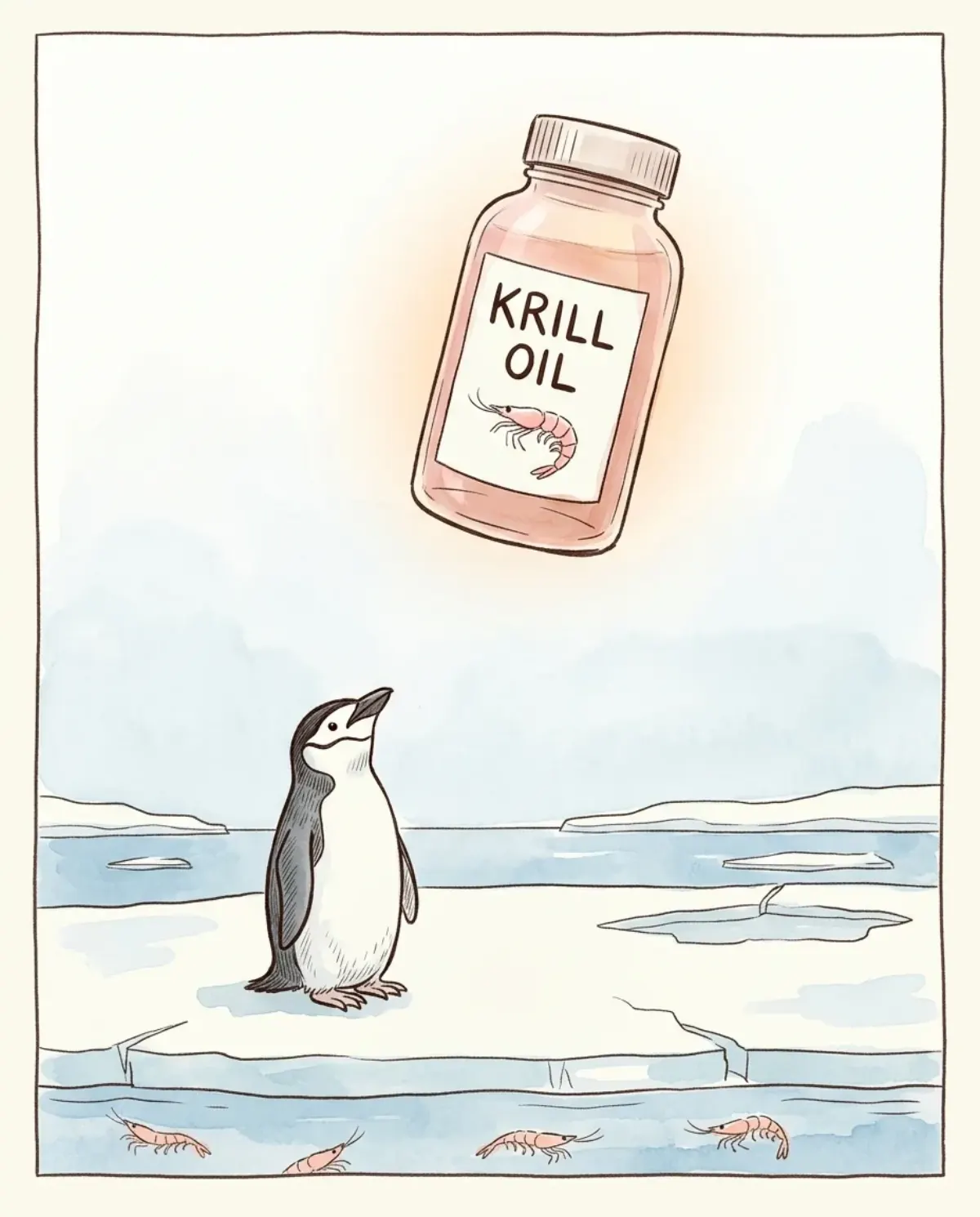
Chick-feeding grounds are summer fishing grounds
In 2018, the krill fishing industry itself set up two voluntary summer closure zones:
- South Shetland Islands buffer zone: closed every year from 11/1 to 3/1
- Gerlache Strait buffer zone: closed every year from 10/15 to 2/15
A 2022 study overlaid these two buffer zones with penguin foraging areas. Together, the two zones covered the following around the Antarctic Peninsula:
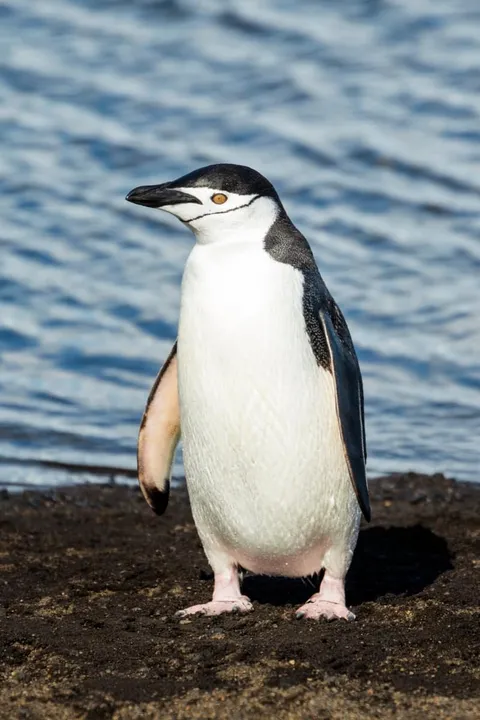
- 74.3% of chinstrap penguin chick-rearing foraging areas
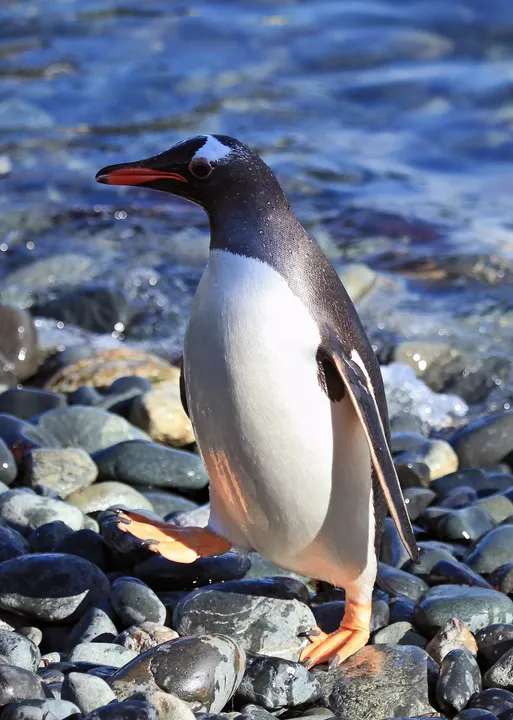
- 97.5% of gentoo penguin chick-rearing foraging areas
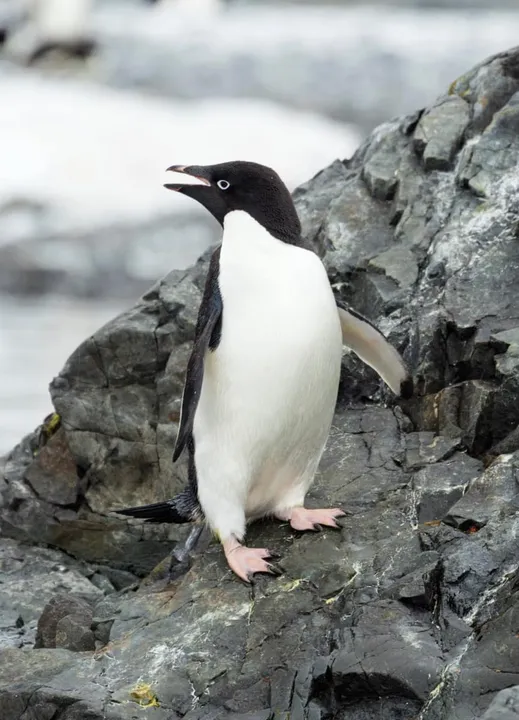
- 91.4% of Adelie penguin chick-rearing foraging areas
What does that mean? It means the industry itself acknowledged something: the sea where we fish is the same sea where penguins feed their chicks.
Do the buffer zones help? Yes. But they are voluntary, not mandatory. And after the 2024 to 2025 allocation mechanism failed, concentrated fishing came back.
A 2020 study was even more direct. Using more than 30 years of penguin tracking data, the authors found that when the local fishing rate near a penguin colony exceeded 0.1, penguin foraging and breeding success dropped clearly. The size of that drop was similar to what happens in bad climate years.
In other words, in the right place and at the right time, fishing damage can be on the same order as climate warming.
Five penguin species cannot be lumped together
If we want to be honest about this, we cannot throw all penguins into one bucket.
I split them into two groups.
Group one: directly tied to krill
| Species | Krill in diet | Recent population trend | Main pressure |
|---|---|---|---|
| Chinstrap penguin | 95-99% in spring and summer | Antarctic Peninsula down about 30% over three generations | Climate first, fishery amplification in hotspots |
| Adelie penguin | Over 99% during chick rearing on the Antarctic Peninsula | Declining on the western Antarctic Peninsula, stable in parts of the north and east | Sea ice first, local fishery pressure added |
| Gentoo penguin | Flexible, can switch menu | Southwest Antarctic Peninsula up about 23% | Warming usually explains more than fishing |
Chinstrap penguins are the classic krill specialist. In spring and summer they eat almost nothing but krill, with studies measuring 95% to 99%. This species is directly tied to the krill fishery issue.
Gentoo penguins, surprisingly, have been a kind of “climate winner.” Warming has opened more habitat, gentoos can switch foods more easily, and their range has pushed south while total numbers have risen. But that does not mean they are fine. When krill becomes scarce, gentoos extend their foraging trips and are more likely to overlap with fishing vessels.
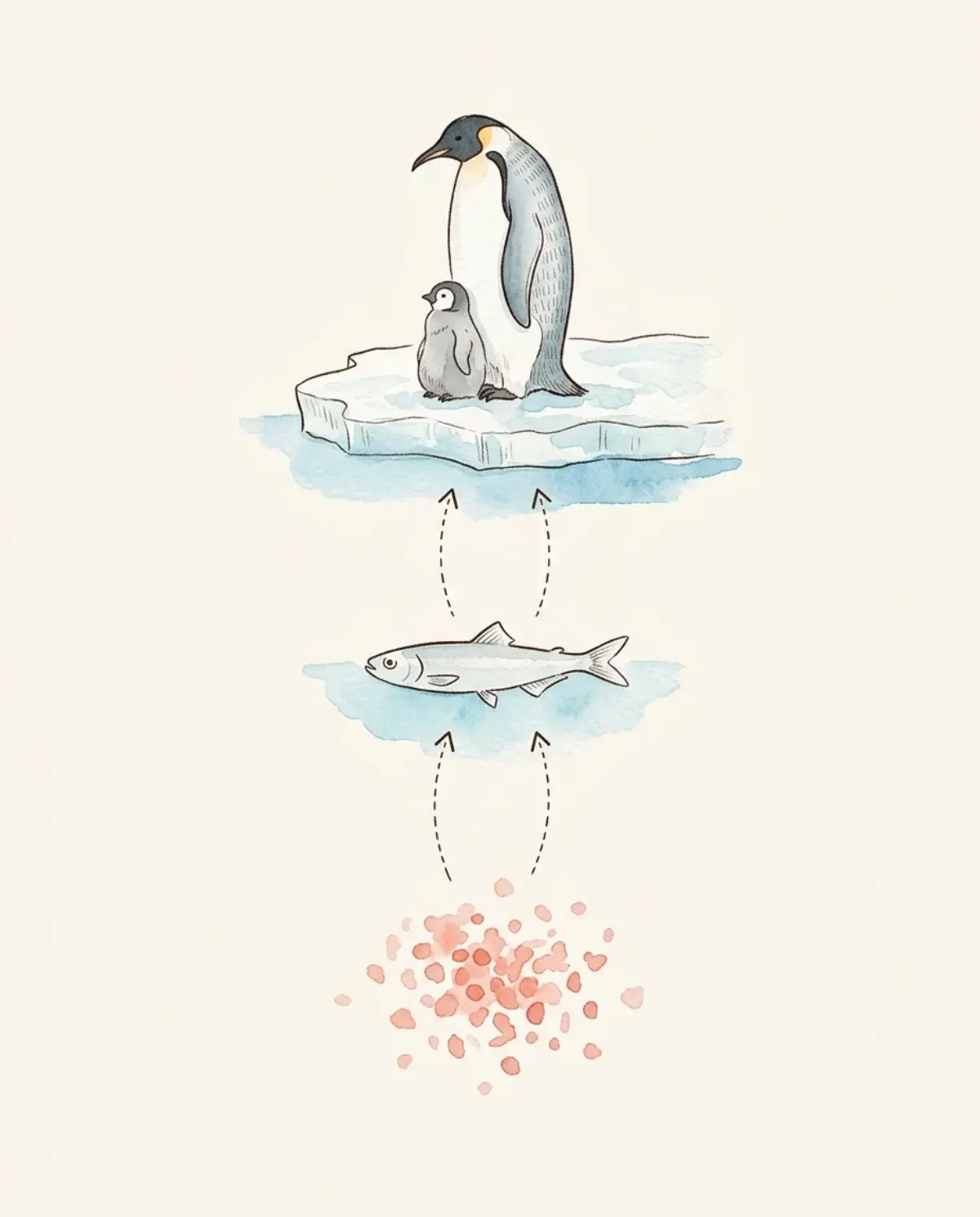
Group two: mainly driven by sea ice
| Species | Krill in diet | Recent population trend | Main pressure |
|---|---|---|---|
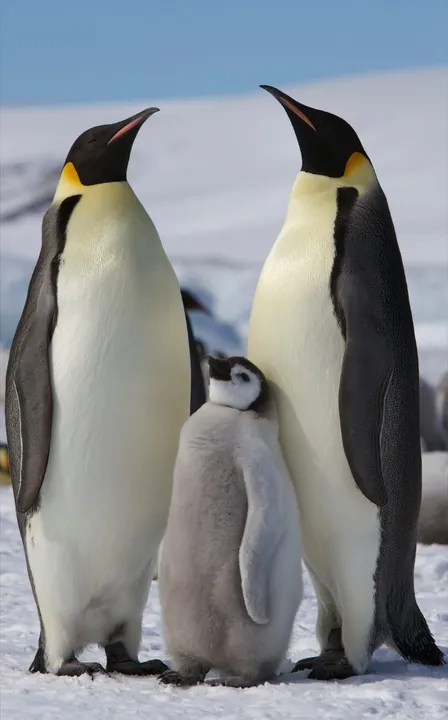
| Emperor penguin | Mainly Antarctic silverfish and squid in summer | Down about 1.3% per year from 2009-2018; some regions down 22% from 2009-2024 | Sea-ice loss first |
| King penguin | Mainly lanternfish, little krill | Large regional differences, some collapses and some stable populations | Ocean-front shifts and prey changes |
One study measured the diet of emperor penguin chicks in the Ross Sea and found Antarctic silverfish made up 76%. King penguins are even clearer: classic studies report that 99.8% of their diet is fish.
These two penguins are also at risk, but their risk is indirect, moving through the food chain or the sea-ice ecosystem.
I often see emperor penguins pulled into the krill oil issue on social media, because visually they are the most iconic penguin. But if the topic is krill oil’s effect on penguins, emperor penguins are not on the front line. If we really want to talk about emperor penguins, the main subject should be sea-ice collapse. In 2022, an ice shelf in the Bellingshausen Sea broke up early; four of five emperor penguin breeding sites failed completely, and an estimated 5,000 to 10,000 chicks did not survive.
Climate is the main driver of penguin decline. I am not going to hide that for rhetorical convenience.
The blue check controversy
Many krill oil boxes carry a blue sustainability label from an international certification body called MSC, often translated in Chinese as the Marine Stewardship Council. Behind that blue check are three principles: the target stock must be sustainable, ecosystem impacts must be controlled, and management must be effective.
The standard itself has a certain rigor. The problem is that two things happened in 2026.
In March 2026, the MSC report responsible for certifying the krill fishery recommended recertification for another 5 years.
Then in April, the Antarctic conservation group ASOC, the Antarctic and Southern Ocean Coalition, formally objected. Almost at the same time, WWF also objected.
WWF’s objection is a turning point. WWF is one of the world’s largest conservation organizations and has worked with MSC for a long time; historically it supported the certification system. If even WWF speaks up, it means even the most moderate conservation heavyweight has had enough.
Independent researchers are also applying pressure. In 2025, scholars wrote that “current fishing may be too concentrated in space and time,” and called for krill management in the 21st century to update faster.
So is the MSC blue check still valid? Yes. But it is now being substantively challenged. For readers, the most honest version is: the certification is still there, but confidence in it is loosening.
What the health comparison can and cannot say
Here comes the practical question.
Krill oil, fish oil, algal oil: which is best for the body?
| Source | EPA+DHA per capsule | Human trial results |
|---|---|---|
| Krill oil | Mostly phospholipid form, but total amount per capsule is usually lower | Some trials measured lipid-marker changes; a 12-week equal-dose trial found absorption was the same as fish oil |
| Fish oil | Many forms, many high-concentration options | The largest evidence base, but high-dose trials did not show reduced cardiovascular events |
| Algal oil | Often DHA-focused, with more new dual EPA+DHA versions | 2025 study showed noninferiority to fish oil; 2013 human trial had already confirmed feasibility |
There are two points worth knowing.
First, the claim that phospholipid-form omega-3 absorbs better has a theoretical basis, but human trials do not really hold it up. A 2023 12-week human trial had a title that essentially said “same bioavailability.” At equal doses, krill oil did not win.
Second, krill oil capsules usually contain a lower dose. A 2025 comparison study said this directly: the total EPA+DHA per krill oil capsule is usually lower than in fish oil or algal oil capsules. The effective amount you swallow may actually be smaller.
Taken together, krill oil’s position is: it works, but it does not clearly beat other sources, while carrying the largest ecological controversy.
So it should not be packaged as a clearly better health choice.
Algal oil as a non-Antarctic comparison point
Algal oil, omega-3 extracted from microalgae, is often used as the most direct non-Antarctic comparison point.
A 2025 human trial with 74 people compared algal oil and fish oil over 6 and 14 weeks. DHA and EPA levels in plasma were not lower with algal oil than with fish oil. The authors concluded that algal oil can reliably provide these two key omega-3s.
As a way to understand how different omega-3 sources are compared, the relevant details are EPA+DHA milligrams per serving, whether both EPA and DHA are listed, and whether ingredients and testing information are clear. Prices and retail availability change quickly, so this article does not list brands or treat any product as a recommendation.
Algal oil has weaknesses too, and they should be said plainly:
- Products vary a lot. Many algal oils contain DHA but not EPA. If a comparison calls it a replacement, check whether both EPA and DHA are actually listed.
- Label and testing transparency vary. Products can differ in source, form, third-party testing, and actual content.
- High-dose marine omega-3 may increase atrial fibrillation risk. This is not unique to algal oil; fish oil and krill oil share it. Do not approach it with a “natural means more is better” mindset.
When reading these comparisons, I treat them as label-transparency questions, not buying advice:
First identify whether the source clearly states EPA+DHA milligrams per serving, and whether EPA and DHA are both listed. Do not focus only on labels like “phospholipid form,” “Antarctic source,” or “no fishy taste.”
The first is data transparency. The rest is often marketing.
Where the call to boycott krill oil came from
Last, a little background.
This issue reached ordinary consumers not only through environmental slogans, but through a few concrete events:
- In 2025, international headlines about an “unprecedented early closure” punched a hole in the “we catch less than 1%” argument.
- The marine conservation group Sea Shepherd launched a petition that helped get two major UK retailers, Holland & Barrett and Time Health, to remove krill products.
- In 2026, WWF + ASOC formally challenged MSC certification, marking a shift in conservation circles toward krill oil.
Different organizations take different positions. Greenpeace published related reports early, with an advocacy tone; ASOC is the most institutional, aiming directly at international management bodies and MSC; Sea Shepherd works through consumer pressure. These three lines used to move separately. From 2025 to 2026, they began converging.
Not every voice is equally credible. Direct-action campaigns like the “krill war” route are divisive even inside conservation circles, and should not be treated as the face of mainstream scientific advocacy. It matters to separate them when citing.
My editorial position
I do not take krill oil myself, and I do not have any stocked at home. After writing this, my editorial line is narrower: do not present krill oil as a cost-free “better choice.”
This is not a demand that anyone make the same decision, and it is not supplement selection advice.
Once the information is in place, each person decides.
While writing this, I kept thinking about one thing. Chinstrap penguins have declined 30% over three generations. Behind that number are sea-ice loss, rising ocean temperatures, and fishery hotspots stacked on top of each other. With climate, what I can do is limited. With this fishery, I can choose not to vote for it.
One consumer choice will not decide an international meeting, of course. But retail delistings, certification challenges, and conservation organizations drawing a line are already happening. They would happen without my one vote too.
I just want to know which side I am standing on.
Related
References
CCAMLR and fishery data
- CCAMLR Fishery Report 2024 (2025-04-07)
- AP News, “Antarctic krill fishery closes early…” (2025-08)
- Freer et al., 2025, Limnology and Oceanography, DOI: 10.1002/lno.12809
- Santa Cruz et al., 2018, Fisheries Research, DOI: 10.1016/j.fishres.2018.07.006
- Trathan et al., 2025
Spatial overlap and risk
- Hinke et al., 2017, PLOS ONE, DOI: 10.1371/journal.pone.0170132
- Watters et al., 2020, Scientific Reports, DOI: 10.1038/s41598-020-59223-9
- Warwick-Evans et al., 2022, Frontiers in Marine Science, DOI: 10.3389/fmars.2022.1015851
- Godø & Trathan, 2022, ICES Journal of Marine Science
- Constable et al., 2021
Five penguin species: population and diet
- Krüger et al., 2021, Ambio, DOI: 10.1007/s13280-020-01386-w
- Krüger et al., 2023, Diversity, DOI: 10.3390/d15030327
- Juáres et al., 2017
- Ratcliffe et al., 2021, DOI: 10.1111/ddi.13216
- Iles et al., 2020, Global Change Biology, DOI: 10.1111/gcb.15085
- Hong et al., 2021
- LaRue et al., 2024
- Fretwell et al., 2023, Communications Earth & Environment
- Hindell, 1988
- Yamazaki et al., 2020, Science Advances
MSC certification and conservation objections
- The QRILL Company Antarctic Krill Final Draft Report, 2026-03-03
- ASOC objection, 2026-04-08
- WWF statement, 2026-03
Health comparisons
- Vosskötter et al., 2023, Lipids, DOI: 10.1002/lipd.12369
- Alijani et al., 2025 (bioavailability review)
- 2023 meta-analysis, 14 RCT krill oil lipid effects
- Bailey et al., 2025, microalgal oil RCT
- Ryan et al., 2013
- Makay et al., 2025, Marine Drugs
- STRENGTH trial, JAMA 2020
- Circulation 2021 AF risk meta-analysis
Position of this article: I do not present krill oil as a clearly better health choice, and I do not recommend any omega-3 product. This article is not medical, nutrition, supplement, or shopping advice. If you feel unwell or need supplement guidance, ask a qualified health professional. The argument here follows a balanced scientific evidence view and avoids an emotional boycott frame.
FAQ
Why is krill oil connected to penguins?
Antarctic krill is key food for chinstrap, Adelie, and gentoo penguins during chick rearing, while commercial fishing concentrates in Antarctic Peninsula area 48.1.
Why can a catch below 1% still matter?
The issue is local concentration, not only total quota. The article cites research showing penguin foraging and breeding success drop when local fishing rate exceeds 0.1.
Is krill oil clearly better than fish oil or algal oil?
The human trials summarized here do not show a stable absorption advantage for krill oil. Algal oil can supply EPA/DHA while avoiding Antarctic krill controversy.