Courtship begins with posture, calls, and old partners
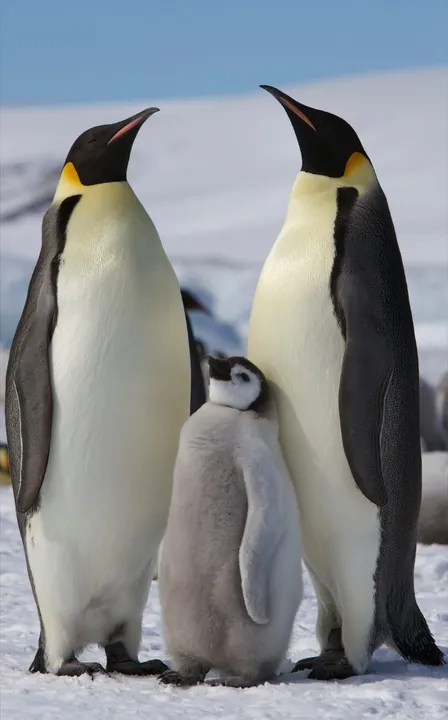
When penguins look for mates, they often begin with posture. Chest lifted, bill pointed upward, wings opened slightly, plus a string of calls loud enough for the whole breeding colony to hear. If you watch from farther away, it looks like a performance.
Move closer in your thinking, and you realize the penguin is actually announcing its location, strength, and determination.
Courtship rarely takes a long detour in the penguin world. I like you, this is my place, and I can raise a chick with you now are usually written straight into the movement.
Many penguins return to old partners and old nest areas. King penguins, Adelie penguins, and gentoo penguins all have this tendency. As long as both birds return successfully, the chance of pairing again is often high.
This has little to do with nostalgia.
Familiarity really saves time.
The breeding season is short. If a pair can spend one less day getting to know each other again, that is one more day for arranging the nest, handing off energy, and preparing for the next egg. For a bird that constantly has to race wind, ice, rain, and predators, knowing the route already is itself an advantage.
Stones are not gifts, they are drainage systems
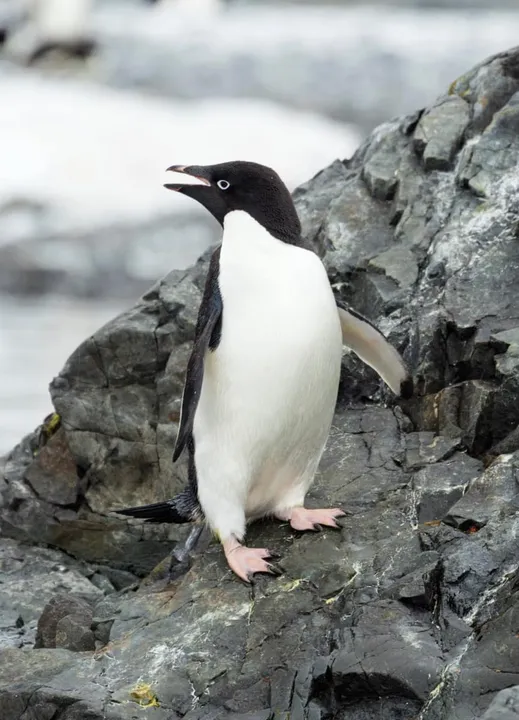
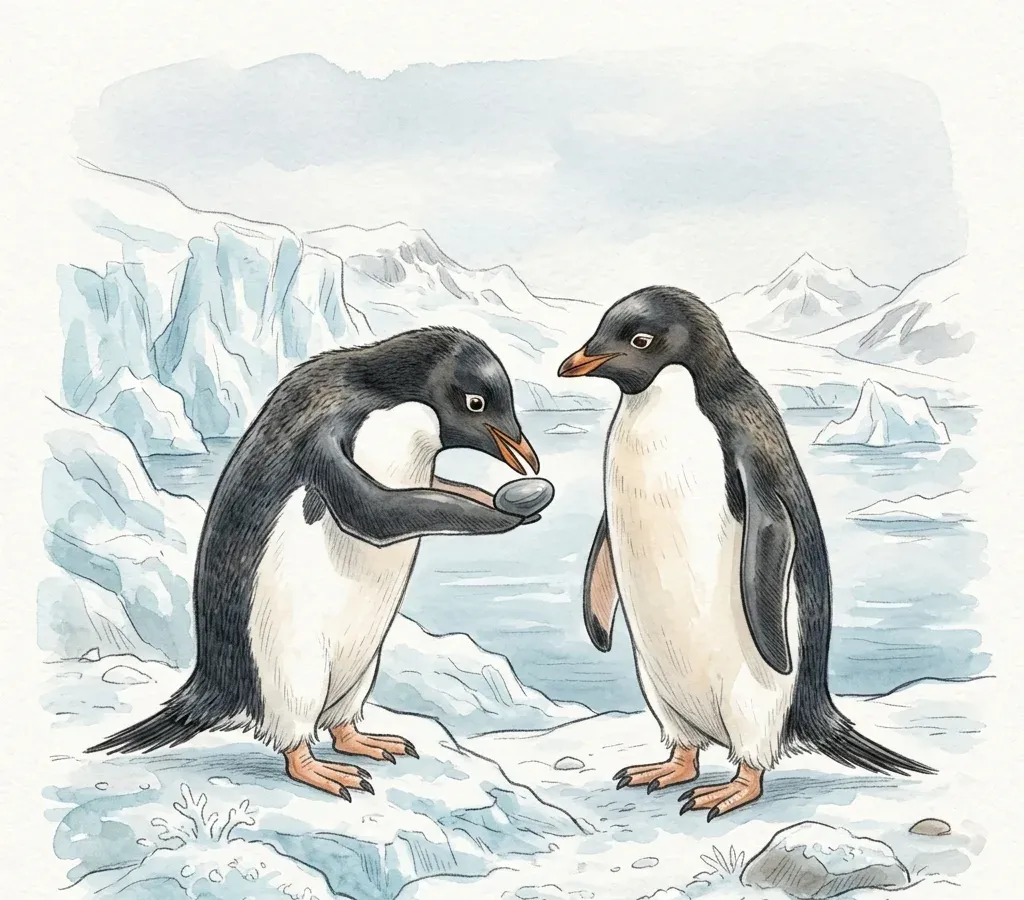
Adelie penguins express this realism in classic form. They collect stones to build nests; the better the stones and the higher the nest, the less likely the egg is to soak in meltwater. During courtship, giving stones turns sincerity directly into building material.
What you give is not a flower. It is a drainage system.
When the other bird accepts the stone, it is also judging whether you have the ability to run a life well. The reason stone-stealing scenes are so common in breeding colonies is exactly that stones are part of breeding success.
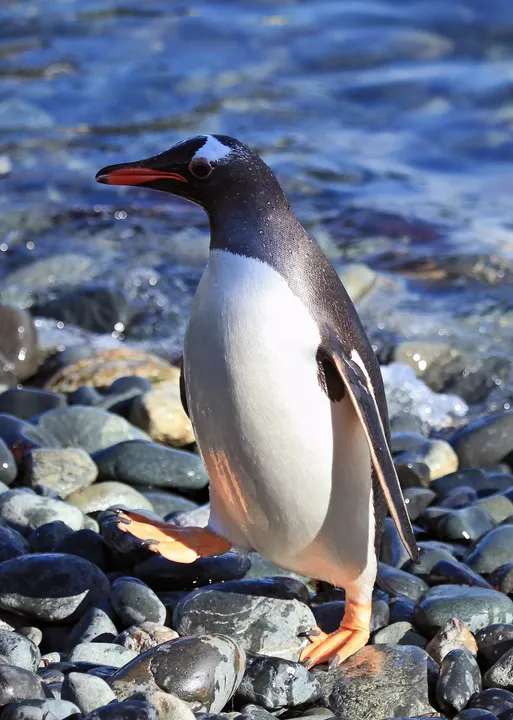
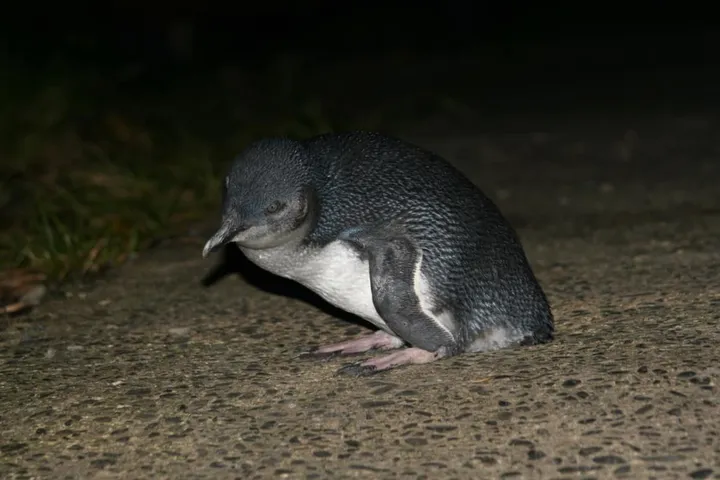
Gentoo penguins and little blue penguins may look a little softer, but the core logic does not change. Gentoo penguins slowly pile stones, grass, and feathers into the nest. Little blue penguins often arrange soil burrows, rock crevices, or artificial nest boxes until two eggs can fit just right.
Penguin courtship is not only looking for a romantic partner. It is more like looking for a reliable teammate. Incubating together, going hungry together, taking turns at sea together: hand that life to an unstable partner and the whole brood can go wrong.
Calls and voiceprints: recognizing family inside the colony
Penguin calls matter too. Breeding colonies are so dense, and everyone looks so similar, that sound is almost an ID card. This is especially obvious for king and emperor penguins. In huge breeding areas crowded with thousands upon thousands of birds, parents still have to use calls to find mates and chicks again.
That is not a cute setting. It is a practical need. Call wrong once, feed the wrong chick, and your own chick may miss a meal. Penguin attachment rarely stops at atmosphere; it is always tied to the responsibility that comes after.
After the egg is laid, breeding becomes the hard fight
After egg-laying, the truly hard part begins. Most penguins lay two eggs per clutch, with an incubation period of about 33 to 40 days, and parents take turns keeping the eggs warm and foraging. Emperor penguins push this almost to the limit: after the female lays a single egg, she returns to the sea to replenish herself, while the male places the egg between his feet and abdominal brood pouch and carries it alone through about two months of Antarctic winter.
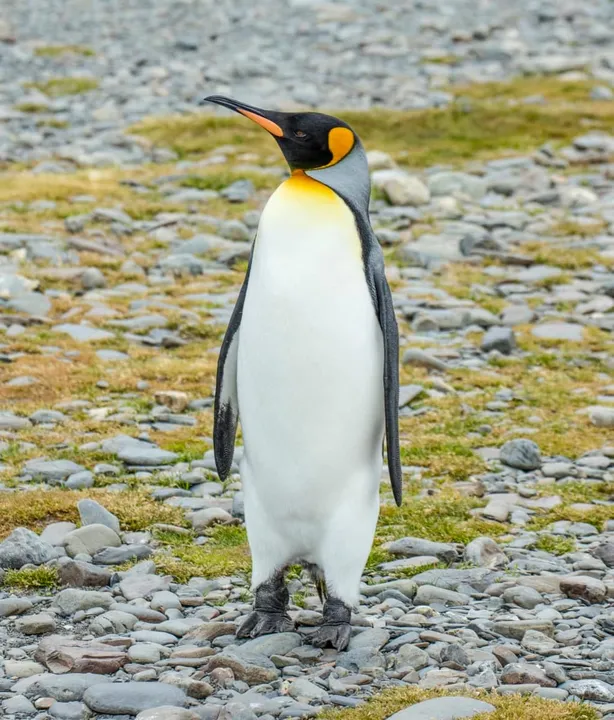
King penguins stretch chick-rearing out for a long time, often across an entire winter. Brown downy chicks stand in the wind waiting for parents to return, and that patience explains partnership more clearly than many courtship postures do.
Penguins also do not always aim for both chicks in a clutch to survive.
Many crested penguins, such as macaroni penguins, rockhopper penguins, and erect-crested penguins, usually lay a smaller first egg, and the chick that is actually raised is often from the second egg.
That is painful to read.
But it is really a way of putting the odds on the larger egg when resources are limited. Penguin breeding has always carried arithmetic. Cuteness and cruelty can appear together, and a stone nest and elimination logic can belong to the same season.
Chicks grow through shifts and crèches
After chicks hatch, the parents’ work does not become lighter; the exhaustion only changes form. At first, one parent often stays while the other goes to sea. When the chicks grow older, some species form small crèche-like groups, as commonly seen in Adelie and king penguins.
Chicks standing together can keep warm, and parents returning from the sea can hand off at the edge of the breeding colony more easily.
The scene may look like school letting out.
For penguins, though, it is really a collective way of lifting survival odds a little. There is one especially direct thing about penguin courtship and breeding. They live many big emotions in a very practical way.
If I like you, we call together; if I trust you, I let you take the egg; if I am willing to spend this season with you, we guard that nest together. There are not many fancy transitions, but it carries more weight than many romance stories.
Because behind every intimate move are food, storms, energy, and time.
What is truly fascinating about penguin breeding
So the truly fascinating part of penguin courtship and breeding is not whether they are monogamous for life, and it does not stop at how fragile the egg is.
What moves me more is that they turn relationship into a concrete cooperative system. Someone finds stones, someone guards the spot, someone chases fish at sea, someone holds the egg on their feet, and when someone comes back, they have to recognize the same family inside a whole field of calls.
The more you watch, the more you understand that penguin romance is really the scheduling of a shift roster that cannot afford mistakes.
FAQ
Do penguins keep the same mate?
Many penguins return to previous mates and nest sites, but this is not only romance; the breeding season is short, and a familiar partner can save time and improve chick-rearing efficiency.
Why do penguins give stones?
Species such as Adelie penguins use stones to build and drain nests. Stone quality affects whether eggs stay above meltwater, so courtship stones also display breeding ability.
How do emperor penguins incubate eggs?
After the female lays one egg, she returns to the sea to feed. The male keeps the egg warm between his feet and brood pouch, carrying it through about two months of Antarctic winter alone.