After writing the food-chain article, I thought I had already seen the web clearly.
Then I went through the IPCC Sixth Assessment Report and realized that every line is loosening at a different speed.
“The weather is getting warmer” is too easy a sentence. Sea ice, currents, storms, krill locations, and drainage conditions at breeding sites are all moving at the same time. A penguin’s daily route is being rearranged with them.
They will not wait for us to understand before they change.
Sea ice forms later, and the whole year tilts
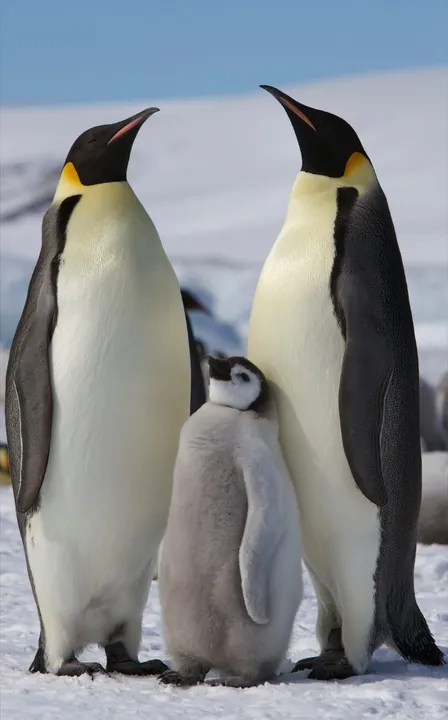
Emperor penguins (Aptenodytes forsteri) make this especially clear.
Males incubate eggs through the Antarctic winter for about 64 days. If the egg on top of their feet drops onto the ice, it can lose heat within minutes.
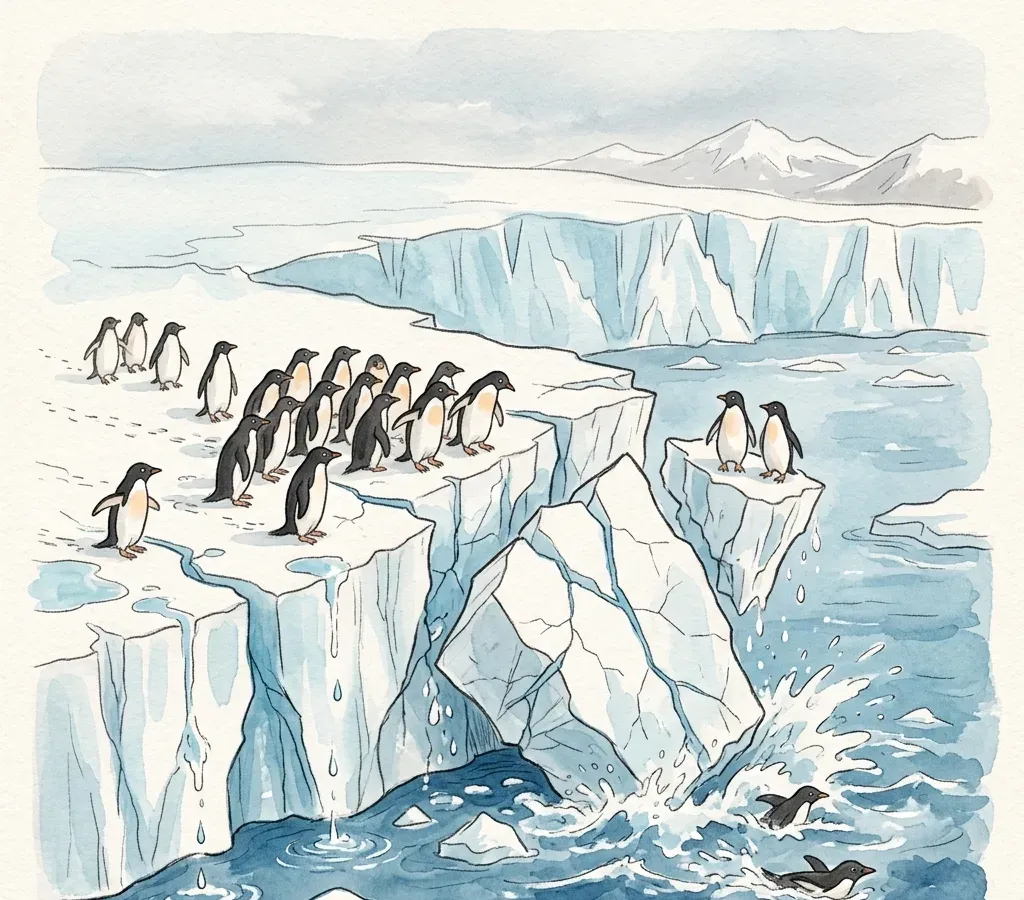
What they are picky about is timing. If ice forms too late, the rhythm of the breeding group coming ashore cannot open properly. If ice breaks too early, chicks face open water before they finish growing waterproof feathers.
In February 2023, Antarctic sea ice extent fell to 1.79 million km², the lowest in the satellite record since 1979 (NSIDC, BAS). A model published by Jenouvrier and colleagues in Global Change Biology in 2021 estimated that under a high-emissions pathway, emperor penguin populations could decline by about 81% by 2100.
The ice is already rewriting their incubation timetable. The model only turns that fact into numbers.
They are among the few penguins that stake the breeding season on winter. When winter’s rules change, the whole year tilts.
When the base moves, the upper layers go hungry
Adelie and chinstrap penguins face a different kind of trouble.
Their stomachs are tightly tied to krill. When sea ice extent, duration, and water temperature fluctuate, the places where juvenile krill can hide and feed shrink along with them.
When the base moves, penguins read it directly in foraging distance and chick mass.
If a parent swims 20 more kilometers before returning to the nest, that means several extra hungry hours for the chick onshore.
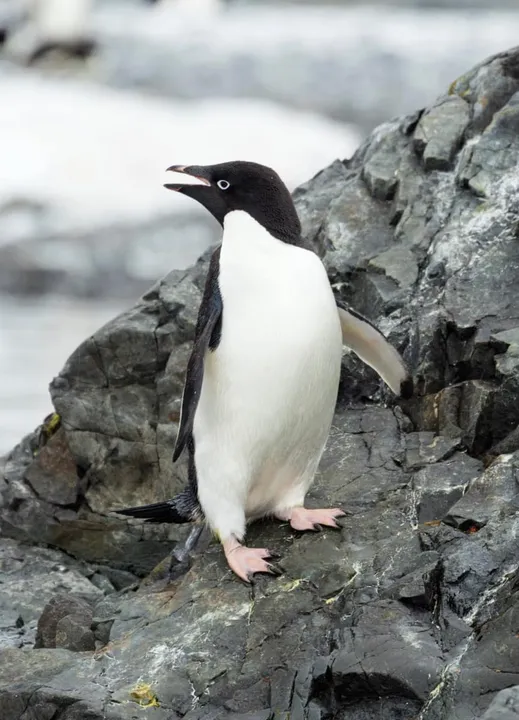
The western Antarctic Peninsula has warmed faster than the global average over the past 50 years (IPCC AR6 WG2). Along that same coast, Adelie penguins (Pygoscelis adeliae) have declined by more than 70% at some breeding sites, and chinstrap penguins (Pygoscelis antarcticus) have also retreated (Strycker et al. 2020, Polar Biology).
When there is less krill, penguins, seals, and whales all feel hungry together.
Looking like a winner only means holding on a few steps longer
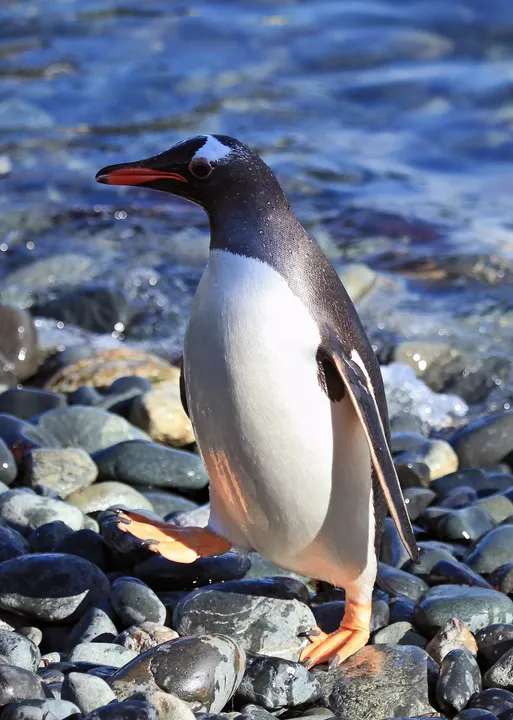
Gentoo penguins (Pygoscelis papua) are often placed on lists of species with “flexibility” under warming. They have expanded southward along the Antarctic Peninsula, choose habitat more broadly, and eat fish, squid, and krill rather than being locked to one ice condition.
But flexibility does not mean safety. A species that can adjust is only holding on a few steps longer. When the environment keeps swinging sharply, it stumbles too.
That is the trouble with climate change. It makes penguins with originally different roles become tired in different ways.
Tropical penguins do not have it easier
Penguins living in warm places are already gambling against heat.
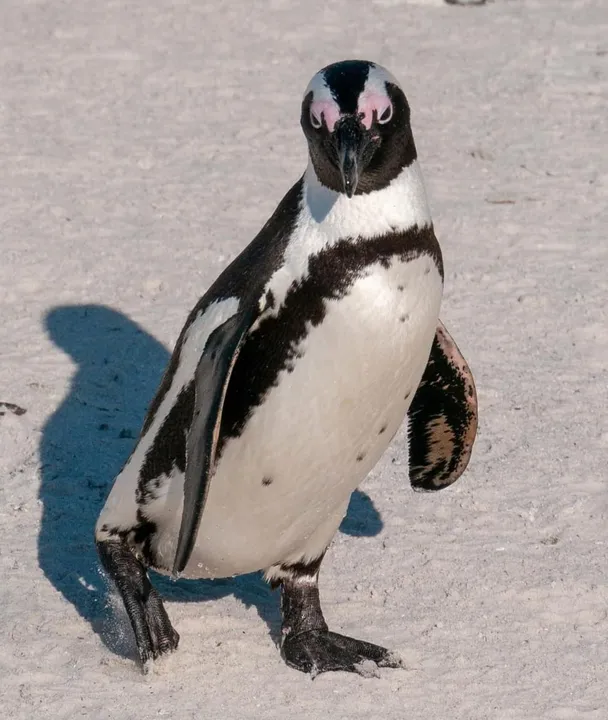
In 2024, the IUCN uplisted the African penguin (Spheniscus demersus) to Critically Endangered. The pink bare skin above the eyes is a built-in radiator, but what it can do is limited. When a marine heatwave arrives and small fish shift distribution, parents have to swim farther to feed the next generation.
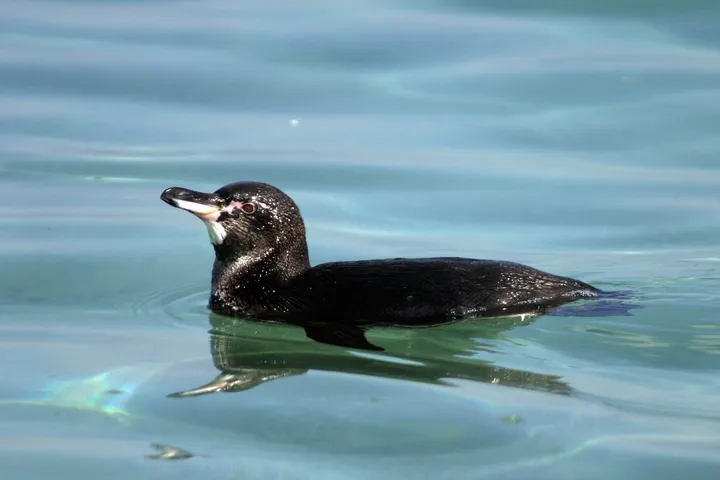
The Galapagos penguin (Spheniscus mendiculus) is even more direct. Common estimates put the population at about 1,200 to 1,800 mature individuals, living near the equator inside a narrow band of conditions and swinging strongly with ENSO. One strong El Nino can press breeding success into ugly numbers.
They do not have ice to stand on like emperor penguins. They depend on sea temperature, upwelling, and small fish positions staying just right.
When the ocean warms a little more, one more layer of margin disappears.
Heavy rain is another blade
Most of the time, climate change is imagined as warming. Rain is another blade that is often underestimated.
Penguin eggs are vulnerable to cold water, and chicks that have not finished replacing down are especially vulnerable to heavy rain. If breeding sites that used to be dry face frequent heavy rain during the breeding season, nest flooding, hypothermia, and mud can erase an entire brood overnight.
Adelie penguins like collecting stones to lift their nests. That is because a difference of a few centimeters is often the difference between whether an egg stays out of wet ground.
Warming does not always appear as high temperature. Sometimes it becomes a rainstorm, an early snowmelt, or a string of storms that should not have arrived so densely.
It has been accumulating for a long time
Penguins live every day according to a world timetable that was already written.
When sea ice should be stable, when fish should be abundant, when to come ashore, when to switch shifts, when the chick should be just old enough to enter the sea. What climate change does is make that timetable more and more disorderly.
They first become more tired, travel farther, fail earlier, and have less room to repair the failure.
By the time we finally see a clear decline in population numbers, much of the pressure has actually been accumulating below the surface for a long time.
I am still reading. With every paper, the web feels a little tighter than I thought.
FAQ
How does climate change affect emperor penguins?
If sea ice forms too late or breaks too early, it disrupts the male's roughly 64-day incubation schedule and the chick's waterproof feather timing; high-emissions models project a possible population decline of about 81% by 2100.
Why are Adelie and chinstrap penguins affected by krill?
Their chick-rearing diet is tightly tied to krill. When sea ice, sea temperature, and juvenile krill habitat change, parent foraging distance and chick mass are affected directly.
Are tropical penguins affected by climate change too?
Yes. African and Galapagos penguins depend on small fish, cool water, and limited heat-loss mechanisms; marine heatwaves or strong El Nino events can make food and breeding outcomes worse.