After writing the Antarctic food chain article, I kept pausing on another image.
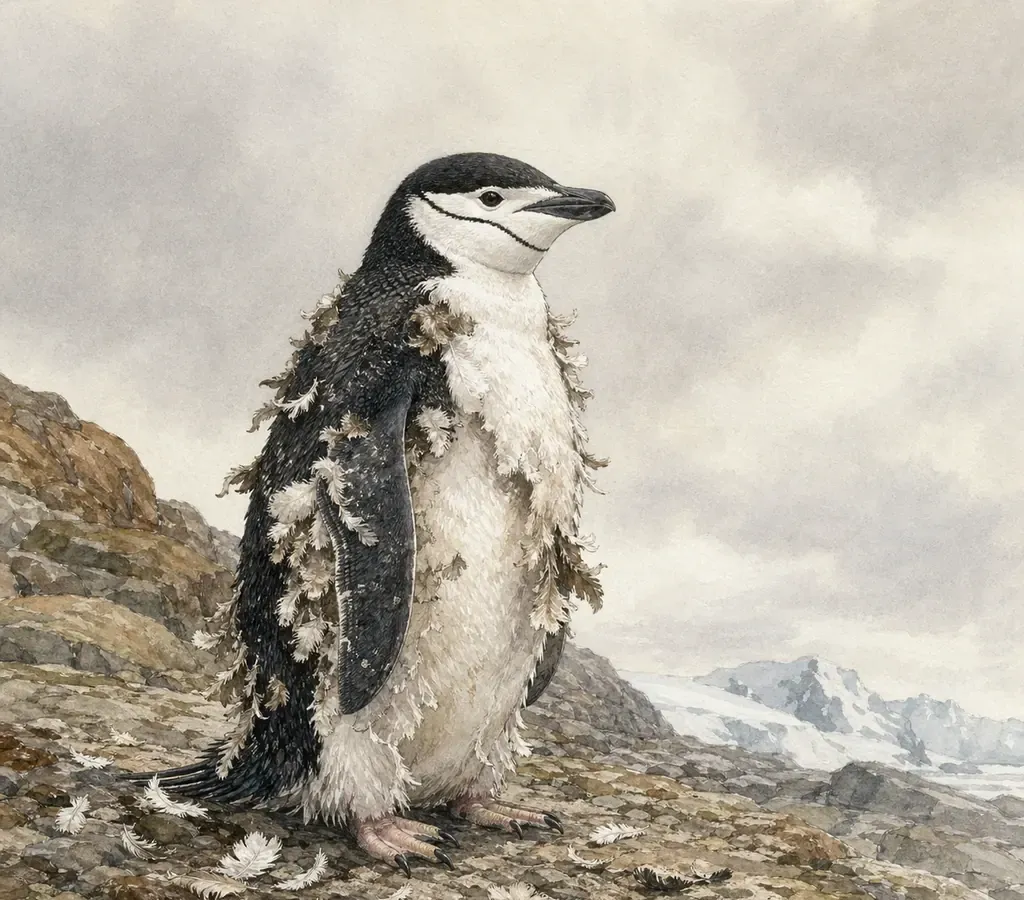
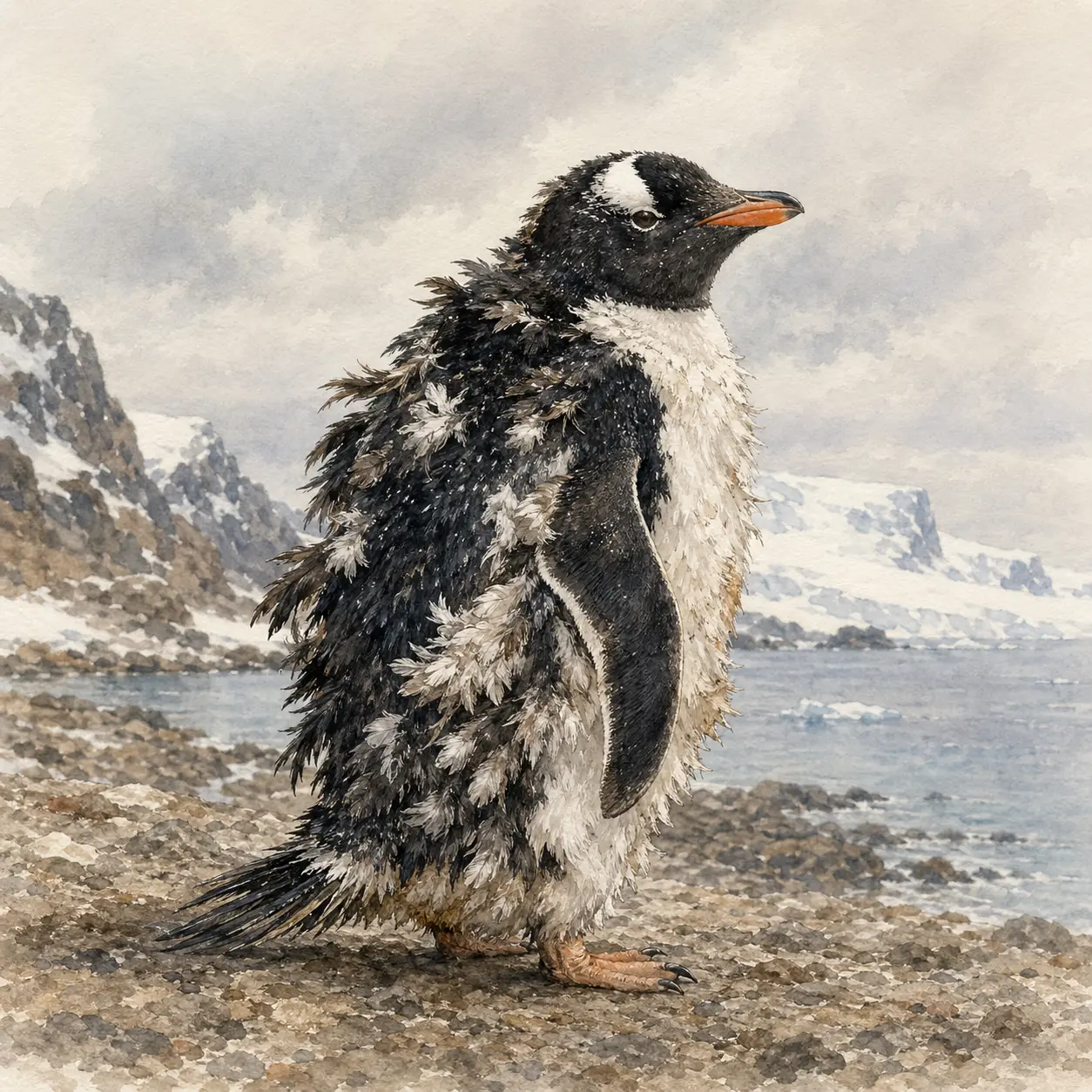
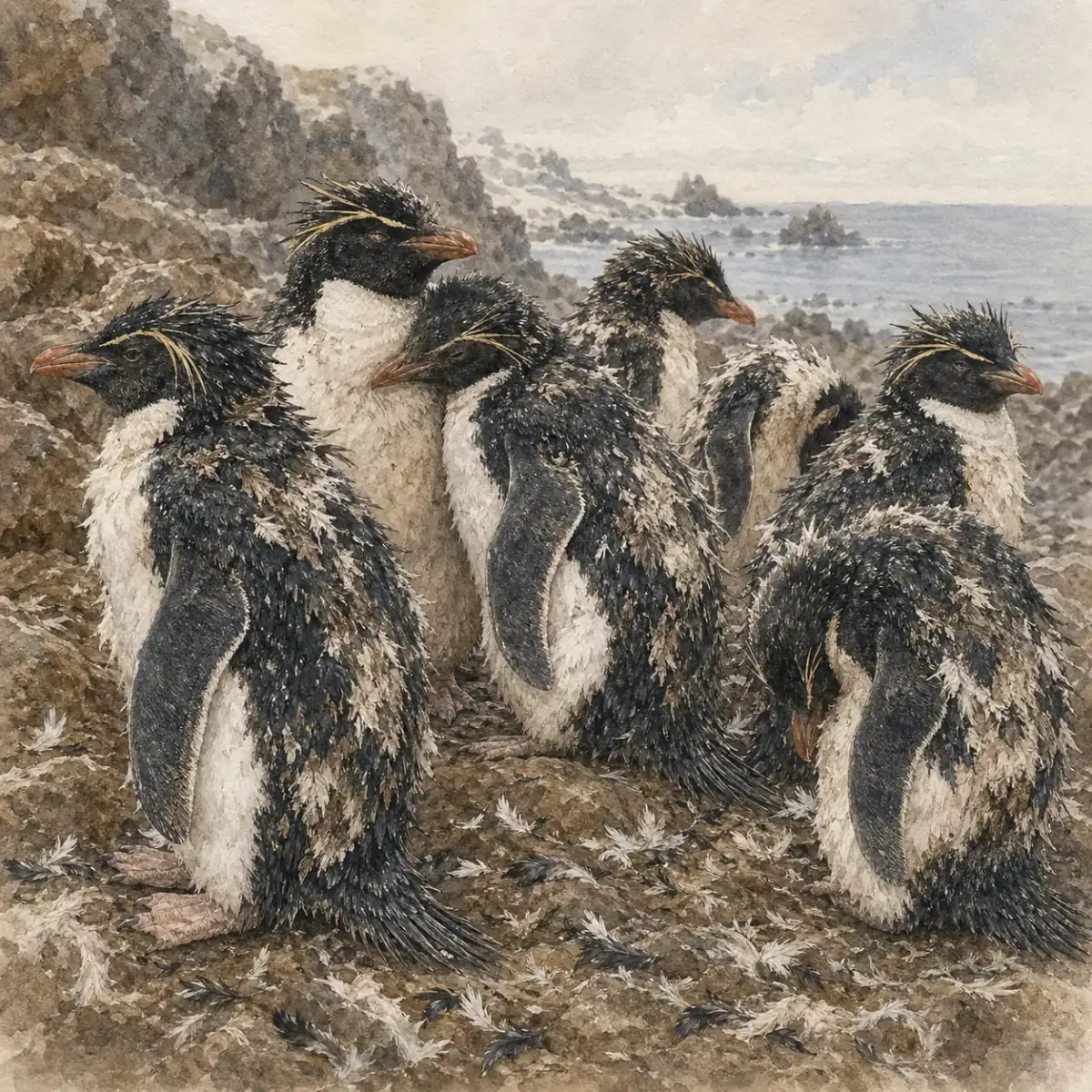
A group of penguins standing on shore, half their feathers gone, old feathers scattered on the ground, not one of them heading into the water.
I used to think they were resting. After checking the literature, I realized they cannot go into the water then. Their feathers are shedding in a batch, and the waterproof layer is temporarily not on their bodies.
That period is called catastrophic moult.
Penguins took the most extreme route
Most birds moult gradually. A few feathers fall, a few grow in, and there is always a usable layer on the body. They can still fly, still swim, still find food.
Penguins do not have that option.
Their waterproofing depends on tightly packed feathers across the whole body. Each square centimeter of skin carries about 70 feathers, much denser than in other birds, with feather vanes overlapping to form waterproof and insulating layers. Once feathers start to fall, the whole system starts leaking. If a penguin enters the sea then, body heat is lost immediately, water soaks under the surface, and it can be fatal.
So the penguin solution is: replace everything at once.
They shed the old feathers on land, grow the new ones, make sure the waterproof layer is back, and only then return to the sea. That is catastrophic moult. Here, catastrophic is quite literal: all at once, large-scale, no going back.
Before moulting, get fat. During moult, wait.
The preparation before moult is simple: eat.
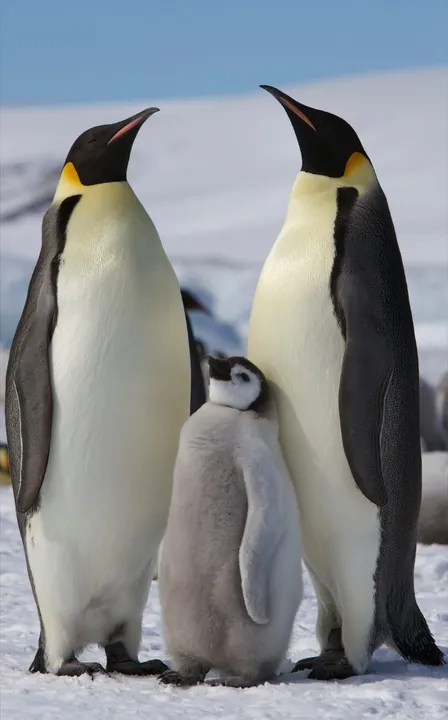
Take the emperor penguin Aptenodytes forsteri. Before moulting, it keeps feeding and pushes fat stores close to twice its normal body weight. The reason is direct. The moulting period lasts about 30 to 34 days, and the bird spends the whole stretch on land without eating. It has to live off that fat.
Fat has to do two jobs at once: maintain basic metabolism and provide protein for new feather growth. The skin is pushing old feathers out while growing new ones in, which costs a lot of energy. A Marine Ornithology study puts it plainly: metabolic rate during moult is higher than at ordinary rest.
Once moult begins, the penguin can only stand and wait.
Waiting for new feathers is the most passive part of the whole breeding cycle. No entering the sea to feed, no chasing fish, only the fat stored beforehand, carrying the body until the day it can swim again.
Three penguins, three timings
Different penguin species moult at very different times.
Emperor penguins begin moulting in late Antarctic summer, after the breeding season ends and chicks become independent. The whole moult lasts about 30 to 34 days. By the end, body weight is about 50% lower than before moult. That scale is within the normal range in the literature.
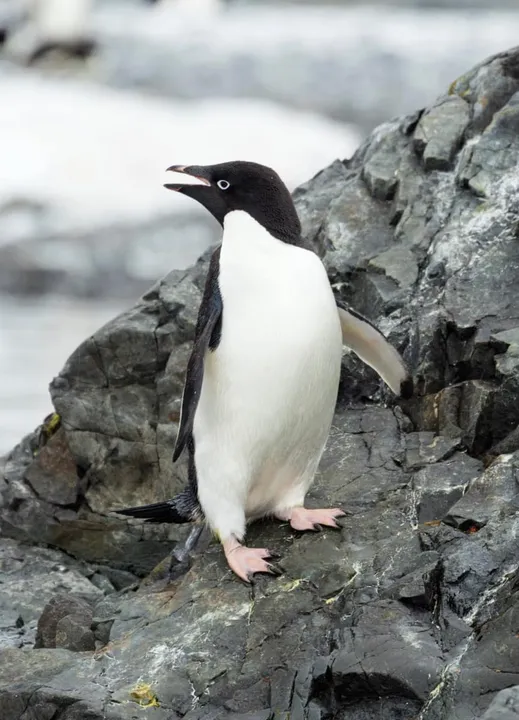
Adelie penguins, Pygoscelis adeliae, do it faster, in about 14 to 21 days. They are smaller and have higher basal metabolism, so they burn fat faster too. How much they eat before moult, and how quickly they regain weight afterward, directly affects whether they make it through that season.
Rockhopper penguins, Eudyptes chrysocome, fall between the two, at about 25 to 28 days. Their moulting sites are very fixed. Every year they return to the same stretch of shore and stand there, sometimes dozens together, half their feathers a mess, looking very beaten up.
Moult is a vulnerable window
Before the feathers finish growing, penguins do not have a complete waterproof layer or a complete insulation layer.
They have to stay somewhere relatively less cold through the moulting period. Emperor penguins usually choose the comparatively warmer end of Antarctic summer; rockhoppers and Adelies also choose periods when the temperature allows it. “Allows” is a relative word. Even in the warm season, Antarctica and the subantarctic can still be far below freezing.
During moult, thermoregulation is mostly down to two paths: muscle shivering and moving as little as possible.
Standing still and clustering together are the most effective ways to reduce heat loss.
Predator pressure does not disappear either. When penguins cannot escape into the water, leopard seals and skuas become more dangerous. They cannot swim away, their activity is low, and the space for avoiding danger is squeezed down.
Data show adult mortality during moult is higher than during ordinary at-sea foraging periods. The exact proportion varies by species and year, but the window itself is clearly a weak point.
Why evolution allows such an extreme design
Replacing everything at once is much riskier than gradual moult. That much is not really debatable.
But penguins do not have a second option.
Gradual moult works for land birds because even partial feather damage can reduce flight, so evolutionary pressure pushes birds toward “staying as functional as possible.” Penguins rely on a sealed whole-body feather system for underwater swimming. Any leaking patch means heat loss under ice.
Choosing to moult all at once means accepting one clearly bounded risky window. Once that window passes, the waterproof layer is complete again, and every dive for the rest of the year starts with full protection.
Concentrate vulnerability into a fixed window, and get a complete waterproof layer for every dive afterward. For penguins, the math works.
Climate change and the moulting window are still being watched
The timing and location of moult have been very stable over the long term, but that stability is now being stress-tested.
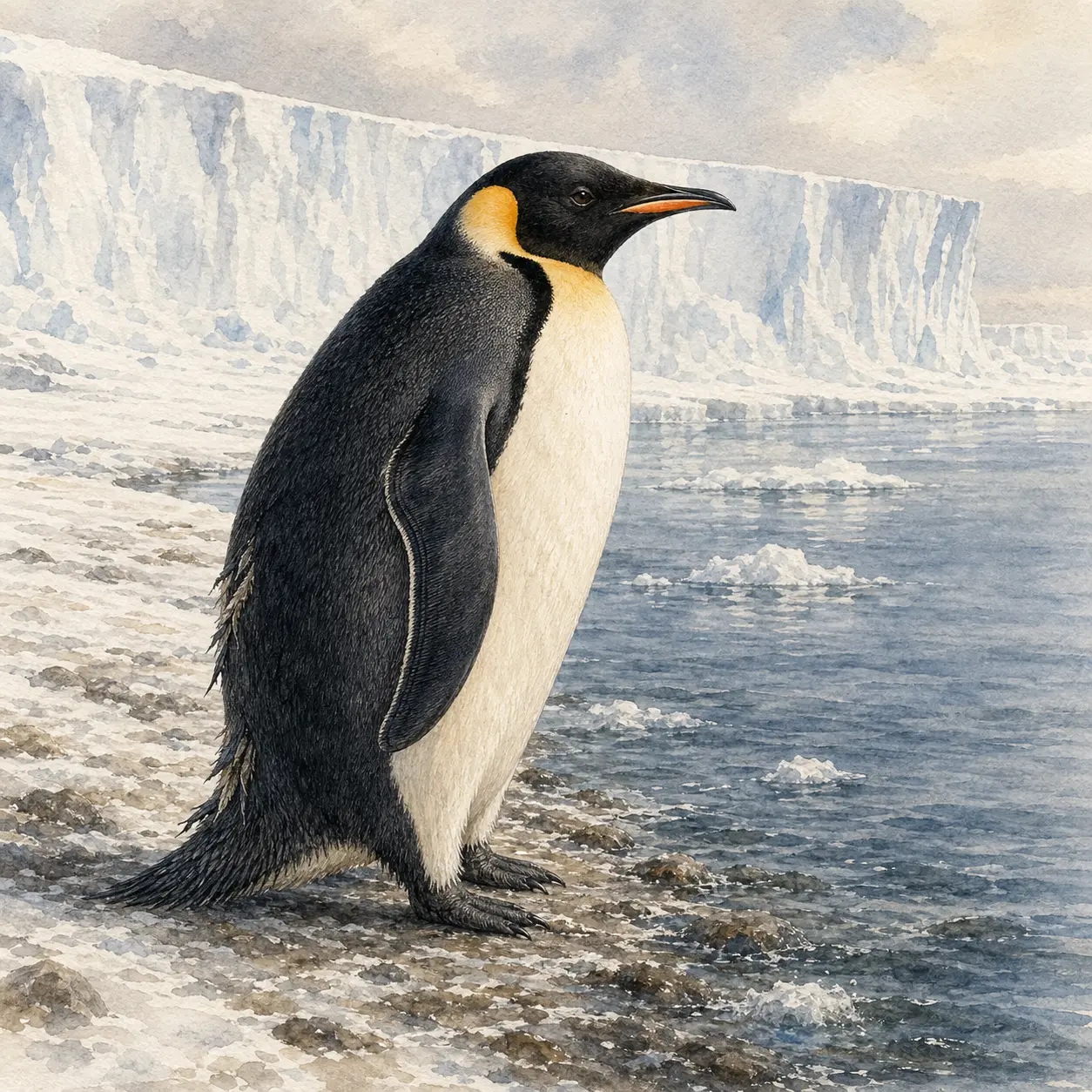
When sea-ice area and distribution change, the places and times penguins can use for moult change too. Emperor penguins usually need a stable sea-ice platform to stand on during moult. In recent years, several colonies have recorded breeding sites where sea ice broke up too early. Long-term monitoring from BirdLife International and the British Antarctic Survey shows changes in breeding success and pre-moult fat accumulation in multiple emperor penguin populations.
Moult is a physiological mechanism, but it is also an environmental condition: both time and place have to be right.
Before moult, penguins have to eat enough fat, so the foraging environment must be stable. During moult, they have to stand on land or ice without disturbance, so temperature and terrain must fit. All of these conditions are now being recalculated.
Adelie penguin population data are tracked in long-term NOAA and BirdLife monitoring, and regional trends differ widely. Some Adelie populations on the Antarctic Peninsula have shrunk, while Ross Sea populations have grown in recent years. Moult is one of the most vulnerable links in the life cycle; when foraging conditions or ice conditions shift, this link is often one of the first to feel pressure.
Whether they can keep finding the right place, the right timing, the right amount of fat, and then stand on shore for 30 days is something I am still reading about.
FAQ
What is catastrophic moult in penguins?
Penguins replace the whole feather coat at once. Their waterproofing is temporarily broken, so they cannot swim or feed and must live on stored fat.
How long does penguin moult take?
Emperor penguins take about 30 to 34 days, Adelies about 14 to 21 days, and rockhoppers about 25 to 28 days, with timing varying by species and place.
Why do penguins not moult gradually like many birds?
Penguins depend on a sealed whole-body feather layer for waterproofing. One leaking patch can mean rapid heat loss in cold water, so they concentrate the risk into one window.