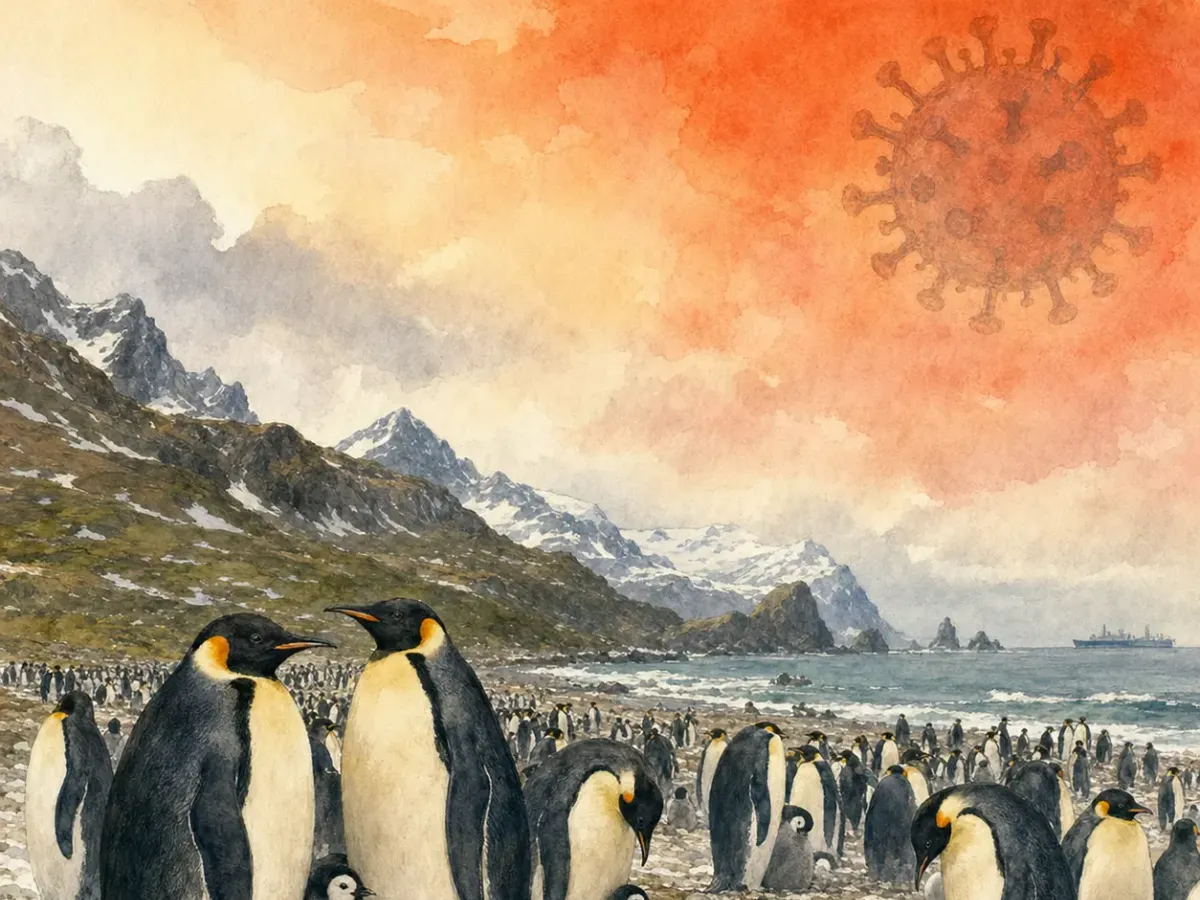
In October 2023, skuas on Bird Island began dying one after another.
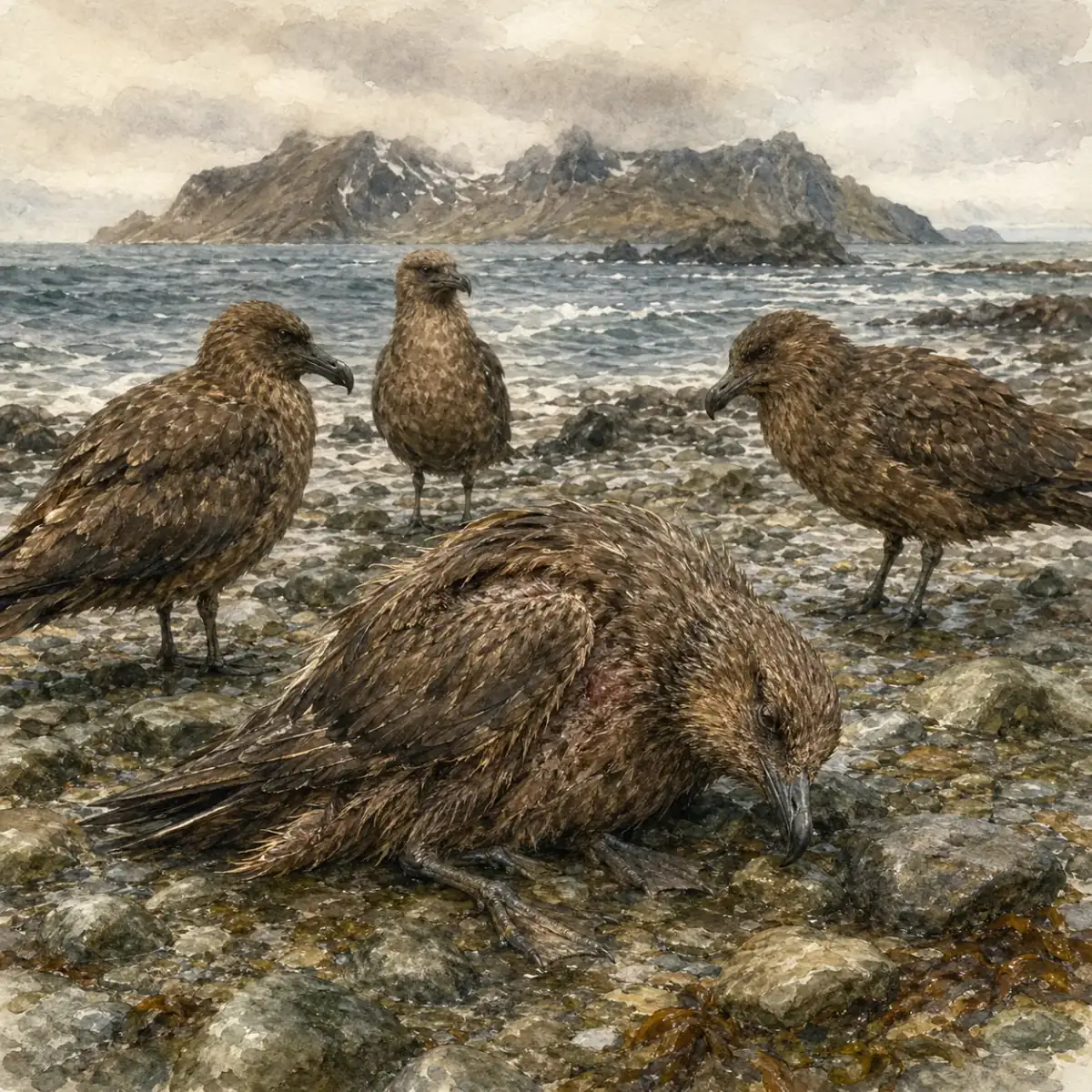
The Bird Island research station recorded the first dead skuas, Stercorarius spp. The bodies lay on gravel at the edge of the breeding area, bills down, wings spread. Researchers took nasal swabs with cotton swabs, sealed the samples in cold boxes, and sent them back to the lab.
South Georgia is a subantarctic island about 1,300 kilometers from the tip of the Antarctic Peninsula. It has one of the densest seabird breeding populations in the world. The test results came back: H5N1 clade 2.3.4.4b.
This clade caused unprecedented seabird mortality in Europe from 2021 onward, then spread through South America in 2022 and 2023. Along the coasts of Argentina, Chile, and Peru, sea lions, seals, albatrosses, and other animals were affected; estimates put deaths or impacts above 600,000 animals.
The skuas on South Georgia were its next stop in the South Atlantic.
How H5N1 reached Antarctica
H5N1 clade 2.3.4.4b did not evolve locally in Antarctica. It traveled with migratory seabirds.
Albatrosses, skuas, and giant petrels are long-distance migrants, foraging across the South Atlantic and South Pacific. Mortality events in South America recorded these species carrying the virus, and their southward routes pass right through breeding sites on islands around Antarctica.
Skuas were among the first exposed species. They roam the edges of penguin colonies, attack chicks, and feed on diseased bird carcasses. That makes them more likely than other seabirds to encounter dead individuals early, and more likely to bring the virus into penguin colonies.
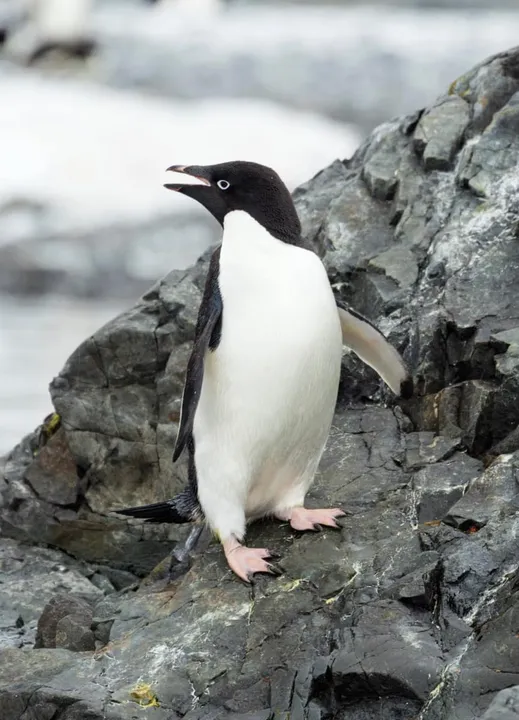
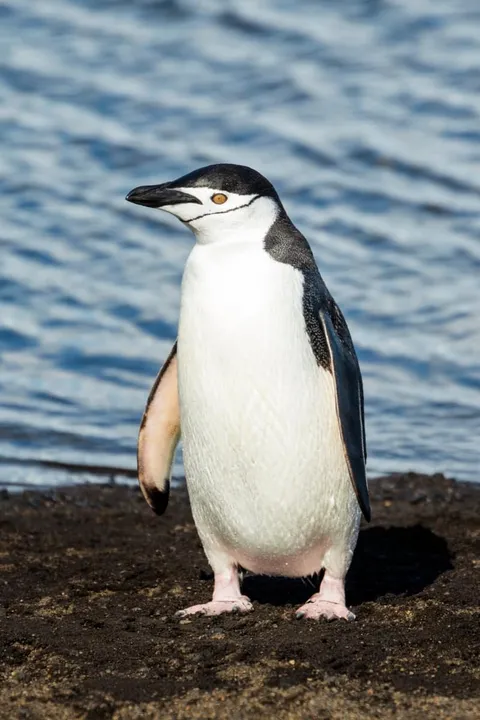
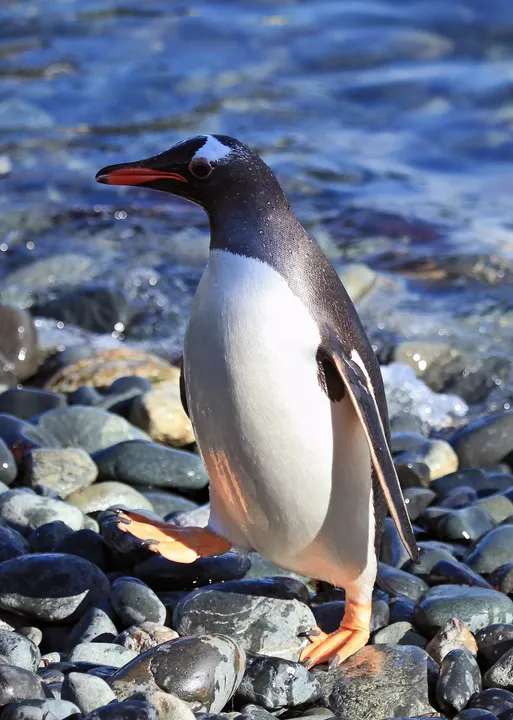
During the 2023-24 Southern Hemisphere summer, South Georgia and the Falkland Islands confirmed H5N1 infections in birds. From 2024 onward, monitoring around the Antarctic Peninsula and nearby islands also recorded penguin-related suspected cases, PCR signals, or confirmed detections. Gentoo penguins, Pygoscelis papua, chinstrap penguins, Pygoscelis antarcticus, and Adelie penguins, Pygoscelis adeliae, need to be read by site and year, not merged into one confirmed mortality event.
Why penguins are especially vulnerable
Penguin ecology leaves almost no buffer when a highly transmissible pathogen appears.
During the breeding season, gentoo, chinstrap, and Adelie penguins gather at fixed land breeding sites, from thousands to hundreds of thousands of pairs. Parents and chicks stand shoulder to shoulder; incubating birds are almost touching. Once a virus enters a colony, transmission could move quickly in theory; the real impact still depends on site, season, and sample evidence.
Antarctic penguins have almost no immune history with H5N1. The last similar event was H5N8 in 2014, but that virus had much lower pathogenicity and cross-species transmission than clade 2.3.4.4b.
Colonial life, high density, and an immune blank: when all three conditions exist at once, the consequences of H5N1 entering Antarctic penguin populations are hard to predict.
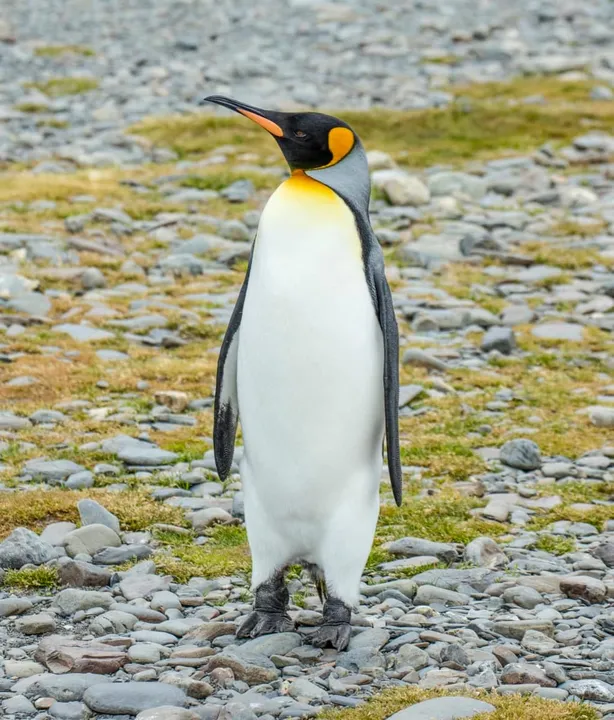
King penguins, Aptenodytes patagonicus, whose main breeding sites are on South Georgia, are listed among high-risk species. Their chick-rearing period lasts 14 to 16 months, meaning chicks remain in dense colonies for a long time.
The practical limits of monitoring
Disease monitoring in Antarctica is much harder than it sounds.
During the Antarctic winter, from April to September, most research stations reduce staff or evacuate entirely. Sea ice blocks ships from landing, and long darkness grounds helicopters. That period may be exactly when the virus continues low-level transmission, but sampling capacity drops almost to zero.
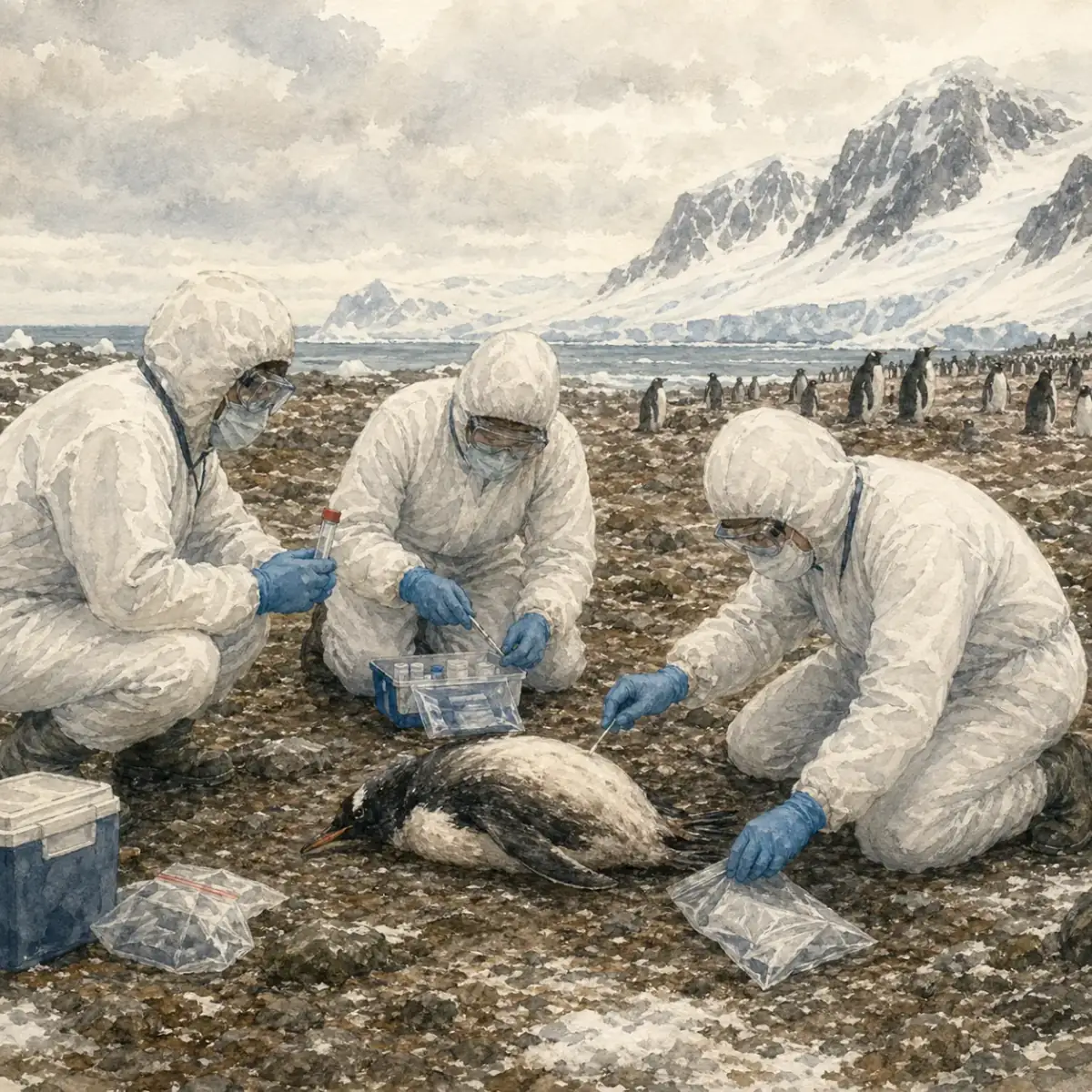
When summer researchers return to remote camps, they crouch at the edge of penguin breeding sites in full protective gear, swab the oropharynx and cloaca of carcasses, then seal samples into -80°C cold boxes to wait for ship or fixed-wing transport back to a lab. Each batch of samples has to travel thousands of kilometers before reaching a PCR machine.
Summer sampling data are always incomplete snapshots. The full-year disease dynamics are still inside a black box.
SCAR created the Antarctic Wildlife Health Network to integrate wildlife health data from national Antarctic programs. Coordinating reporting standards across countries and sharing samples in real time is itself a long administrative process.
Carcass recovery is another problem. Birds that die at sea leave almost no bodies, and birds that die on land may be cleared by skuas before anyone finds them. A single chinstrap colony can have 100,000 breeding pairs; distinguishing seasonal mortality from disease abnormality requires long-term baseline data. At most sites, historical records are only enough to piece together a few scattered summers.
How this differs from past disease events
Antarctica has faced disease threats before.
Over past decades there have been scattered records of avian malaria and chlamydial infections, but on limited scales, without triggering population-level collapse.
H5N1 is different because of the size of the starting wave. Clade 2.3.4.4b has already caused record wild-bird mortality worldwide, with large breeding colonies failing in Europe and North America. Multiple PLOS Pathogens studies show this evolutionary branch has far stronger cross-species transmission than the H5 subtypes previously seen around Antarctica.
After H5N8 reached South America in 2014, damage in local wild-bird populations was relatively localized, and it did not spread onward into the Antarctic region. The dynamics this time are different.
IUCN and conservation agencies are on alert
Since 2024, IUCN and BirdLife International have continued tracking H5N1 as an emerging threat to Antarctic penguins.
FAO/WOAH OFFLU, with WOAH formerly known as OIE, has listed the Southern Ocean as a priority monitoring region and asked national Antarctic programs to report suspected cases first.
The chinstrap penguin is still listed as Least Concern in the current IUCN/BirdLife global assessment, but its population trend is decreasing and parts of the Antarctic Peninsula have seen strong regional declines. H5N1 stacks on top of pressures that were already unresolved.
A population that is already shrinking over the long term has far less resilience to sudden mass mortality than a stable or growing population.
Some Adelie and gentoo penguin populations are still growing, but their geography is uneven. Adelie populations on the Antarctic Peninsula have declined for years as sea ice has decreased. These sites are also among the places where later H5N1 monitoring signals need careful, site-specific interpretation.
2026 monitoring update: the virus is still appearing around Antarctica
In May 2026, FAO, WHO, and WOAH published an updated H5 assessment based on data available through March 1, 2026.
The assessment keeps the Antarctic Peninsula and subantarctic islands in view. A(H5N1) clade 2.3.4.4b has been detected repeatedly in skuas, penguins, and marine mammals, with wild-bird and mammal detections continuing into the 2025-26 season.
Heard Island is a useful case because it says two things at once: the virus has not disappeared from the region, and one site’s mortality signal should not be overstated. The assessment notes detections in Antarctic fur seals, gentoo penguins, and southern elephant seals. A second voyage in January 2026 found no further evidence of sustained large-scale mortality.
That makes the current picture more like an unfinished map. H5N1 has entered the wildlife network around Antarctica and continues to leave signals across islands and species. At the same time, each site needs separate interpretation; “detected” should not be turned automatically into “collapsing.”
Data are accumulating, but waiting has a cost
Survey reports from the 2024-25 Southern Hemisphere summer are still being organized.
Several questions still have no answer. Does the virus continue low-level circulation through the Antarctic winter, or does it temporarily fade as migratory birds leave? Will penguins develop partial immunity after repeated exposure? In the next breeding season, where will the virus reappear?
A Nature Communications research group called last year for stronger genomic surveillance in Antarctica and a denser sampling network. The geography of Antarctica makes that call slow to implement.
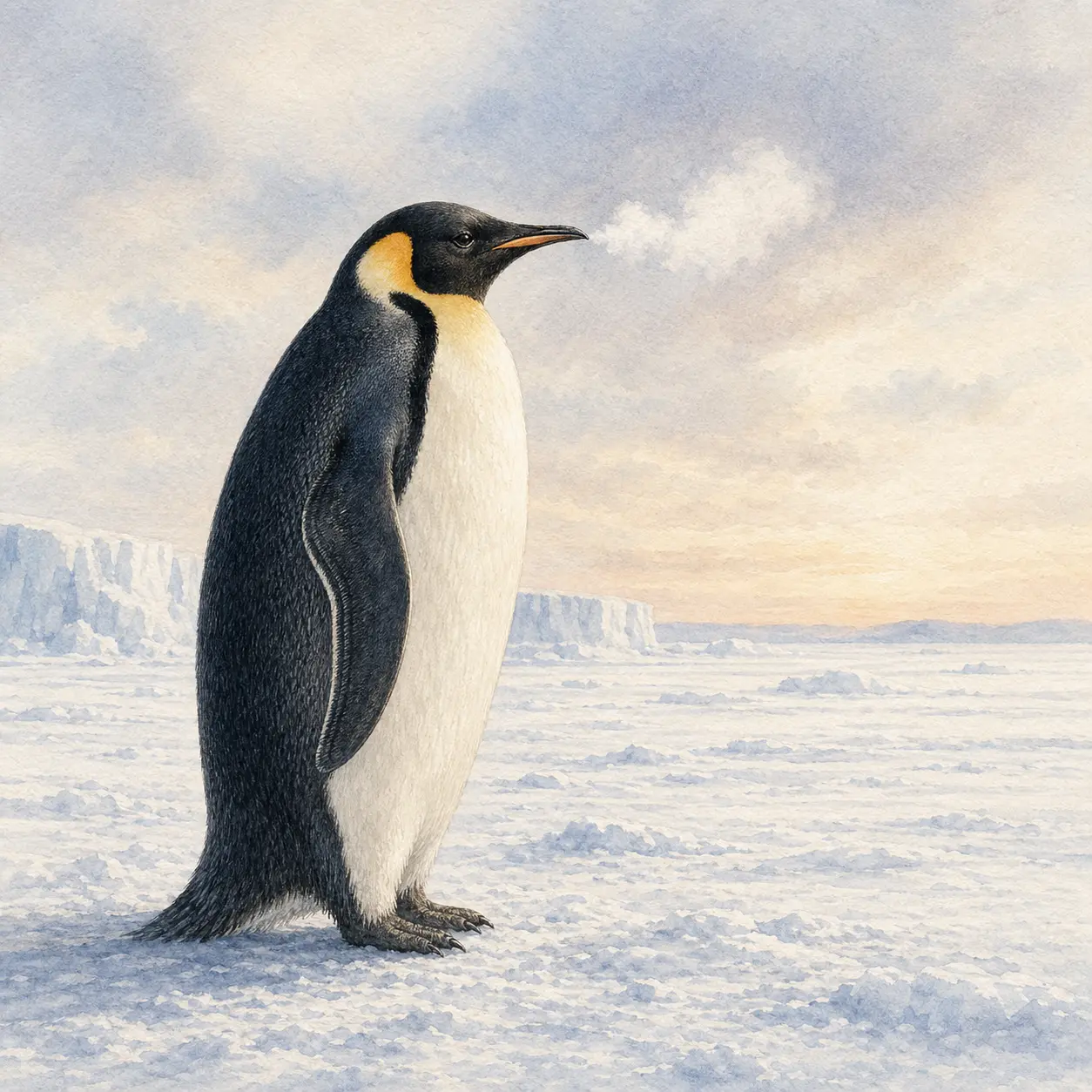
What is certain now is this: H5N1 has arrived. The scale of damage it caused in South America was unprecedented, and it reached Antarctica earlier than many researchers expected.
Monitoring data from the next few breeding seasons will sketch the true shape of this threat. Right now, that outline only has its edges.
Where the virus goes during those winter months is something I am still reading about.
This article is a summary of ecological and research information, not public-health or biosecurity guidance; for personal precautions, follow the announcements of your public-health authorities.
References
H5N1 entering Antarctica and the Southern Ocean
- Dewar et al., 2022, The risk of avian influenza in the Southern Ocean: A practical guide
- Banyard et al., 2024, Nature Communications
- Bennett-Laso et al., 2024, Frontiers in Veterinary Science
2024-25 follow-up surveillance
- Ogrzewalska et al., 2026, Nature Communications
- Iervolino et al., 2026, Scientific Reports
- FAO/WHO/WOAH, 2026, updated public health assessment of recent A(H5) events
FAQ
When did H5N1 reach the Antarctic region?
Confirmed infection appeared in skuas on South Georgia in October 2023. From 2024 onward, penguin records around the Antarctic Peninsula and nearby islands include suspected cases, PCR signals, and site-specific confirmed detections, so species, sites, and years need to be read separately.
Why are penguins vulnerable to H5N1?
Breeding colonies are dense, parents and chicks stand close together, and Antarctic penguins have almost no immune history with H5N1.
Which penguins are most at risk?
Gentoo, chinstrap, and Adelie penguins have had suspected or confirmed cases, and king penguins on South Georgia are treated as high risk because chicks stay in dense colonies for months.