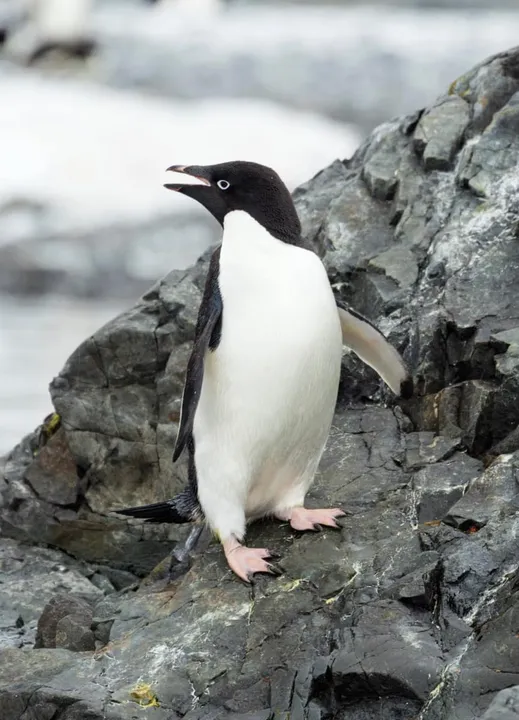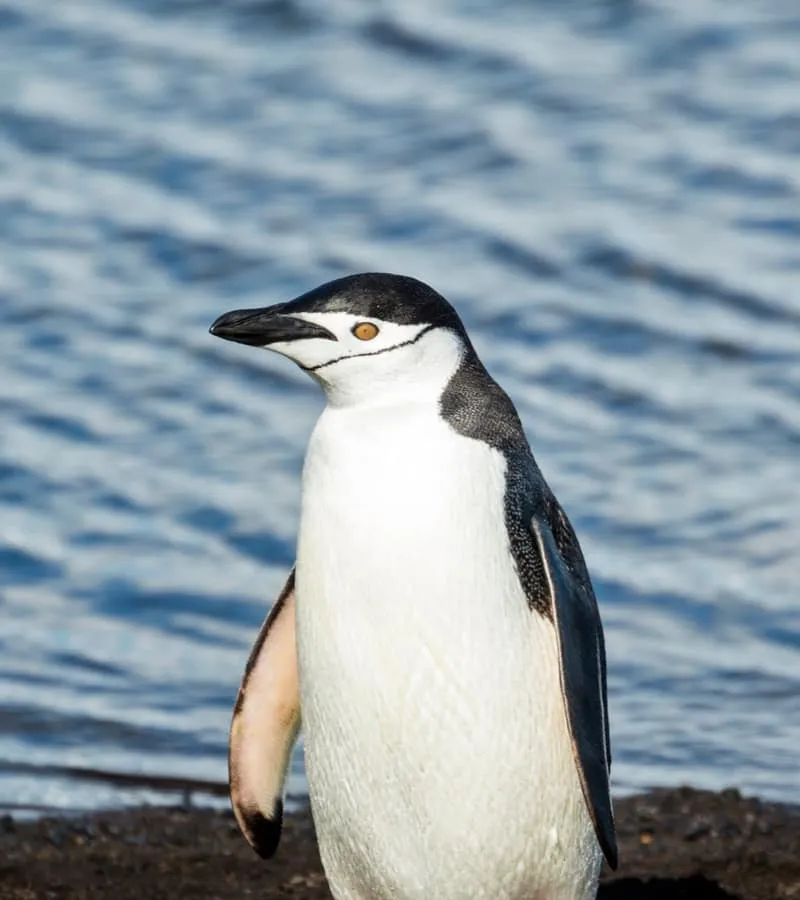
The black line on a chinstrap penguin’s face looks crisp, almost like part of a uniform. Walk into a colony, though, and the impression changes fast. Stones knock together, birds call, neighbors argue over space, and wind keeps pushing through the whole slope.
Chinstrap penguins breed around the Antarctic Peninsula and Southern Ocean islands. Adults are about 68 to 76 cm tall and 3.2 to 5.3 kg in weight. They often nest on rocky slopes where the ground is steep and the wind is direct.
They usually lay two eggs. Both parents incubate, and chicks hatch after about 37 days. After a few weeks, chicks gather into creches while adults return to sea for food. In many places that food is krill, which makes chinstrap penguins especially sensitive to changes in Antarctic marine systems.
Noise is part of survival
In a dense colony, quiet is not useful. A bird has to locate its partner, defend its nest, answer its chick, and push back against neighbors. The species looks tidy from the front, but the body language is direct: head forward, bill open, weight pushed outward.
The global estimate is still about 8 million mature individuals, and the species remains Least Concern. That status can hide the sharper story. Some Antarctic Peninsula colonies have fallen noticeably as sea ice, climate, and krill distribution change.
Chinstrap penguins are not rare yet. The point is that big numbers can still carry local warnings. Their clean black line is easy to recognize; the harder thing is hearing what the noisy colony is saying about the sea.