A brown king penguin chick standing in subantarctic wind can look like a ball of old wool. It is not waiting only for today’s meal. Often it is waiting through a whole winter.
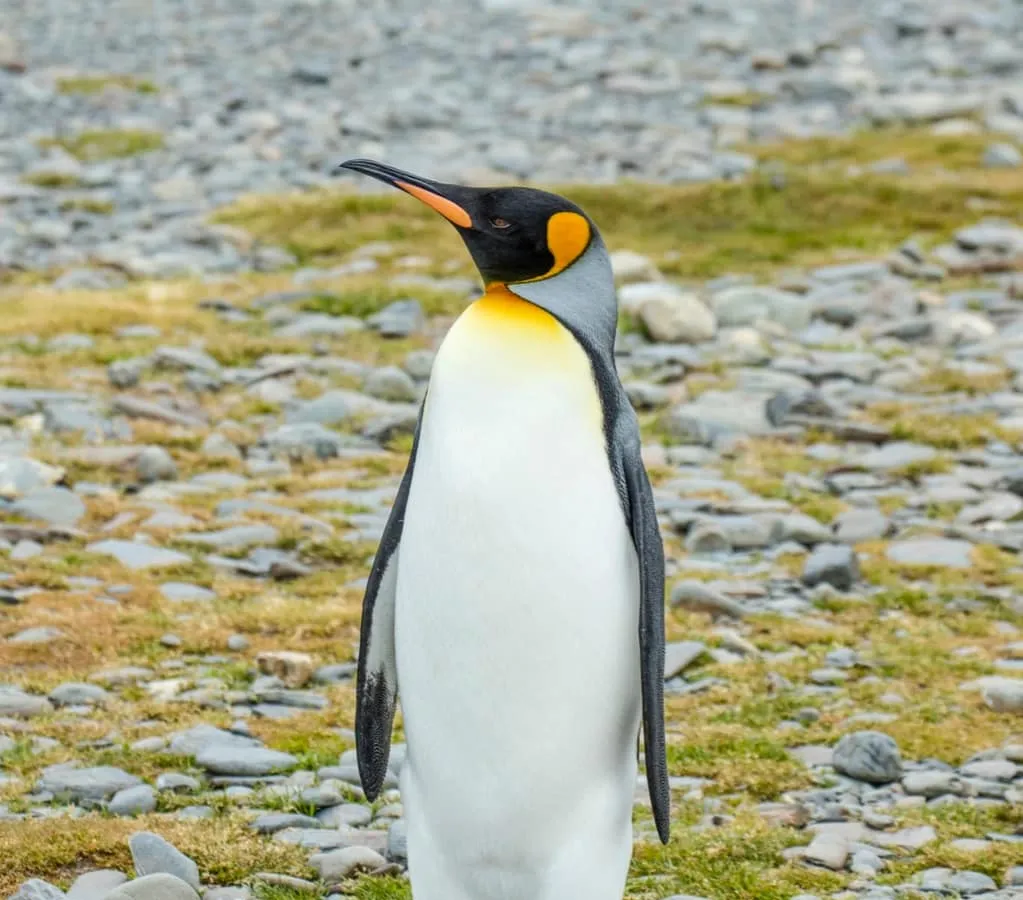
King penguins are the second-largest living penguins, about 85 to 95 cm tall and often 9 to 18 kg in weight. They live on subantarctic islands such as South Georgia, Crozet, Kerguelen, and the Prince Edward Islands, and they feed mainly on lanternfish, squid, and krill.
Their warm orange chest makes them look formal and almost royal. But the heart of their story is not decoration. It is duration.
King penguins usually raise one chick. The egg rests on the feet and under a fold of belly skin, with parents taking turns. The chick-rearing cycle is long and often crosses a winter, so chicks remain on land in thick brown down while parents make repeated trips to sea.
A child that grows slowly
This strategy does not depend on speed. It depends on returning again and again. Adults dive, often beyond 100 meters, to find fish. If fish move farther away, the interval between meals stretches, and the chick feels that as hunger and cold.
The global population is still large, about 2.23 million breeding pairs, and broadly increasing. But even large numbers are built from small units: one trip out, one trip back, one chick recognized in a noisy colony.
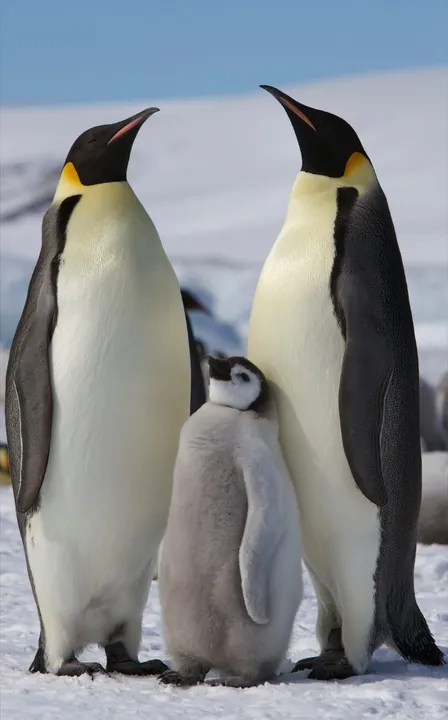
King penguins and emperor penguins both belong to Aptenodytes, but their stories differ. Emperor penguins are shaped by extreme ice. King penguins are shaped by time.
They are not the most dramatic penguins. They simply keep raising one chick slowly. Sometimes that is the harder achievement.