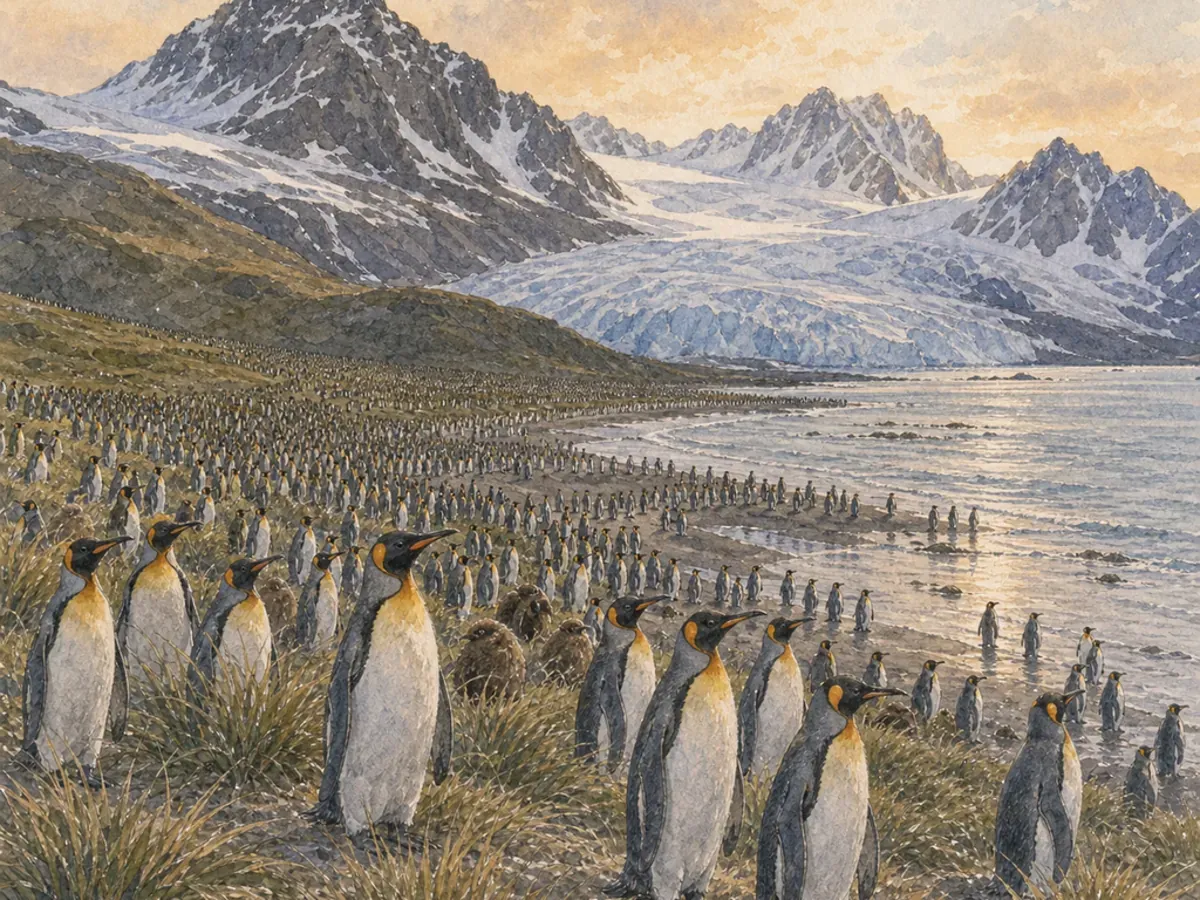
South Georgia’s king penguins do not fit inside the word “many.”
At St Andrews Bay or Salisbury Plain, black sand beaches, glacial outwash plains, and mountain feet fill with penguins. Sound, smell, and movement all stack on top of each other. That is also why the Government of South Georgia writes popular landing sites into Site Visitor Management Plans, not just guide reminders.
How to get there
There is no airport and no pier-style independent travel. Regular visitors can only arrive by expedition ship, often on routes linking the Falklands, South Georgia, and the Antarctic Peninsula.
Government visitor documents clearly require vessels and expedition leaders to follow permits, post-landing reporting, biosecurity, and each site’s SVMP. Individual passengers do not apply for every document themselves, but these rules still govern you.
For regional framing, place South Georgia within penguins in Antarctica. It is a sub-Antarctic island, not the same landing rhythm as the Antarctic Peninsula.
Where to look
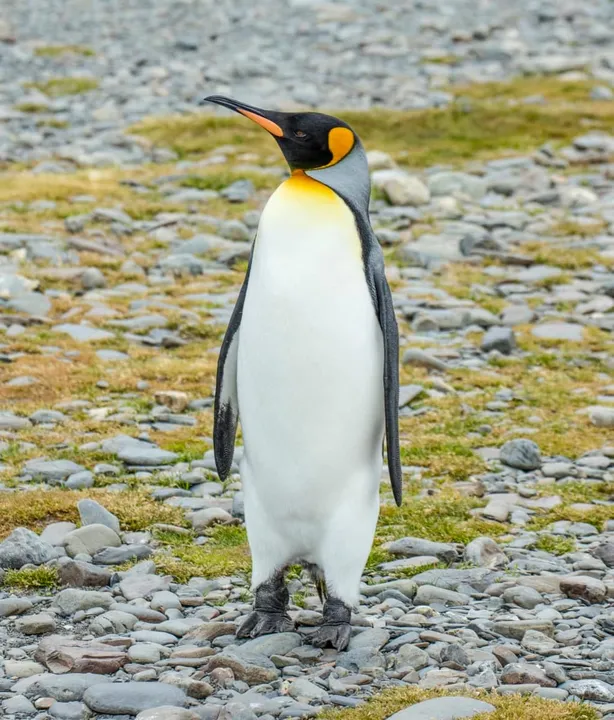
St Andrews Bay is one of the best-known large king penguin (Aptenodytes patagonicus) colonies. The government PDF states that its king penguin colony is the largest in South Georgia. Salisbury Plain is also famous for king penguins, and sources such as Wikidata often list numbers around 60,000 birds or more.
Those numbers use different counting methods. Some count breeding pairs; some count adults and chicks together. Before using a number, ask first: who is being counted?
An island’s recovery history
South Georgia was once a major center for whaling and sealing. King penguins were also heavily exploited. Today’s spectacle carries traces of human industry leaving, protection and management arriving, and species recovery unfolding together.
That makes the scene more complicated. What you see is a scarred seabird system that is still working.
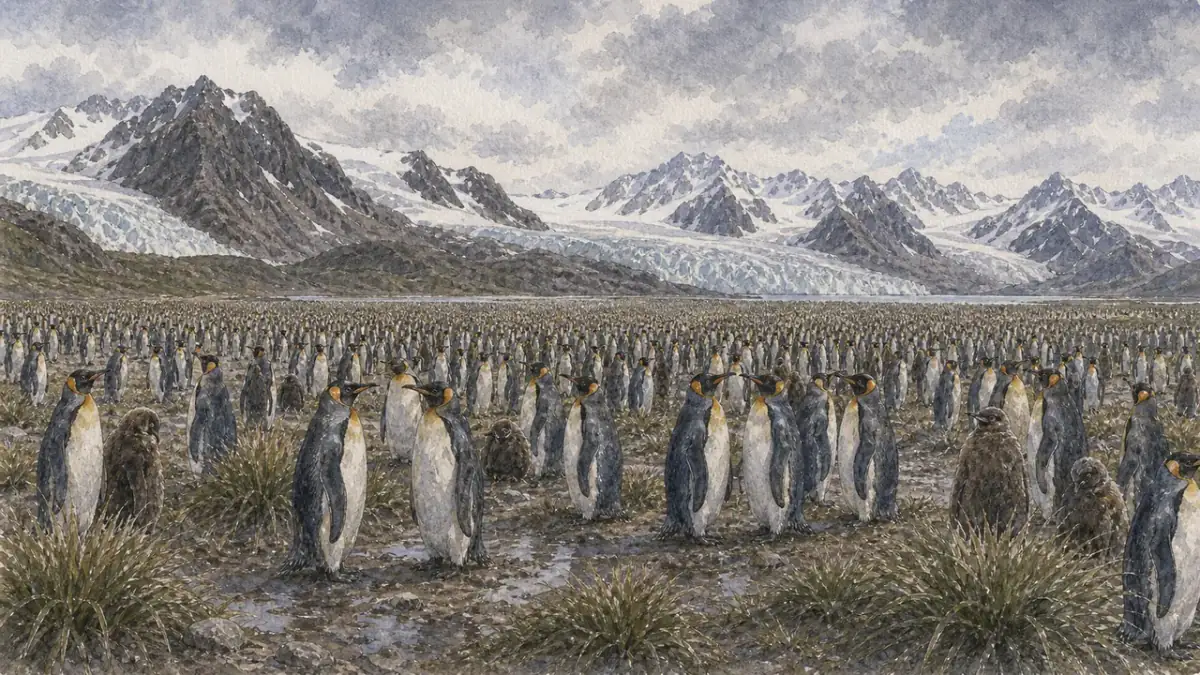
King penguins have a long breeding cycle, and brown-fluffed chicks often stand there looking almost like another animal. Adults return from the sea and find their own chicks by voice inside the dense colony. This happens countless times every day, and visitors cannot block it.
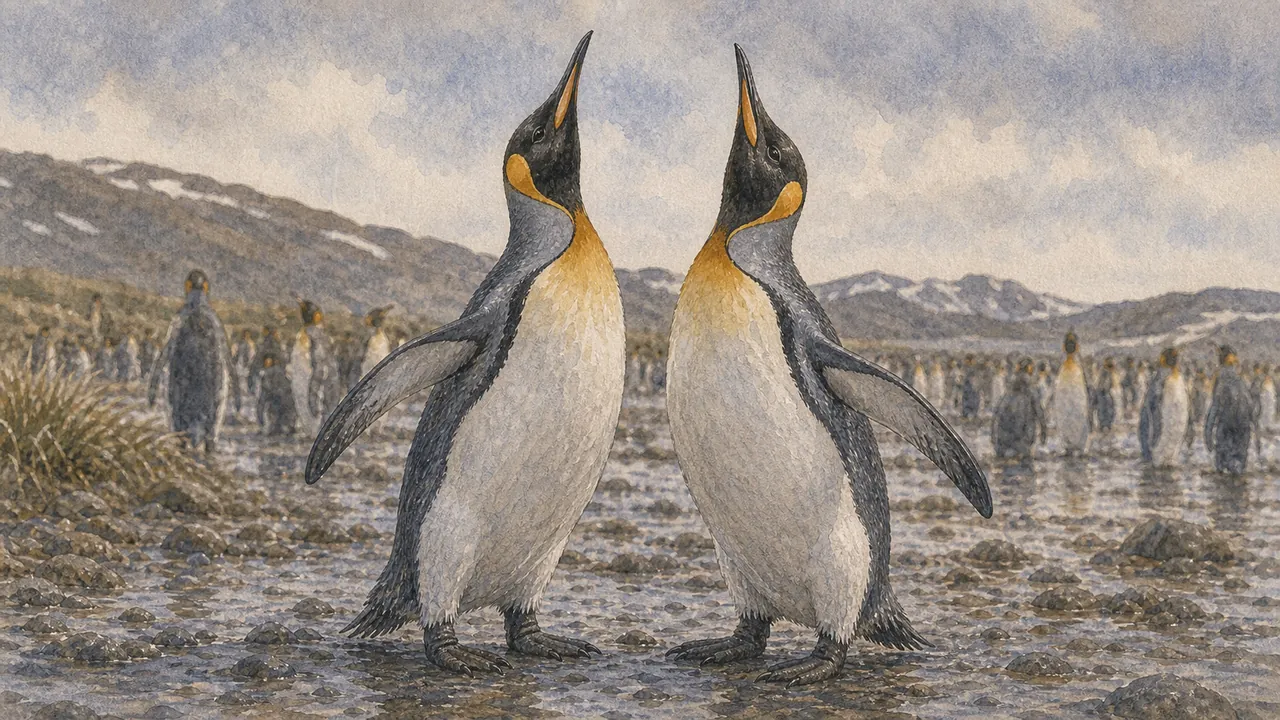
That breeding rhythm pairs with penguin courtship and breeding. Adults also eventually enter catastrophic moult, when they must stay ashore and cannot forage normally.
Distance rules
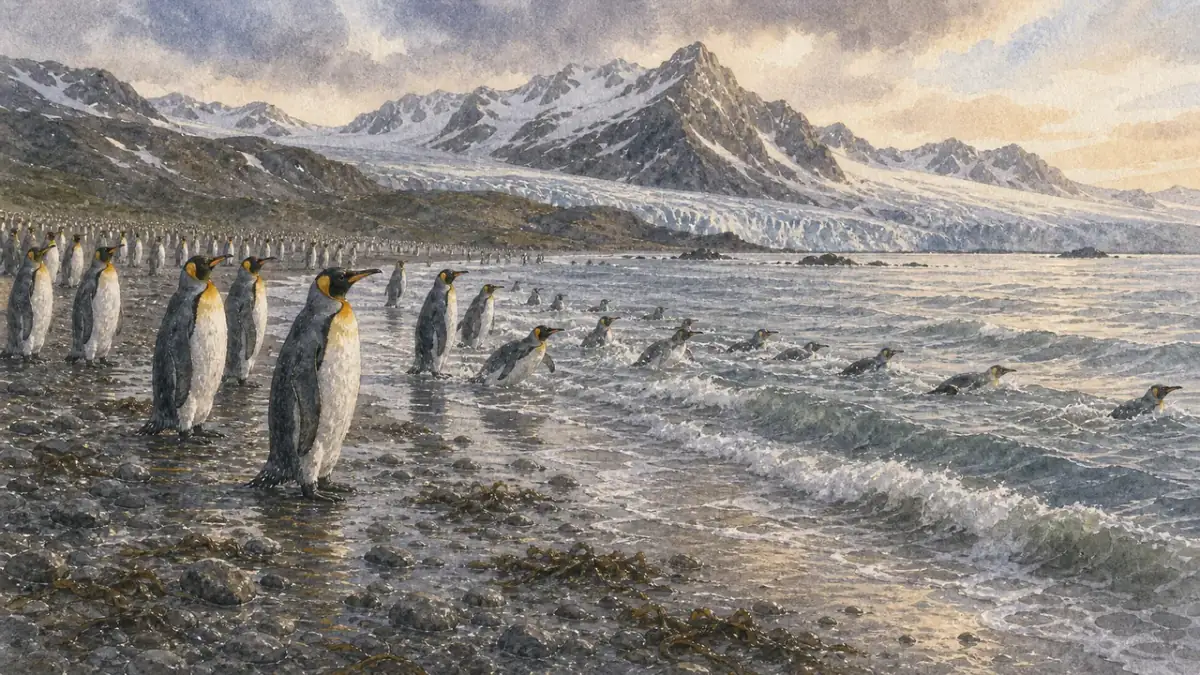
SVMPs mark landing areas, closed areas, and free-roaming areas. The St Andrews Bay document says the king penguin colony and its surrounding buffer are closed areas, and visitors may move only in designated zones.
South Georgia has another variable: seals. In spring and summer, elephant seals and Antarctic fur seals can be dense, and sometimes they directly decide whether a section of beach is walkable.
Compared with Volunteer Point, South Georgia is larger in scale and more institutional in management. The former depends on private land permission and road conditions; the latter uses government visitor documents and fleet operation to hold visitor flow down.
References
- Government of South Georgia & the South Sandwich Islands, Visitor Documents and SVMP.
- Government SVMP, St Andrews Bay and Salisbury Plain.
- Wikidata, St Andrews Bay coordinates.
FAQ
Where are South Georgia's best-known king penguin colonies?
St Andrews Bay and Salisbury Plain are the names most often raised. The government SVMP states that St Andrews Bay has the largest king penguin colony in South Georgia.
Can you visit South Georgia king penguins independently?
Regular visitors cannot treat it like an independent city attraction. South Georgia has no airport or free-travel pier access, and visits normally happen by expedition ship under government visitor documents and SVMPs.
Why are distance rules strict at South Georgia king penguin colonies?
SVMPs mark closed areas and visitor zones to avoid blocking breeding, chick-finding, and beach movement. Dense elephant and fur seals in spring and summer can also limit where people can walk.