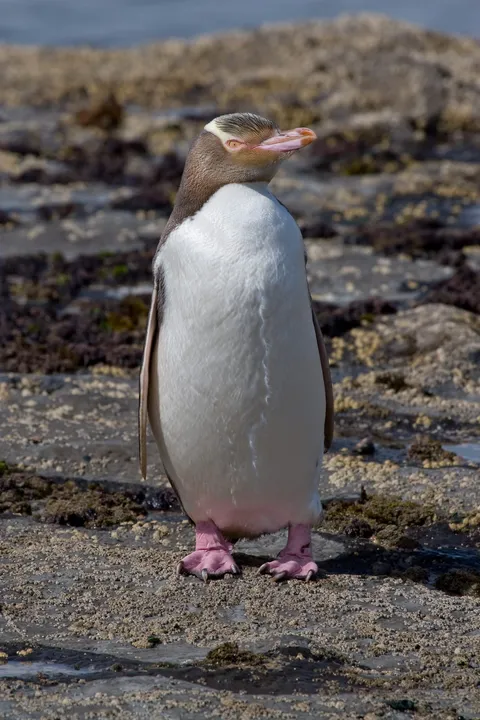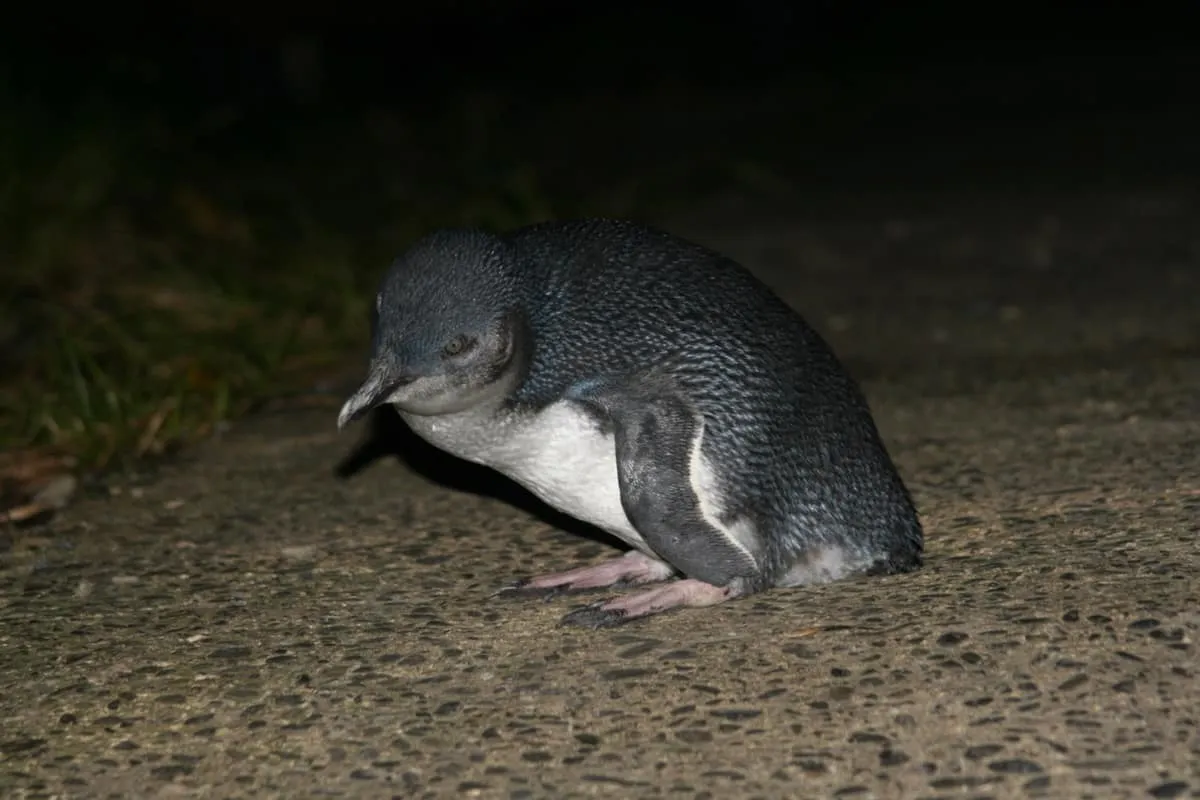
Just after dark, a little blue penguin comes out of the waves, pauses, and runs forward. Then another appears, and another. The landing path suddenly looks like a night commute.
Little blue penguins are the world’s smallest penguins, about 30 to 33 cm tall and 1 to 1.5 kg in weight. Their blue-grey backs give them a soft cool color from a distance. They live along New Zealand and Australian coasts, sometimes very close to towns.
That closeness makes them easy to love and easy to endanger. Their route home may cross a path, a driveway, a seawall, or a beach where people walk after dinner.
They usually come ashore at dusk or after dark. By day they chase small fish, squid, and crustaceans near shore; by night they return to burrows, rock crevices, or nest boxes. When food is abundant, some populations can breed more than once in a season. Incubation takes about 35 days, and chicks fledge after about two months.
Cuteness has a fragile edge
Dogs and cats can be deadly to birds this small. Roads, artificial light, coastal development, and loose pets can all turn ordinary shore life into pressure. Protecting them often means small, concrete actions: dim lights, better fences, pet control, and safe passages.
Globally, the species remains Least Concern, with more than a million mature individuals. But a large total can hide local losses. Some colonies are stable; others disappear slowly through everyday accumulation rather than one disaster.
The image that stays is not only the sea, but the road home. A small body pauses in the dark, checks the world, and hurries forward. Conservation here is sometimes as simple and difficult as making human light a little smaller.