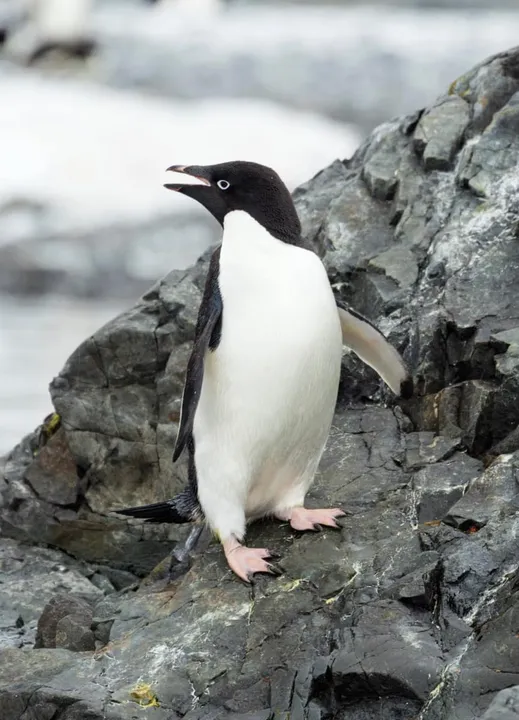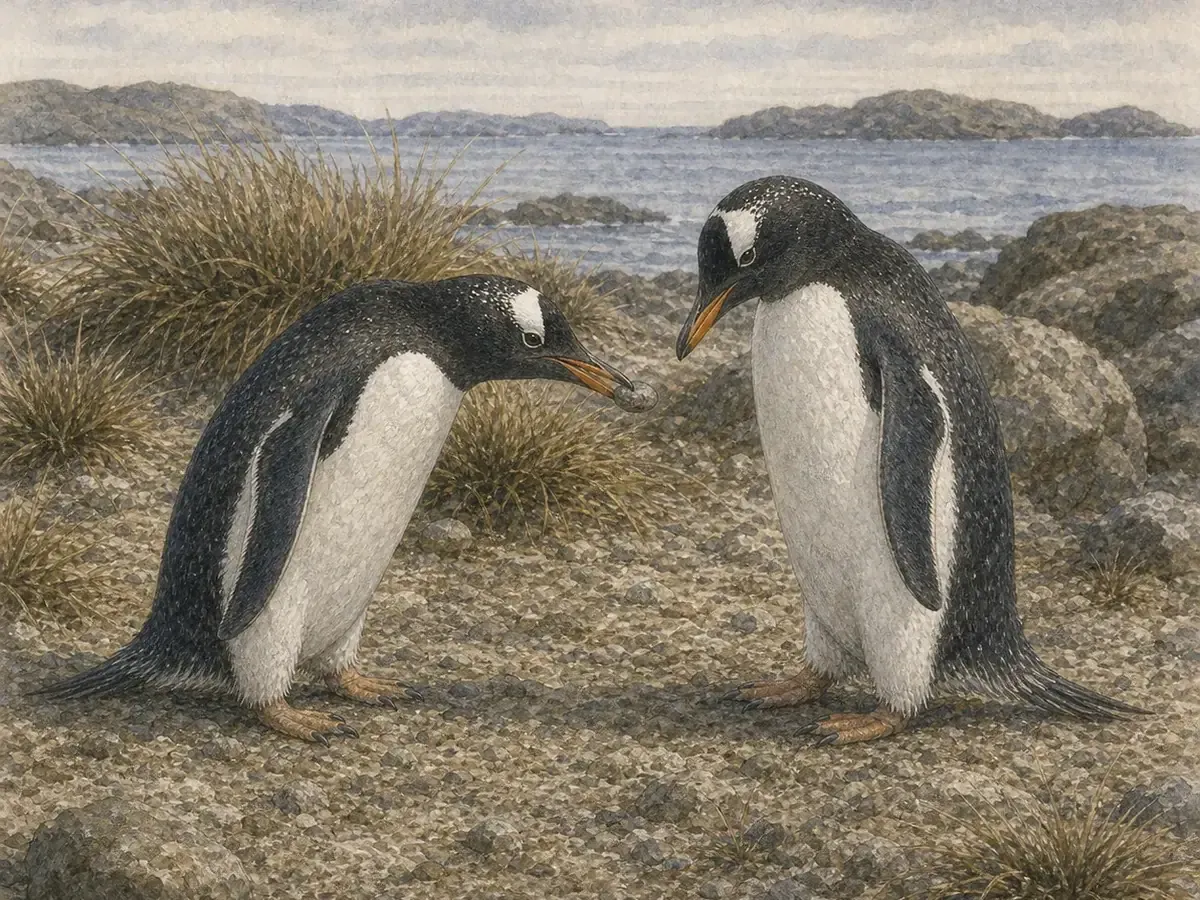
An Adélie penguin carrying a pebble back to the nest is very easy for humans to translate into a proposal; the wider pairing context sits in penguin courtship and breeding.
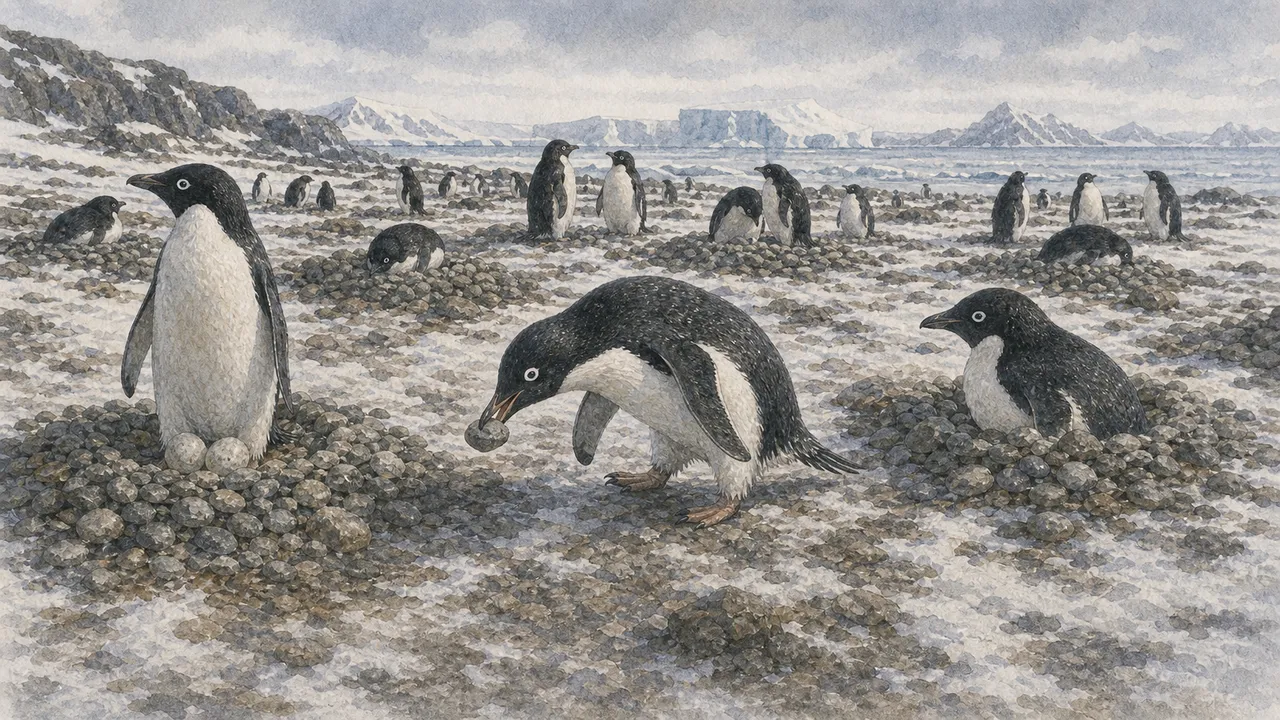
Stones solve water first
Adélie penguins breed during the Antarctic summer. Melting snow, mud, guano, and gravel mix together, and the ground quickly becomes wet and cold. If an egg lies directly on that ground, both low temperature and standing water raise the risk.
Small stones lift the egg a little. Ainley’s 2002 book The Adélie Penguin: Bellwether of Climate Change connects Adélie nests, breeding schedule, and sea-ice environment. A stone nest looks simple, but its function is clear: keep the egg off wet ground, let the parent sit more securely, and make the nest boundary visible inside a crowded colony.
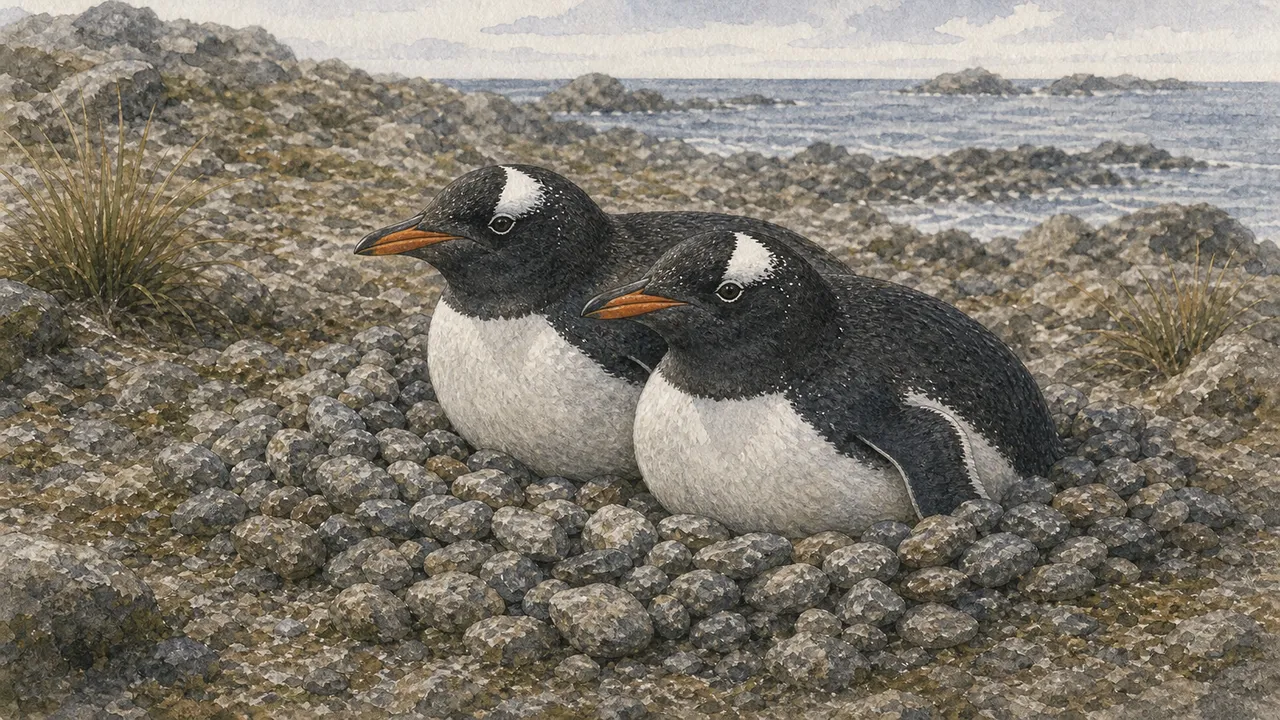
Courtship contains engineering
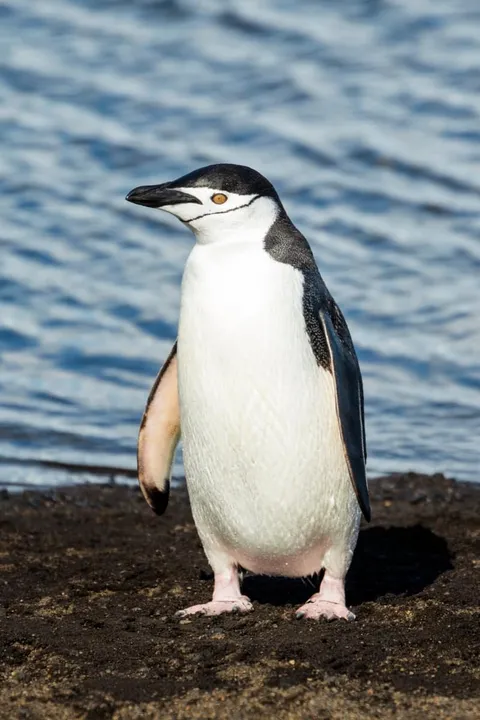
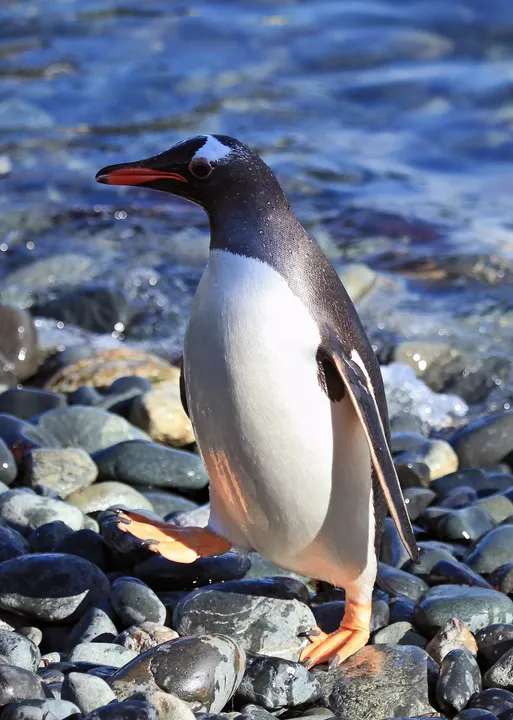
A male bringing back a stone and a female accepting it can be a pairing display. Gentoo penguins and chinstrap penguins also build nests with stones, and the same motion is easy to film as a romantic scene. The issue is that a stone’s value is not only symbolic.
One stone added to the nest ring raises the rim a little. A higher rim makes it less likely that meltwater will run directly under the egg. The breeding season is short; the faster materials arrive, the faster the egg reaches a more stable position.
So “giving a stone” is display, investment, and construction progress at the same time.
The drama of stone theft
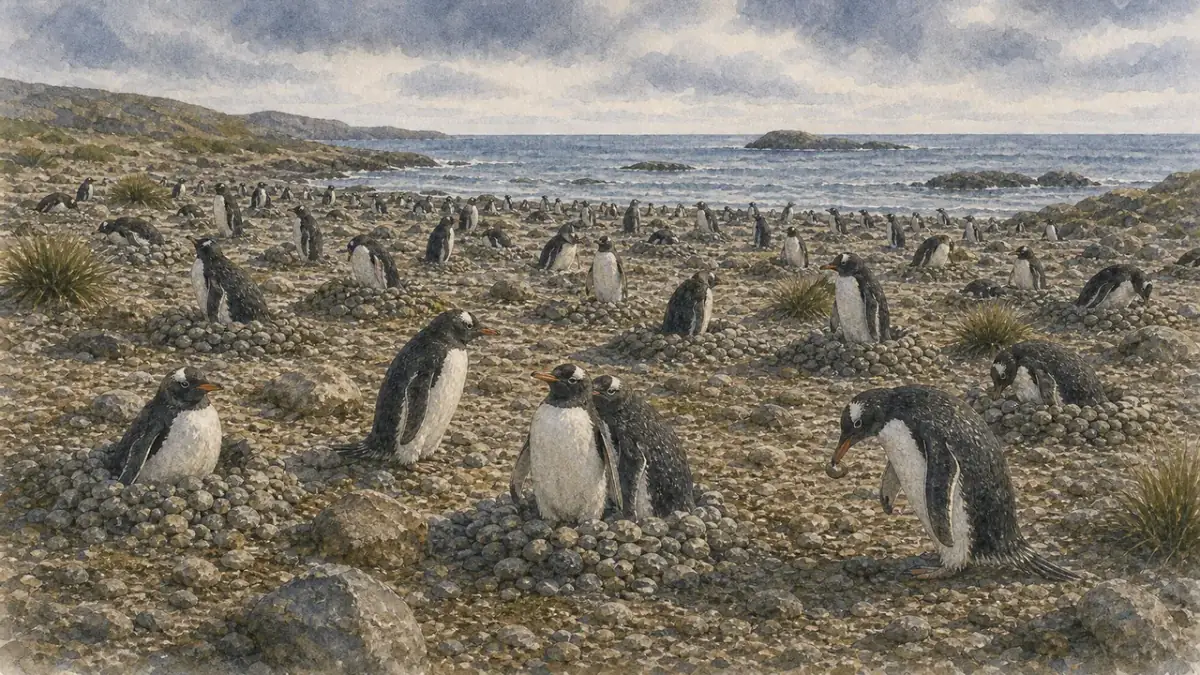
Stones are limited, so theft happens. When Spurr recorded Adélie penguin chick behavior in The Condor in 1975, nest sites and surrounding interactions were already an important part of the study. Later summaries of Adélie breeding ecology also repeatedly mention nest-material movement, edge conflicts, and the constant checking between neighboring birds as part of daily life in dense colonies.
One bird lowers its head to arrange the nest ring. The neighbor reaches over and drags away a stone from the edge. The robbed bird turns and pecks back; the thief takes half a step away. The stone drops between the two nests, and a new contest begins.
The scene is funny. The cost is not small.
“Exchanging stones” is easy to distort
In 1998, The Auk published observations of female Adélie penguins taking stones after interactions with unpaired males. The internet later flattened this into “penguins trade sex for stones.” That claim has a factual source, but it is told too smoothly.
The record describes a small number of observed events, not a standard transaction system for the whole species. The steadier reading is that stones are very valuable, the breeding season is very rushed, and some individuals may use courtship or mating contexts to approach resources. That is already complicated enough. It does not need a human gossip plot added on top.
The weight of a small stone
The Adélie penguin stone story is compelling because of more than its resemblance to a human proposal. One small pebble connects mate choice, nest drainage, neighbor conflict, and chick survival, and it belongs beside wider questions about whether penguins mate for life. What the bird picks up is a little height, a little dryness, and a small chance not to be overtaken by time in the Antarctic summer.
References
- Ainley, 2002, The Adélie Penguin: Bellwether of Climate Change, Columbia University Press.
- Spurr, 1975, The Condor, DOI: 10.2307/1366222.
- Hunter & Davis, 1998, The Auk, observations of Adélie penguin stone-related courtship.
- Kooyman, 2003, The Condor, DOI: 10.1093/condor/105.4.835.
FAQ
Are Adélie penguins giving stones as proposals?
A stone can be part of a pairing display, but it is not a ring. In this article it is also nest investment, construction progress, and drainage material.
Why do Adélie penguins build nests with pebbles?
In Antarctic summer, meltwater, mud, guano, and gravel make the ground wet and cold. Pebbles lift the egg, lower water and cold risk, and help the parent sit more securely.
Why do penguins steal stones from each other?
Stones are limited and the breeding season is short. Nest material directly affects rim height and drainage, so neighboring birds may steal and contest pebbles.
Is the claim that penguins trade sex for stones accurate?
It is too flat. The 1998 Auk observations involved a small number of female Adélie penguins taking stones after interactions with unpaired males, not a standard transaction system for the species.