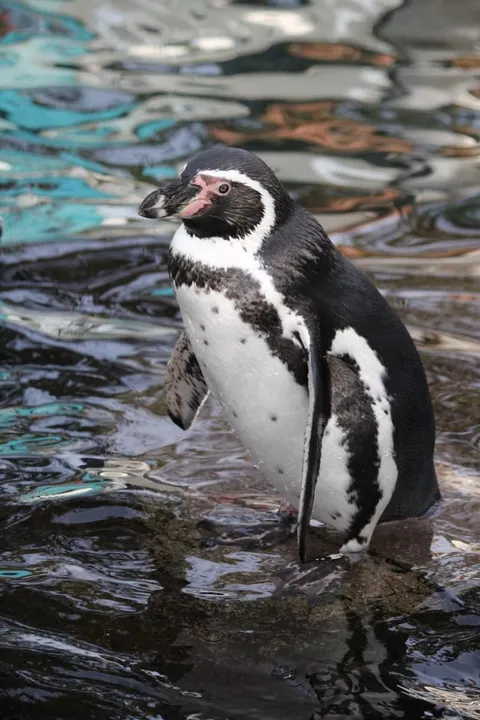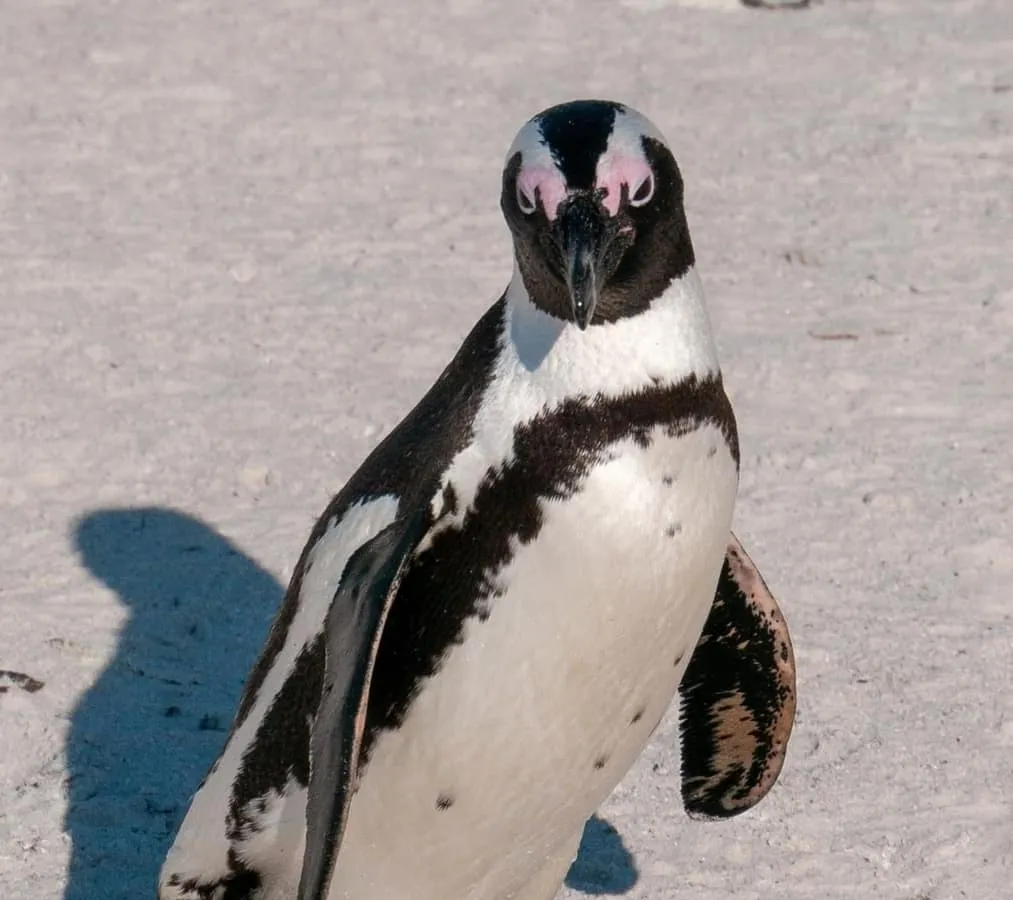
An African penguin on the South African coast, bill open and panting, can feel like a scene from the wrong map. But the bird really belongs there, along cold-current coasts where heat, fish, people, and boats all shape daily life.
African penguins are about 60 to 70 cm tall and weigh about 2.2 to 3.5 kg. They have a black breast band and spotted faces, with each pattern slightly different. They live mainly along South Africa and Namibia, the only penguin native to Africa.
They are also called donkey or jackass penguins because of their braying call. They can breed year-round, with peaks varying by colony. Incubation takes about 38 days, and chicks leave the nest at around three months.
They eat sardines, anchovies, and squid. In recent decades, bait fish distribution has shifted and fisheries competition has grown. Parents swim farther, return later, and chicks feel the shortage first.
By 2024, the global estimate was only about 19,800 mature individuals. The IUCN Red List uplisted the African penguin to Critically Endangered (CR) in 2024, making it the first penguin species ever placed in the CR category.
That assessment turned a long decline into a formal moment of record. Fisheries competition makes sardines and anchovies harder to secure near breeding colonies, while changing sea temperatures and prey distribution lengthen foraging trips. African penguins live in places people can visit, but the decisive shortage is offshore.
Heat is daily work
The pink bare skin above the eyes acts like a radiator. Hotter weather brings stronger blood flow and a redder patch. It is a visible reminder that a penguin can live in Africa only if the sea stays cold enough, fish remain abundant enough, and shore still offers safe breeding space.
African penguins live close to people, which makes them visible and easier to care about, but also exposes them to pressure. Guano mining, nest loss, oil spills, fisheries, and heat waves have all mattered.
At Taipei Zoo, the species can be seen up close. That liveliness becomes heavier once you know the wild population is below 20,000 mature birds. The pink patch above the eye is quiet, but it reads like a countdown.