Penguins beside a desert sound strange just to say out loud. Yet Humboldt penguins really live in places like that.
The coasts of Peru and Chile can look dry enough to crack. Offshore, however, the Humboldt Current brings cold, rich water; fish follow, and penguins stay.
Their world is dry on one side and cold on the other.
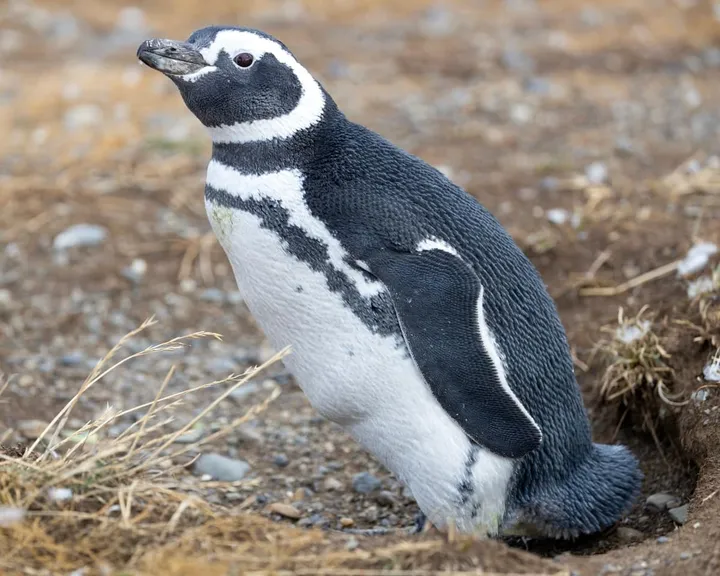
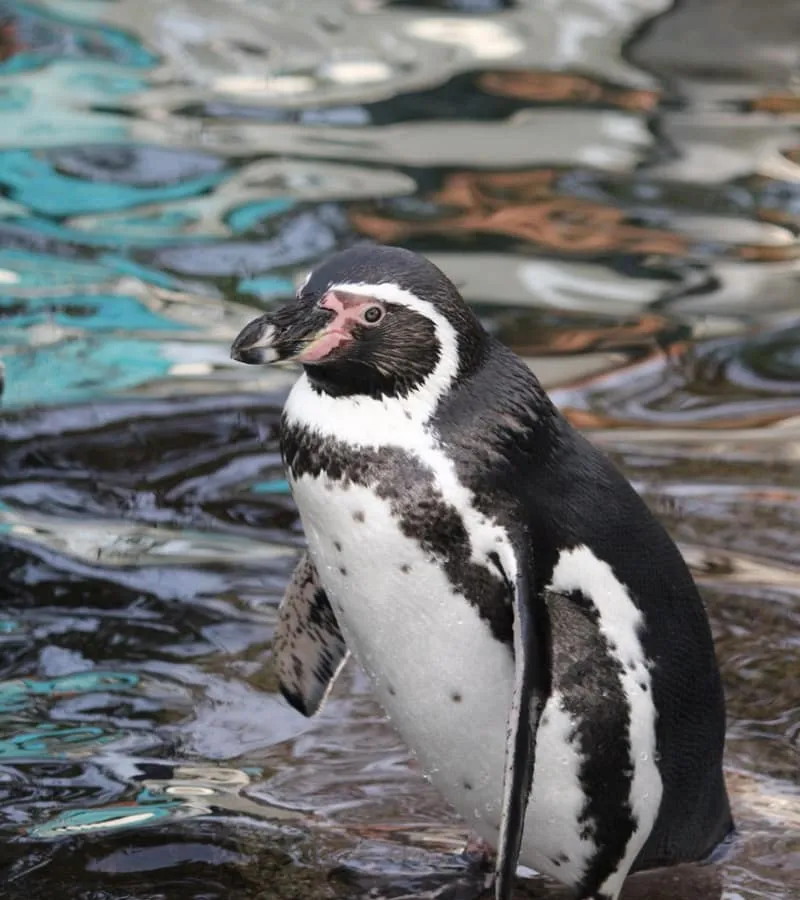
Both ends are extreme. Humboldt penguins are banded penguins, about 56 to 70 cm tall and 3.6 to 5.9 kg in weight, with a black breast band and broad white areas on the face. They often nest in holes dug into guano layers, natural rock cracks, or coastal caves.
Those nest sites are practical. They provide shade, block wind, and keep eggs and chicks away from the most direct exposure.
On the surface, the coast does not look suitable for penguins.
Humboldt penguins make it barely livable with holes. Their life depends heavily on current. When the cold current is stable and fish are plentiful, parents can bring food back often and may even breed twice in a year.
But when El Nino arrives, the sea surface warms, small fish shift in depth and distribution, and the rhythm breaks. Incubating can still be endured; feeding chicks cannot endure for long.
They have some ability to adapt. The space to retreat is simply thin.
Life inside holes
They put home in the shade. Between guano and rock, they dig out a space that can breathe. It looks a little rough, and very clever.
You know they are not trying to be pretty. They are negotiating with the sun. But holes do not last forever.
Guano layers can be used by people, coasts can be disturbed, predators can enter, and fishing nets may wait at sea.
Current broad estimates put mature Humboldt penguins at about 23,800, and the species is listed as Vulnerable. That number is not an immediate collapse, but it is not generous either.
For a penguin held up by a narrow current system, every major sea-condition swing feels like a demand for part of its future. Its existence is almost a geography question.
Why would a penguin choose here, and how long can it stay?
The current writes the answer at sea
The answer is not on land. It is in the water. When the current turns, the story turns.
The pink bare skin on the face has to release heat, while the nest has to hide as much as possible in shade. The sea must be cold, while the land is pale with dryness.
Humboldt penguins are balancing between two extremes every day.
Is the current still stable today? Is that fish school worth chasing? Can the nest entrance still be guarded? Which piece of order will the next El Nino wash away? The bird is not flashy. Its story lives on the narrow line where a burrow, hot wind, and cold current meet.