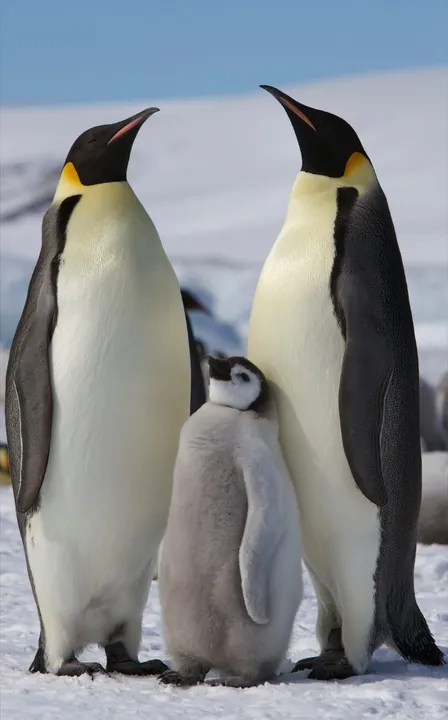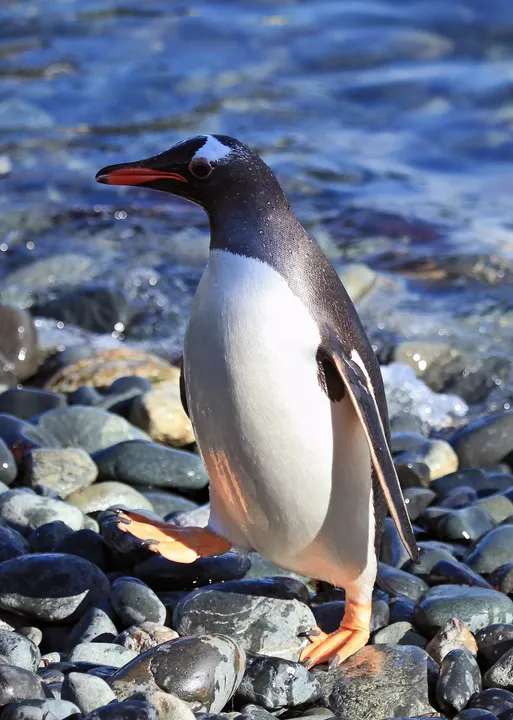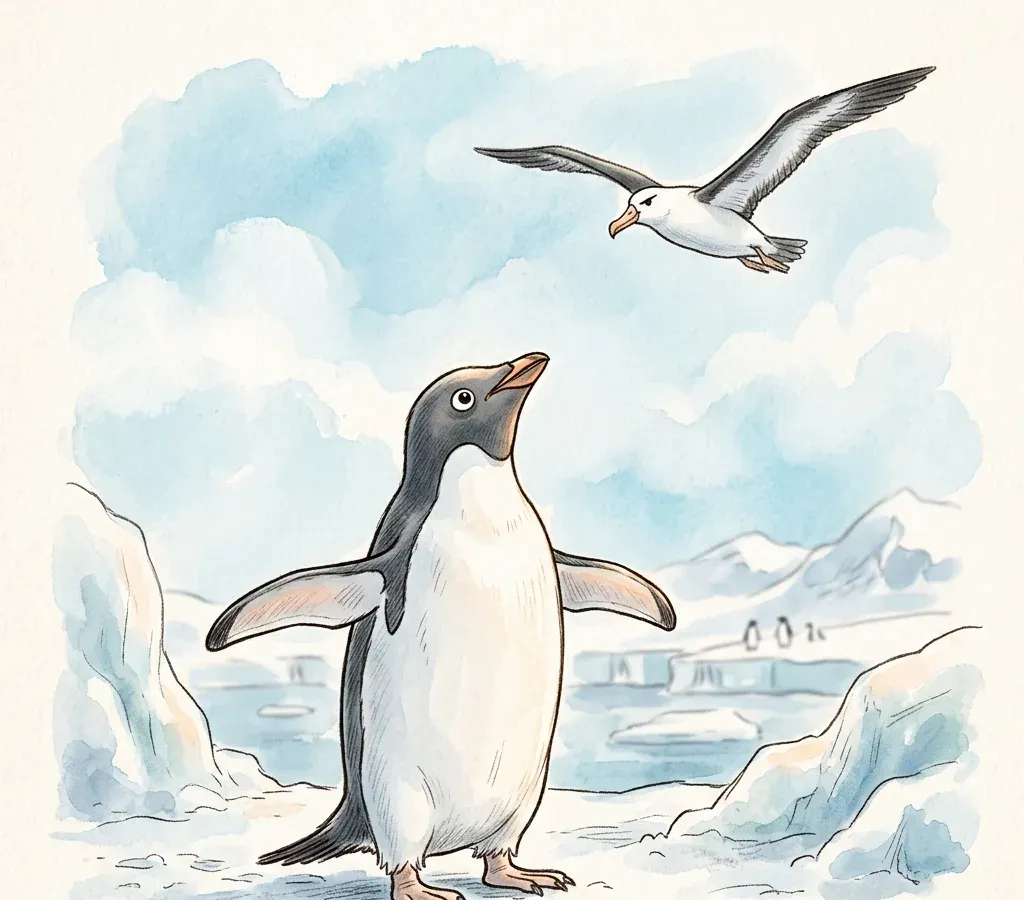
When people see a penguin waddling, they often instinctively put it in the box labeled “clumsy bird.” But once it reaches the water, the whole impression flips. Its wings are short, stiff, and flat, like two tightly packed paddles.
With rapid strokes, a penguin can turn sharply underwater, chase fish, and cut through waves. For penguins, the sky stopped being the better bargain long ago. Flight requires a lighter body, hollower bones, and longer wings. Move those traits into the sea, and they start to get in the way of diving.
So evolution put the resources on the other side.
The body became streamlined, the bones more solid, the feathers denser, and the wings turned directly into flippers. What penguins lost was the ability to lift off the ground; what they gained was the skill to drive from the surface down into the water.
You can think of penguins as seabirds that dropped flight class and switched into the swimming track.
They did not become lazy, and they did not forget how to fly. Their ancestors made a very lopsided but very successful choice over deep time. Penguins may be half a beat slow on land, but in the sea they move as if fitted with small engines.
When you see one shoot out through the waves, it can feel as if penguins are still flying. They have simply traded the sky for the sea.
FAQ
Could penguin ancestors fly?
Penguin ancestors came from a flying seabird line. Over a long stretch of evolution, they gradually reduced flight ability and gained stronger diving and swimming performance.
Why are penguin wings like flippers?
Short, stiff, flat wings work better underwater for rapid strokes, sharp turns, chasing fish, and cutting through waves than they do for flight.
Is flightlessness a disadvantage for penguins?
Not simply. Flying favors light bodies and long wings, while penguins evolved streamlined bodies, more solid bones, and dense feathers for diving.