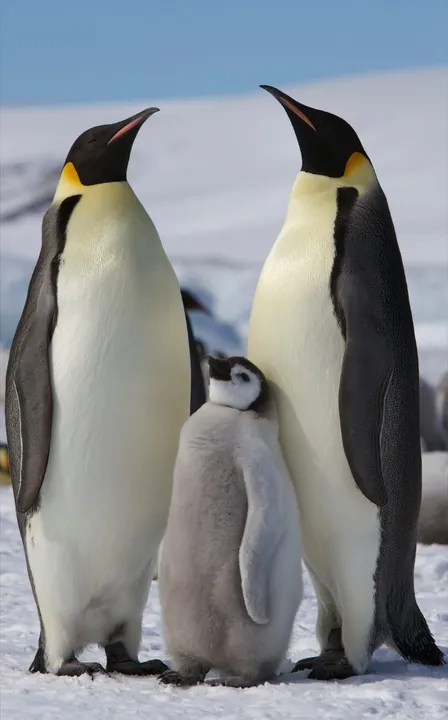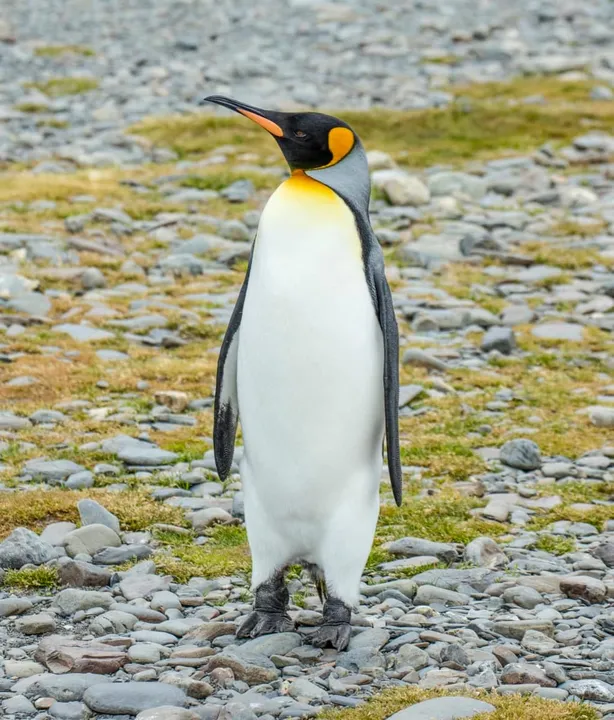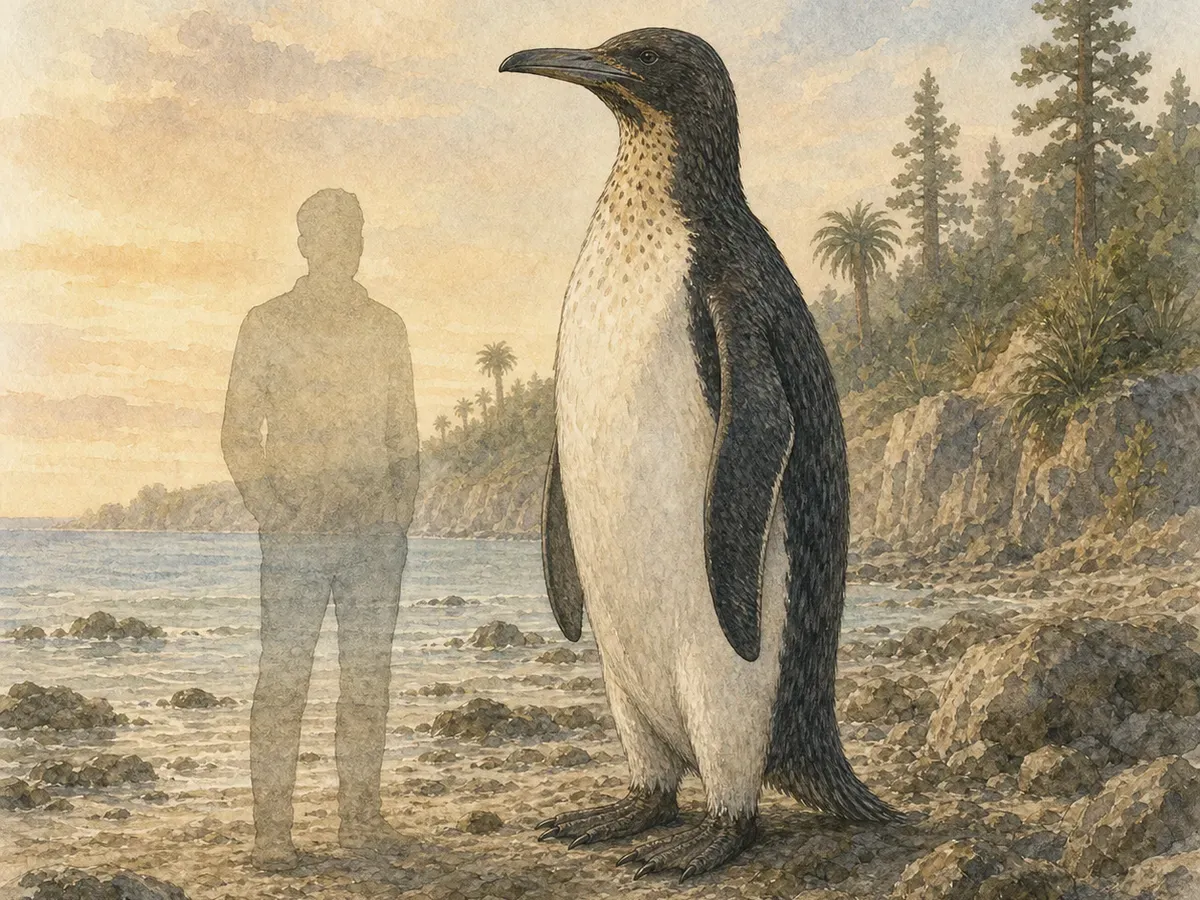
The penguins in paleontology databases are much taller than the penguins alive today.
That sentence is easy to turn into a monster story. Online, Anthropornis is sometimes described as 5 meters tall, like a walking black-and-white dinosaur. After reading the fossil papers, the numbers are calmer: roughly 1.7 to 1.8 meters. Still close to adult human height, and still astonishing enough.
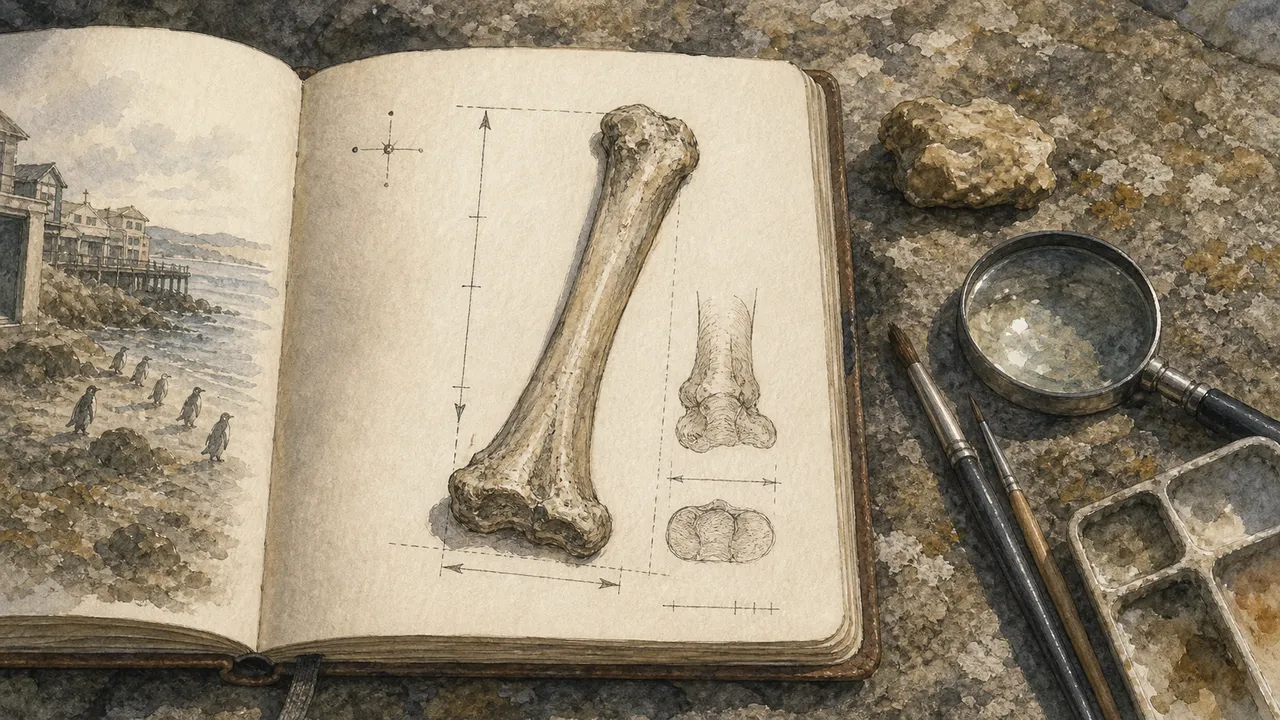
Penguins entered the water early
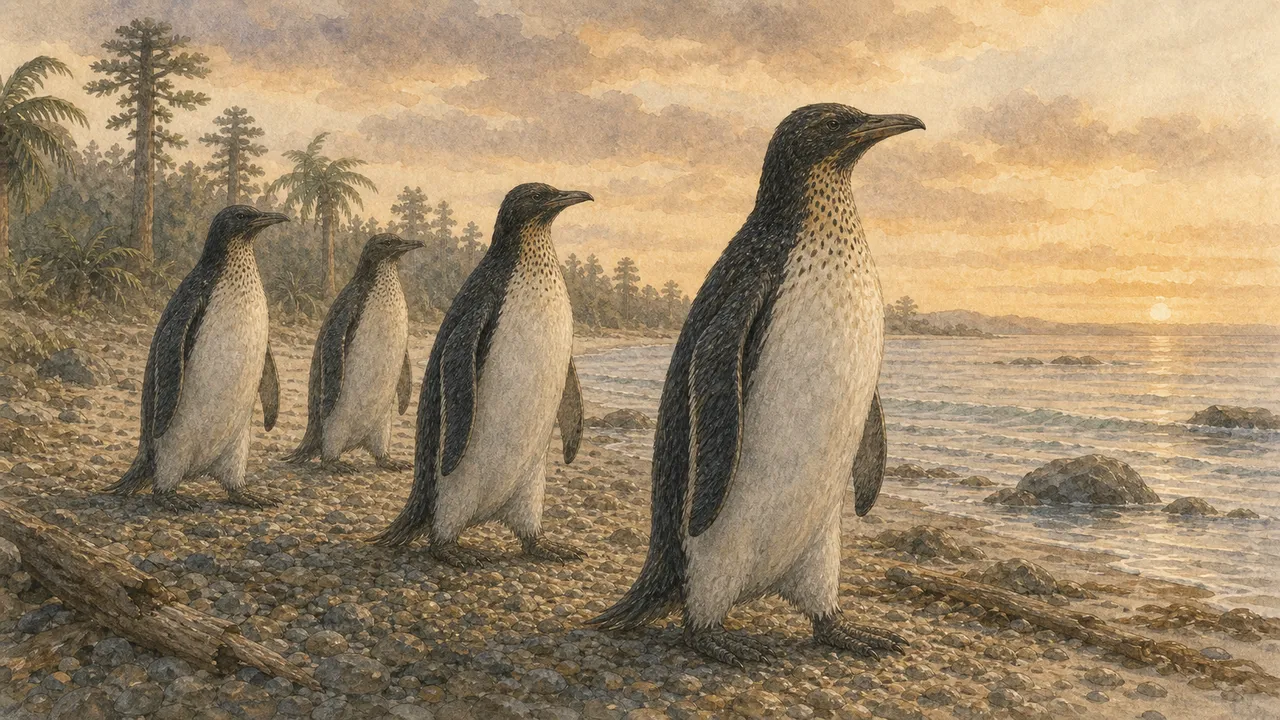
Slack and colleagues published their Waimanu study in Molecular Biology and Evolution in 2006 (DOI: 10.1093/molbev/msj124). The fossils came from the Waipara Greensand in New Zealand and date to about 61 to 62 million years ago, not long after the end-Cretaceous mass extinction.
The point is not whether it looked like a modern penguin.
The point is that its body had already been pushed toward life underwater. The wings no longer served the sky like those of a typical flying bird, and skeletal proportions were beginning to shift toward swimming; that path leads into penguin flightless evolution. As marine vacancies after the dinosaur extinction were still being rearranged, early penguins had already placed their bodies in the water.
Gigantism was not a single path
Penguins later became large again and again.
Mayr and colleagues described a Paleocene giant penguin from New Zealand in Nature Communications in 2017, arguing that gigantism may have appeared more than once among early penguins. When Ksepka and colleagues described Kairuku in 2012 (DOI: 10.1080/02724634.2012.652051), they also put Eocene-to-Oligocene body differences directly in front of readers: some penguins were long-bodied, some were heavy-boned, and their outlines did not necessarily match today’s emperor penguin.
Anthropornis nordenskjoeldi is one of the best-known branches of this large-penguin history. Its fossils come from Antarctica and nearby high-latitude deposits, and its estimated size clearly exceeded the largest living penguin.
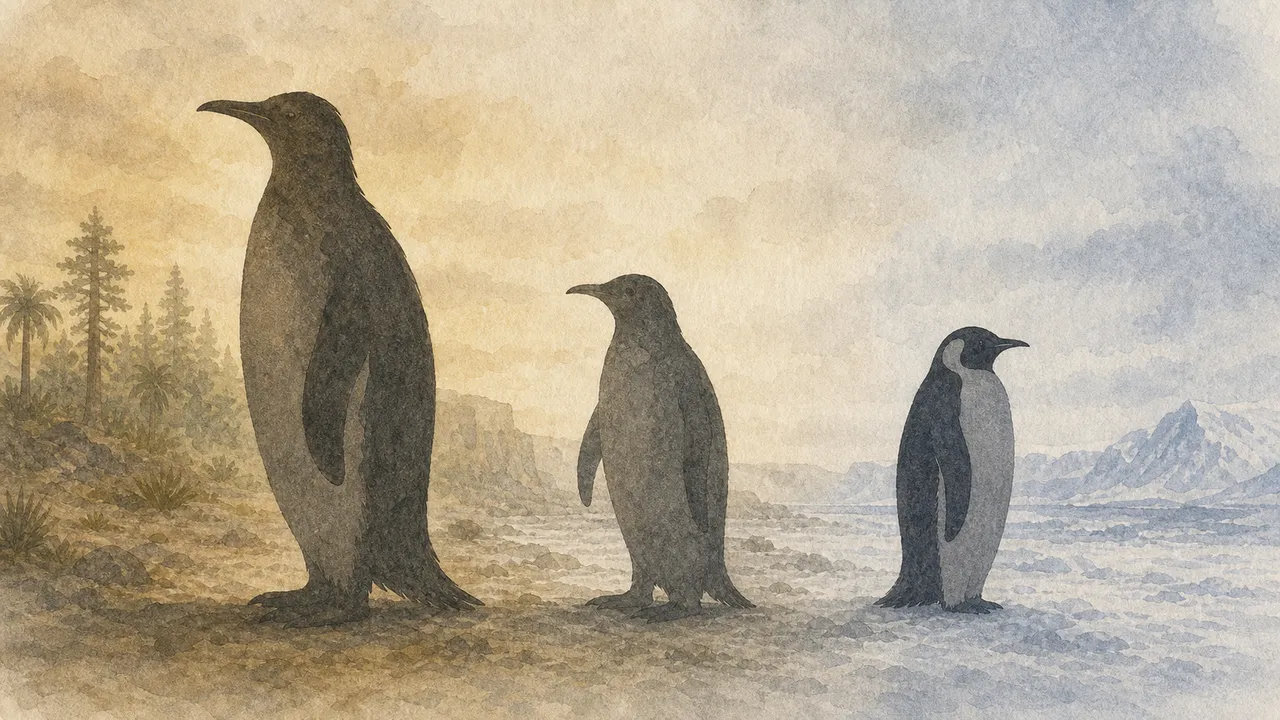
The modern emperor penguin, Aptenodytes forsteri, stands about 100 to 122 cm tall, which is today’s upper limit. Anthropornis pushed that limit higher.
Why they could once be so large
A large body has advantages in cold water. The bigger the volume, the smaller the relative surface area, which lowers heat-loss pressure. A larger body can also carry more oxygen during dives and stay underwater longer.
But size has costs too.
A larger body needs more food, may slow the breeding cycle, and demands more energy to grow a chick. When the distribution of marine prey changed, or when predation pressure from seals and toothed whales was rearranged, the advantage of giant penguins may no longer have balanced the account.
That is what makes the fossil record so interesting. It does not just tell us that big penguins once existed. It tells us that large bodies once made sense, and later that accounting changed.
Modern penguins are not degraded versions
Placed beside prehistoric giant penguins, modern species are easy to misread as shrunken survivors.
That explanation is too blunt.
The 18 penguin species alive today are the result of another round of environmental filtering. Emperor penguins remain tied to sea ice, king penguins track sub-Antarctic ocean fronts, and little penguins shrink to around 1 kg while using nearshore waters in Australia and New Zealand. Different seas, different prey, and different breeding rhythms leave different answers.
Body-size history looks like a line drawn, erased, and redrawn. Waimanu first took birds into the water. Anthropornis pushed the body toward adult human height. Modern penguins then narrowed the range into the sizes we see today.
References
- Slack et al., 2006, Molecular Biology and Evolution, DOI: 10.1093/molbev/msj124.
- Ksepka et al., 2012, Journal of Vertebrate Paleontology, DOI: 10.1080/02724634.2012.652051.
- Mayr et al., 2017, Nature Communications, DOI: 10.1038/s41467-017-01959-6.
- Jadwiszczak, fossil penguin body-size reviews.
FAQ
Was Anthropornis really 5 meters tall?
No. This article follows the conservative fossil-paper reading: Anthropornis was roughly 1.7 to 1.8 meters tall, close to adult human height, not the 5-meter monster often repeated online.
When had early penguins already moved toward underwater life?
Slack and colleagues described Waimanu from New Zealand Waipara Greensand in 2006. The fossils are about 61 to 62 million years old and show early penguins already shifting toward swimming.
Why could prehistoric giant penguins become so large?
Large bodies lose heat more slowly in cold water and can carry more oxygen during dives. The cost is higher food demand and potentially slower breeding and chick growth.
How does Anthropornis compare with emperor penguins?
Modern emperor penguins stand about 100 to 122 cm tall, which is the upper limit today. Anthropornis clearly pushed above that living-penguin range.