New Zealand is a highly diverse penguin country.
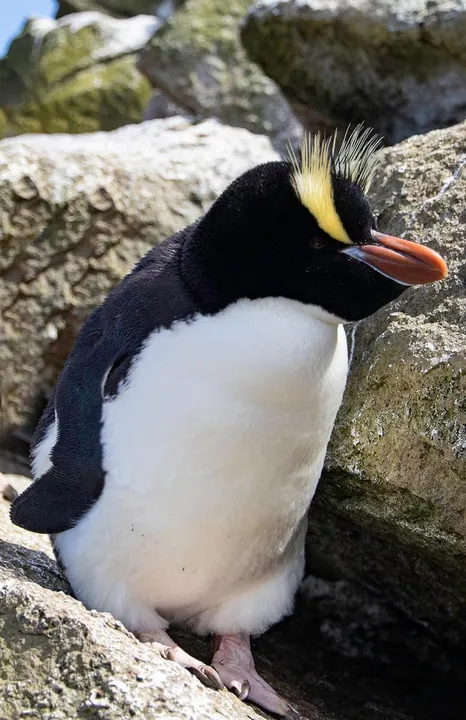
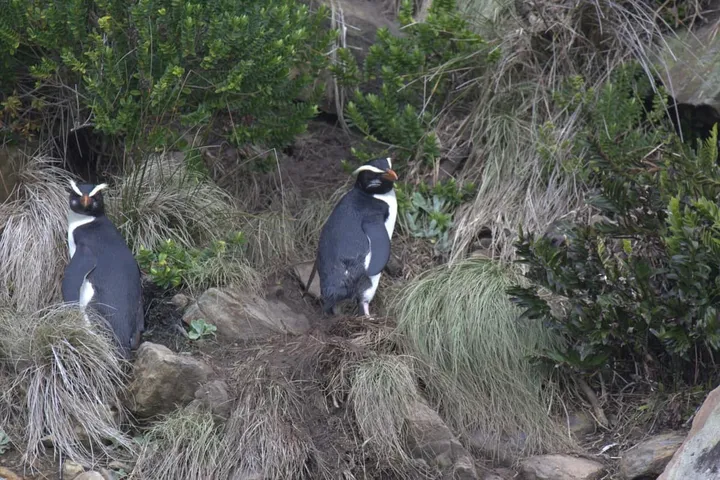
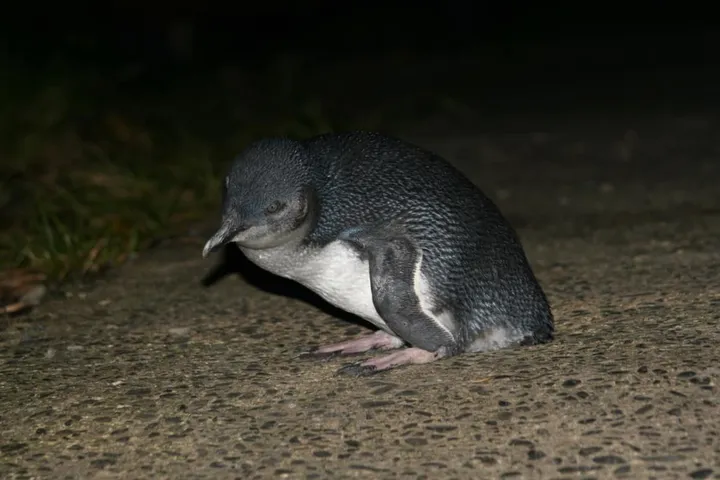
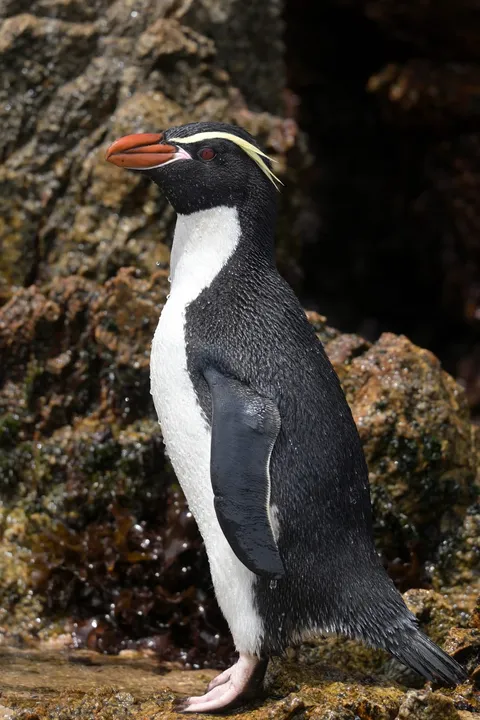
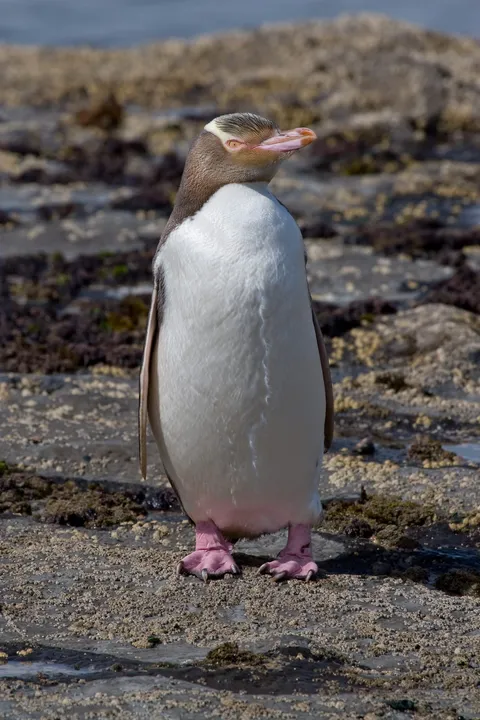
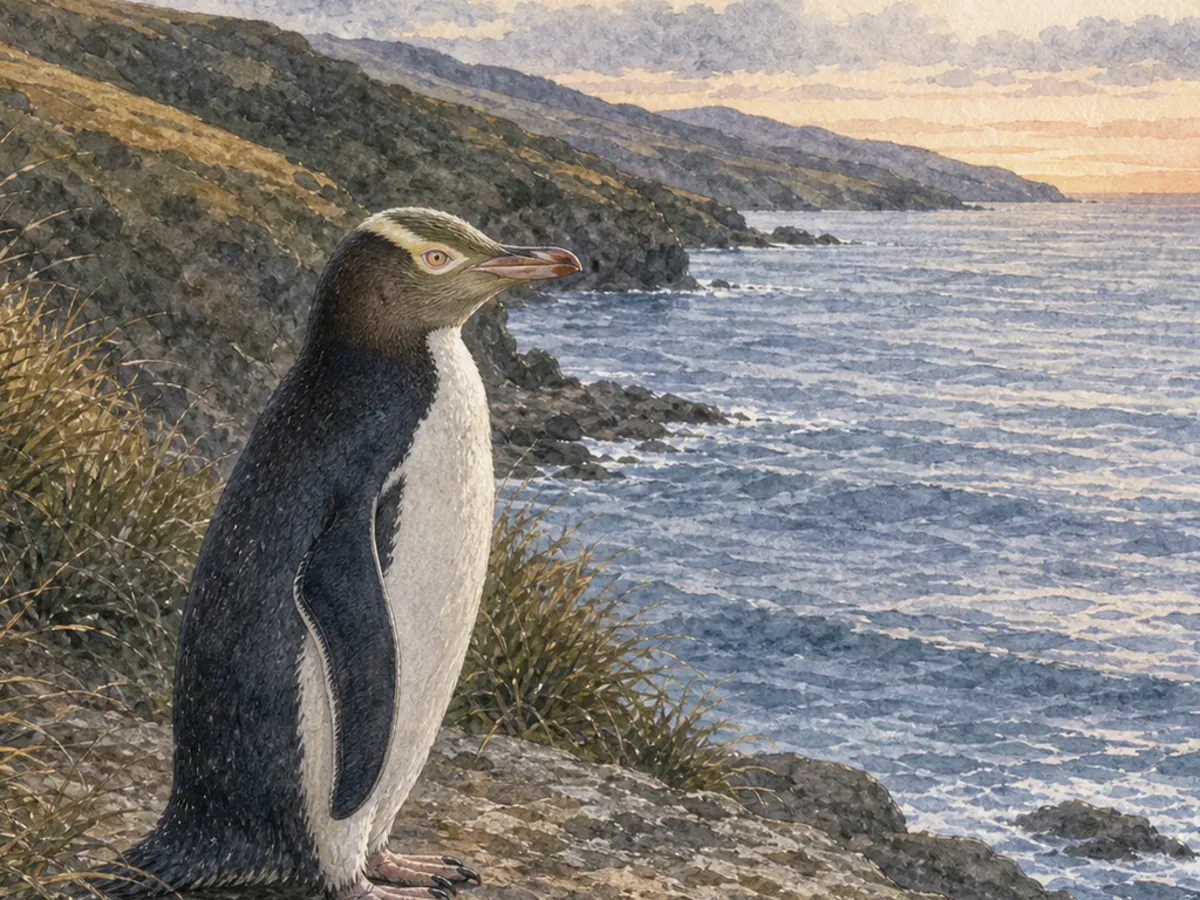
Travelers most often see the little penguin, but the list does not stop there. The southeast coast of the South Island has yellow-eyed penguins, the southwest has Fiordland penguins, and farther out on sub-Antarctic islands are Snares, erect-crested, and other endemic or near-endemic species.
This is also where New Zealand penguins are easiest to misrepresent.
Many species does not mean many viewing points. The rarer, more scattered, and more disturbance-sensitive a penguin is, the less suitable it is for a public checklist of places to chase.
Easiest to arrange: Ōamaru
Ōamaru Blue Penguin Colony is the most stable entry point. It sits beside a city harbour, with fixed viewing platforms, tickets, and evening viewing. Little penguins come back from the sea and move along the rock slope into the nesting area.
This managed style of viewing is good for a first wild penguin experience. You know where to stand, and you know what not to do.
Ōamaru’s advantage is not that it is “very close.”
Its advantage is clear rules. Little penguins return from the harbour edge, the audience waits in fixed areas, and research and education facilities sit inside the same system.
Most in need of distance: yellow-eyed penguins
Yellow-eyed penguins are endangered, with only thousands of mature individuals. They are easily disturbed by human approach and are also affected by disease, food, land predators, and habitat fragmentation.
Some Otago Peninsula viewing sites use hides or guided access to control distance. Do not chase individuals that have just come ashore, and do not block their route back to the nest. A yellow-eyed penguin may look solitary. That is not an invitation to approach.
Fiordland penguins in the southwest
Fiordland penguins live in wet places where forest meets the sea. Their nests are often under tree roots, in rock cavities, or beneath vegetation. Their breeding areas are more scattered, and travel information is easier to oversimplify.
If your trip is in Fiordland or the West Coast, use local conservation or guide information rather than entering on the basis of social media pins. For species like this, making locations public can itself add pressure.
How to plan the South Island
If you have only one night, Ōamaru’s little penguins are the most stable choice. If you add the Otago Peninsula, treat yellow-eyed penguins as distant viewing, not a chase itinerary.
To compare how little penguins are managed across two countries, read penguins in Australia too. Phillip Island and Ōamaru both keep people on platforms, but the coastline and scale differ.
For Fiordland or the West Coast, check Department of Conservation and local guide rules first. Seeing one Fiordland penguin is not worth more than letting it walk back to its nest smoothly.
That sentence is not very travel-like, but it matters for New Zealand penguins.
New Zealand’s strength is that the species layers are clear. You can use Ōamaru to see the reliable night return of little penguins, then use the restrictions in Otago or Fiordland to understand why fragile species need distance.
Distance itself is a conservation tool.
Sub-Antarctic islands
Snares, erect-crested, and some rockhopper-related viewing is usually not ordinary independent travel. The sub-Antarctic islands are strictly permitted, biosecurity demands are high, and landings are rare.
These species remind us that a country page is not the same as a travel checklist. New Zealand has them; that does not mean you should go looking for them.
When to go
Little penguins may return at night year-round, while breeding season and chick activity usually give spring and summer more content. The best season for yellow-eyed and Fiordland penguins depends on site and conservation advice. The more sensitive the species, the less a trip should be decided by a “best photo month.”
The key to penguin travel in New Zealand is to separate the species. Little penguins can be watched from a managed platform at Ōamaru; yellow-eyed and Fiordland penguins need distance, patience, and less public location-sharing.
Saying those differences clearly is more useful than pushing every penguin onto one map.
FAQ
Which penguins live in New Zealand?
Travelers most often see little penguins. The southeast South Island has yellow-eyed penguins, the southwest has Fiordland penguins, and sub-Antarctic islands add Snares, erect-crested, and other endemic or near-endemic species.
Where should first-time visitors see penguins in New Zealand?
With only one night, Ōamaru Blue Penguin Colony is the most stable choice. It has fixed viewing platforms, tickets, and evening viewing for wild little penguins.
Why should yellow-eyed and Fiordland penguins not be chased closely?
Yellow-eyed penguins are endangered, and Fiordland penguin breeding areas are scattered and sensitive. Chasing, blocking routes, or sharing exact locations can add pressure to nesting and return routes.