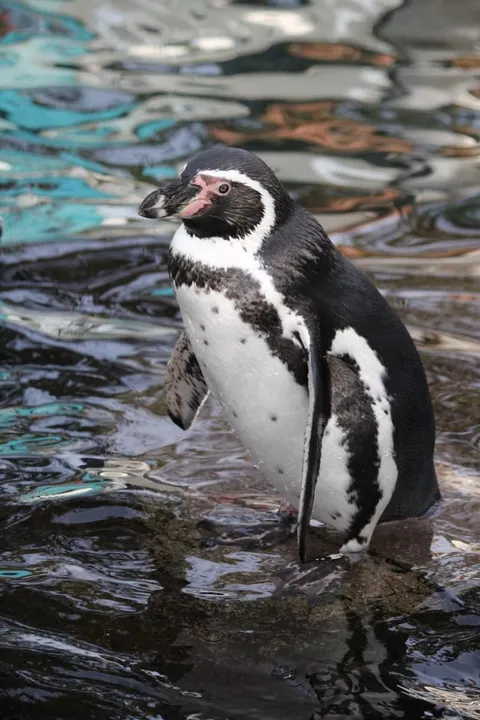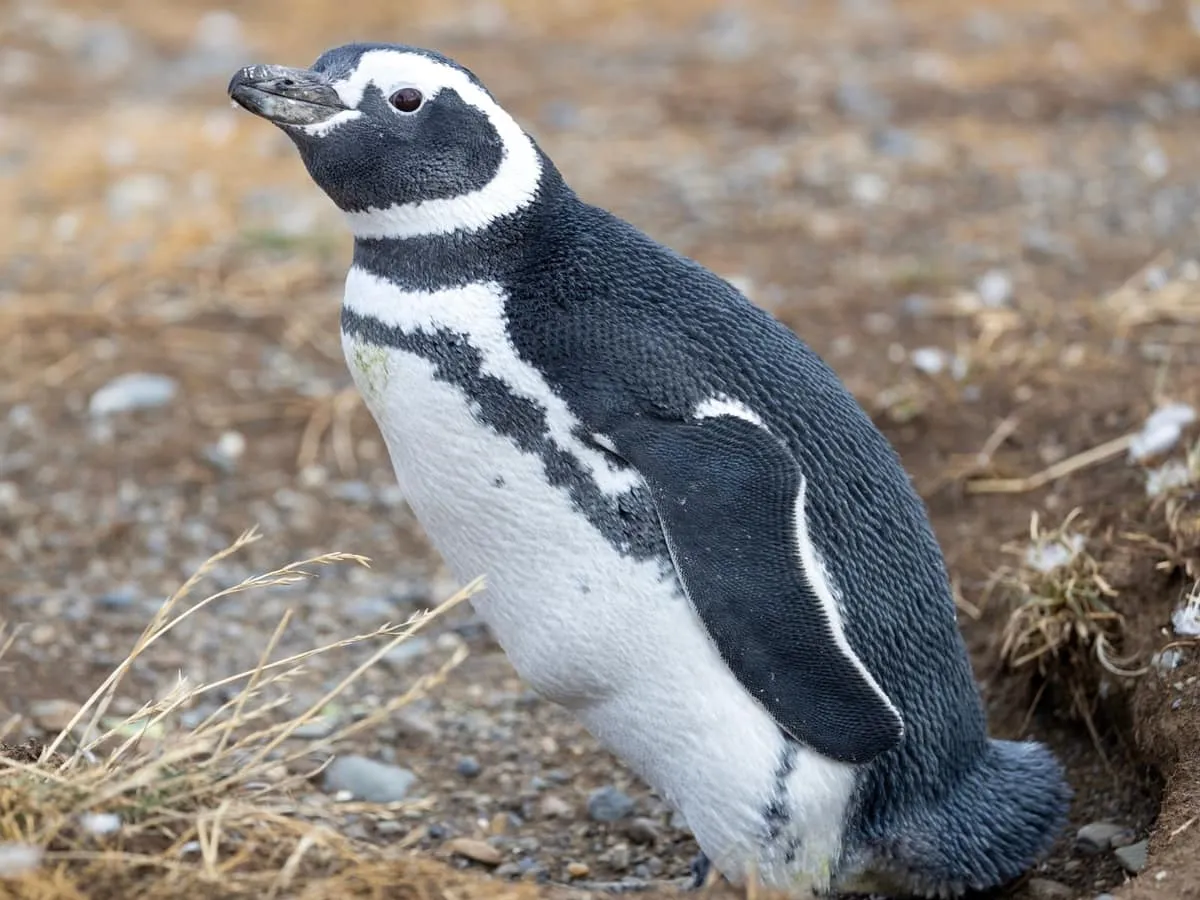
When the Patagonian wind rises, even the ground seems to tremble. Magellanic penguins respond directly: if the outside is unstable, dig into the earth. They make burrows in slopes, under shrubs, or beside natural cover, and place eggs and chicks inside.
Outside are sea wind and open coast.
Inside is low, just enough to block wind and shade the nest.
Magellanic penguins are one of the classic banded penguins of South America. They stand about 61 to 76 cm tall and weigh about 2.7 to 6.5 kg, with two black bands across the chest. They breed mainly in Argentina, Chile, and the Falkland Islands, and after leaving breeding areas many travel far north along the South American coast.
At sea, the road is long.
When it is time to raise chicks, they return to fixed places and dig in.
They usually lay two eggs. Incubation takes about 40 days, and chicks fledge after around three months. Magellanic penguins live on fish, squid, and krill. Their foraging ability at sea is strong, but dependence on land is heavy too.
Burrows matter too much to them. South American coasts can be intensely sunny and dry with hard wind. Inside a burrow, conditions are steadier, and eggs and chicks have a better chance of enduring climate.
A penguin good at finding shelter
They stretch life wide. In the sea, long-distance movement; on land, needs are pulled into one small hole. Safety, shade, and the partner’s voice all have to fit into that modest space.
That shift in scale is crucial.
The world is large, but eggs and chicks cannot be left directly in that largeness.
Their global number is still generally large, about 2.2 million to 3.2 million mature individuals, and the species is listed as Least Concern. But the trouble with Magellanic penguins is that a stable total does not mean every local colony is stable.
Some breeding sites are doing well. Others are under heavy pressure from oil pollution, fisheries, shifting food, and climate change.
Many pairs reuse the same breeding site. Once they return, voice and location matter. If the wind is still strong but the burrow entrance can still be found, home remains.
Long roads and small holes
Being able to travel far and being able to return are different skills. Magellanic penguins need both.
Recognition at the nest is important too. There are so many burrow openings and so many calls on shore, yet the bird and its partner still have to find their own place. The coast can be broad, but the place to return cannot be mistaken.
They can stretch life very far, traveling along the sea and searching for food. What they must protect is small: one burrow, one egg, one voice to come back to.
The wind is still strong.
The sea is still long.
They keep finding a space just right for one egg. However far they travel, they still know where to stop.