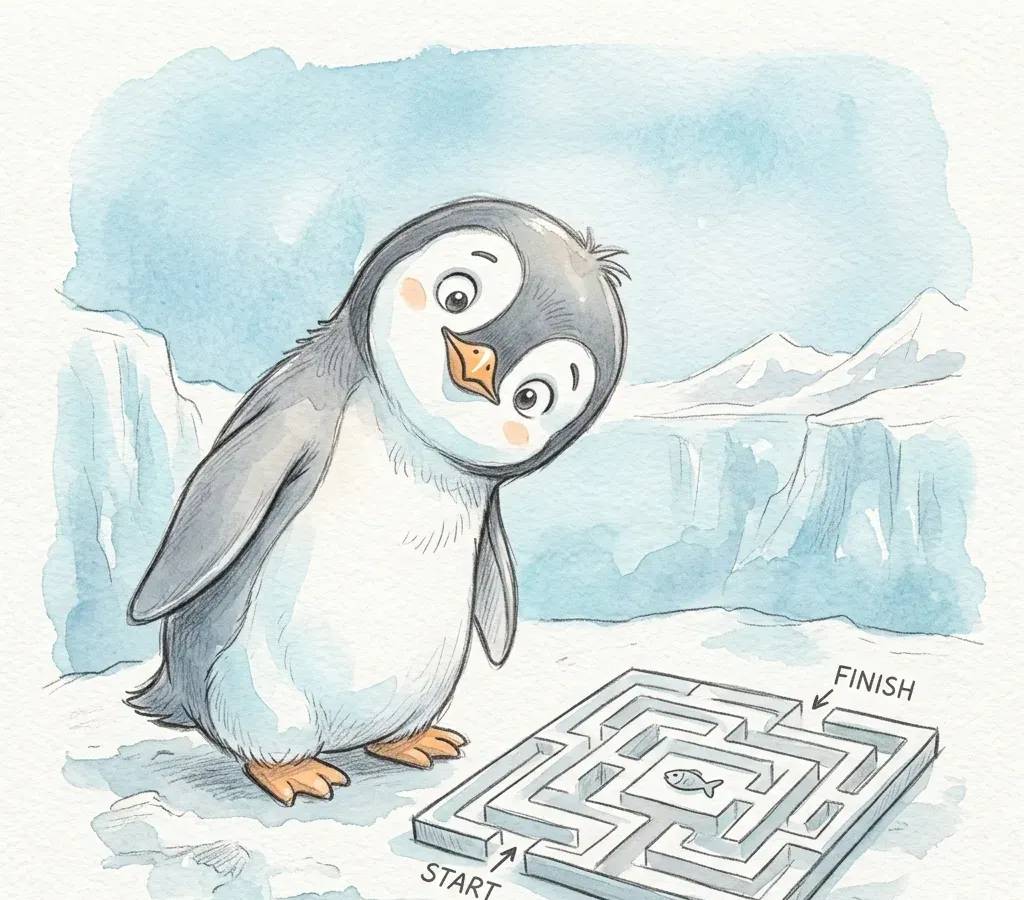
When talking about whether penguins are smart, it helps to set the word IQ down a little more gently.
They are not going to solve puzzle toys for a variety show. But when it comes to the skills needed for life by the sea, penguins are not sloppy at all.
They know when it is safer to enter the water as a group. They remember routes back to the nest, and they can find mates and chicks inside a huge field of calls. Sea conditions, wave patterns, and the positions of predators all need to be checked before deciding whether to jump.
Some research and care observations also show their ability to learn. Penguins can remember repeated routines, become familiar with regular feeding times and keeper rhythms, and even adjust their actions as conditions around them change.
This kind of intelligence is not flashy, but it is useful. It is like the skill of an old hand who reads the wind, reads the crowd, and reads the surface of the sea every day.
You may not measure it with a test paper. But every day, a penguin answers survival questions with its whole body.
Their intelligence has no show-off quality. It hides in a turn, a call, and a precise route home.
Watch long enough and it becomes clear: in the seabird world, a high score is not written only in brain size. It is also written in whether the bird makes it safely through today.
FAQ
Can penguins learn fixed routines?
Yes. Care observations show that penguins can remember regular feeding rhythms and husbandry routines, and adjust to repeated changes in their environment.
Can penguins recognize mates and chicks?
Yes. The article notes that penguins can find mates and chicks within a huge field of calls and remember routes back to nest sites.
Do penguins judge danger before entering the water?
Yes. They may check sea conditions, waves, and predator positions, and sometimes enter the water as a group to reduce risk.