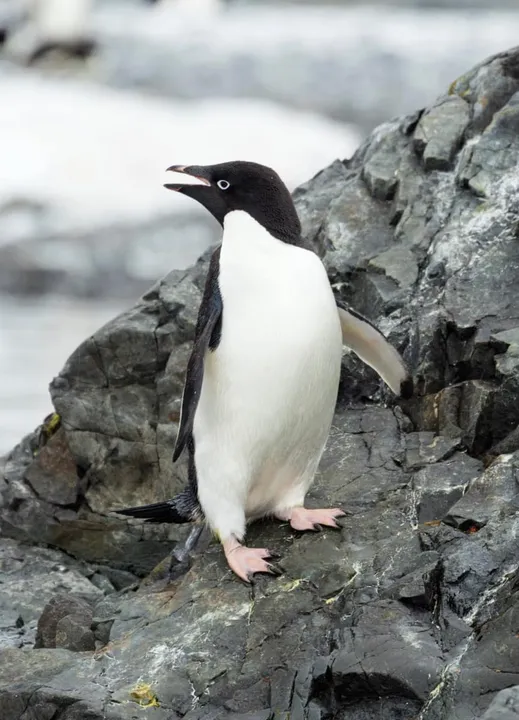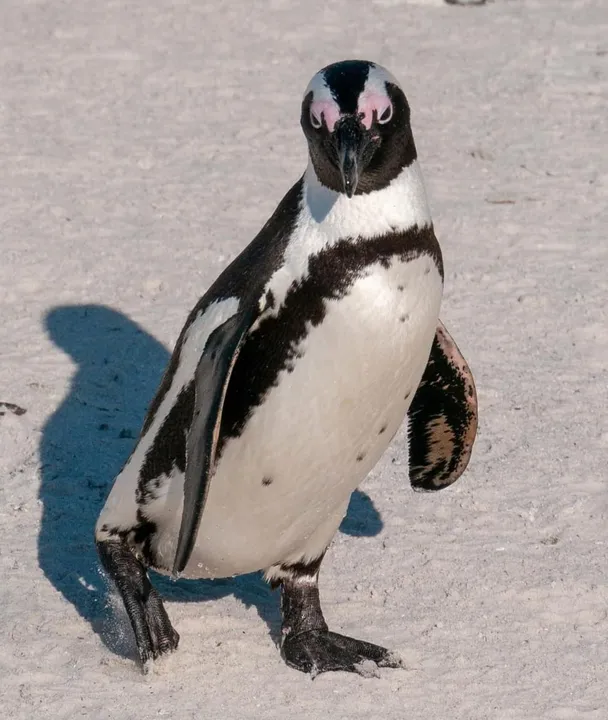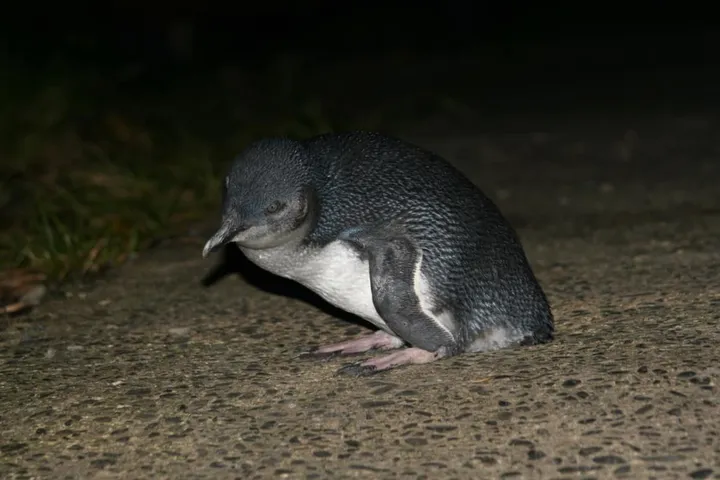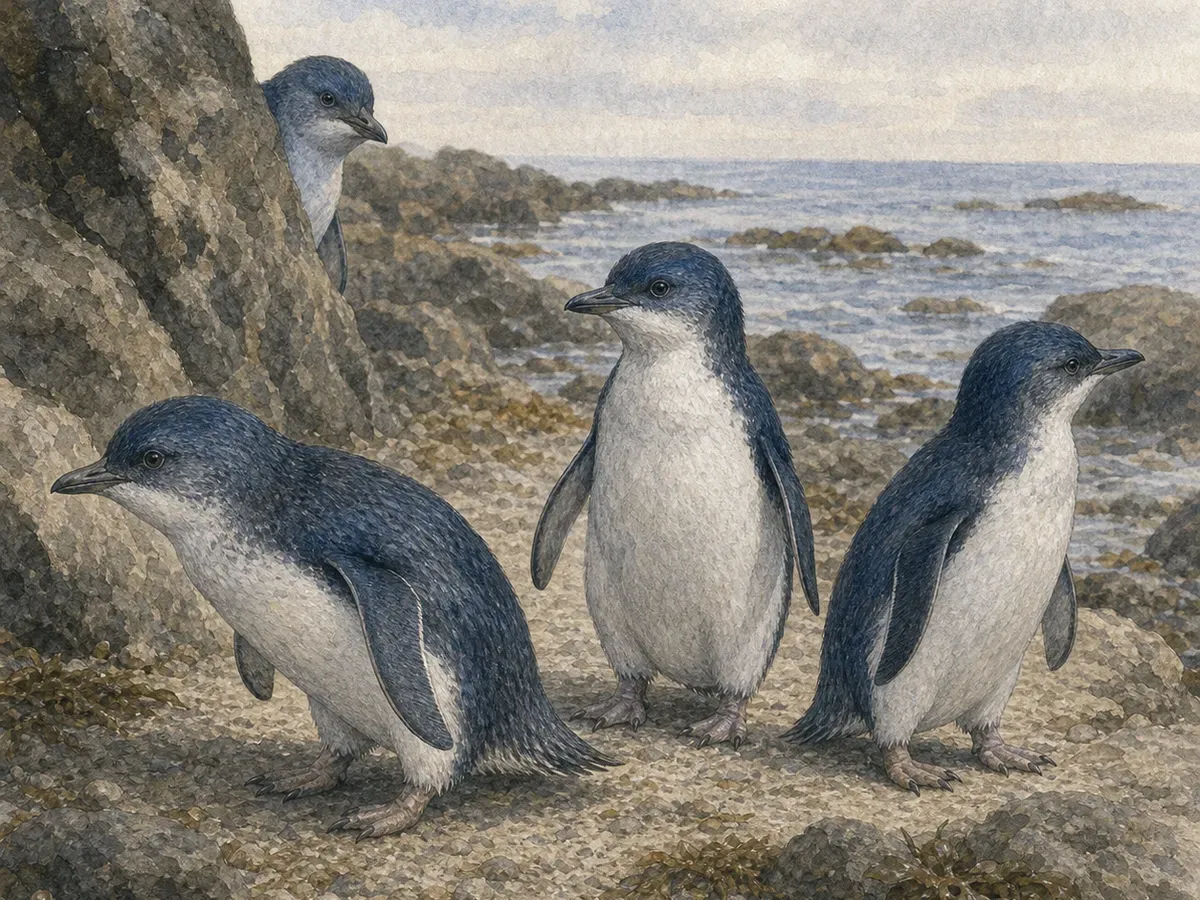
Whether penguins have personalities cannot be judged by saying one “looks fierce” or another “seems shy.”
Researchers make the question smaller: when the same bird faces a novel object, an approaching person, or disturbance at the nest, does it respond in a repeatable way? If so, that is more than the mood of one day. It is a measurable individual difference.
Online, the same posture can become a Nihilistic Penguin meme; research has to separate that reading from repeatable behavior.
Bold-shy is not a personality quiz
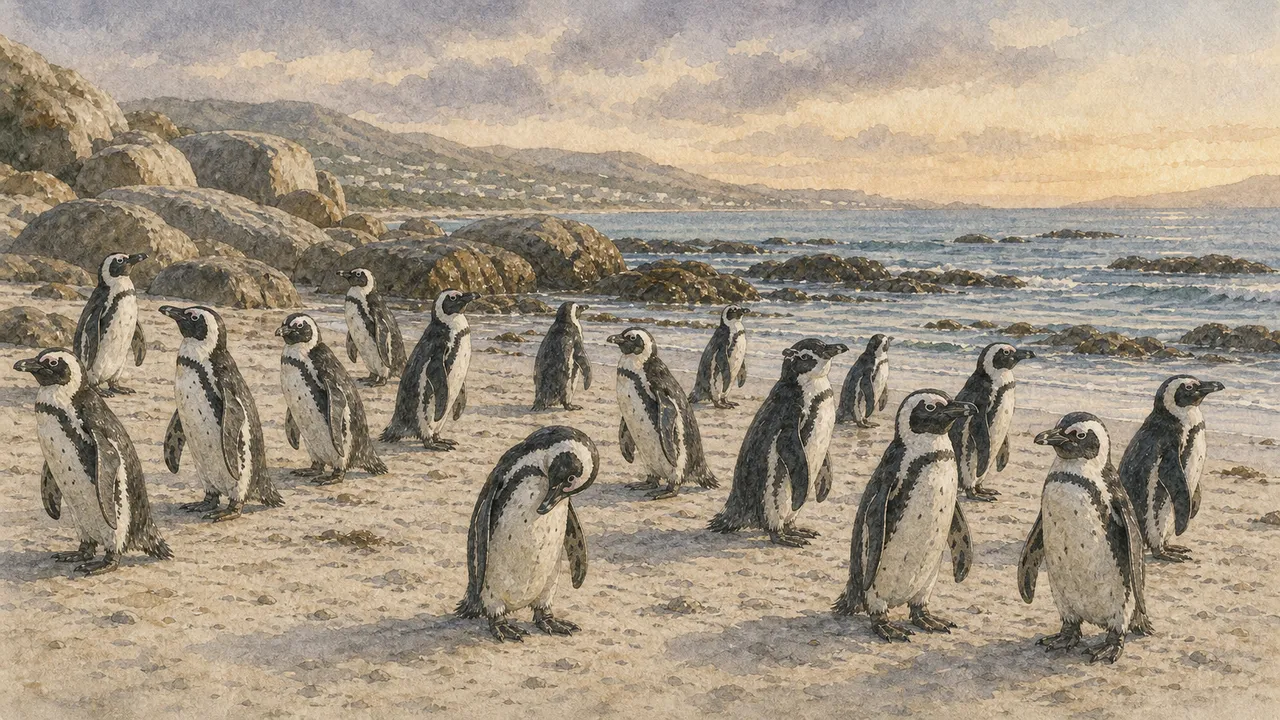
Studies of African penguins, Spheniscus demersus, often use a bold-to-shy axis. Researchers approach nest sites, record vigilance, aggression, or retreat, and then compare multiple measurements from the same bird.
A 2019 study in Animal Behaviour (DOI: 10.1016/j.anbehav.2019.02.003) connected African penguin nest responses with GPS and depth-recorder data. The result was specific: in females, boldness was related to foraging routes and vertical movement, while the relationship in males was less clear.
Inside one nesting area, they are not a crowd of averages.
The differences persist after they enter the sea
If individual differences stop at the nest entrance, their ecological meaning is limited. The important question is whether those differences travel into the ocean.
Cottin and colleagues manipulated prolactin in Adélie penguins, Pygoscelis adeliae, in 2014 and found that hormonal change temporarily reduced diving effort, but did not necessarily crash breeding success immediately (DOI: 10.1016/j.yhbeh.2013.12.001). Patrick and Weimerskirch also showed in 2014 that individual behavioral differences in long-lived seabirds can connect to foraging strategies and fitness outcomes (DOI: 10.1371/journal.pone.0087269).
Penguin research is starting to join this line: nest response, routes at sea, and chick-rearing results should not be split into three tables and read separately.
Personality makes a population less tidy
Conservation discussions often use total population numbers. How many mature African penguins remain, how many pairs nested on an island this year, what share of chicks fledged. These numbers matter; for a field setting, Boulders Beach shows this species under city-edge pressure.
But individual differences shape how a population spreads risk.
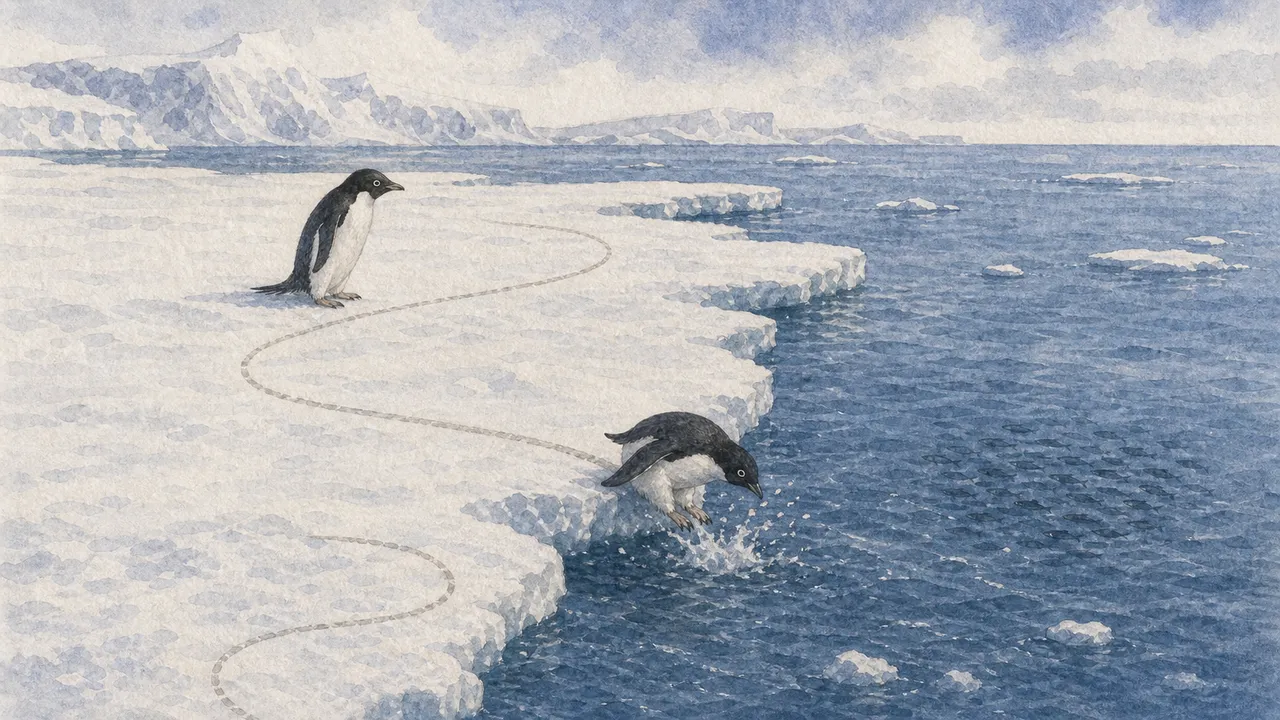
If every bird uses the same foraging route, a moving food hotspot can injure the whole group at once. If some birds explore farther while others stay conservative near shore, a bad year is less likely to erase every strategy in one stroke.
This is not an award for boldness. Boldness can bring more food, but it can also raise predation or energy costs. Shyness can miss opportunities, but it may also avoid disturbance.
Conservation has to see individuals
The most useful reminder I took from these papers is this: a penguin colony is not one model copied 1,000 times.
One African penguin leans out of the nest. Another retreats into shadow. If that scene is treated only as cute, something is lost. It may correspond to different routes at sea, different chick-rearing costs, and choices that also feed back into penguin partnership and breeding decisions.
References
- Le Vaillant et al., 2019, Animal Behaviour, DOI: 10.1016/j.anbehav.2019.02.003.
- Cottin et al., 2014, Hormones and Behavior, DOI: 10.1016/j.yhbeh.2013.12.001.
- Patrick & Weimerskirch, 2014, PLOS ONE, DOI: 10.1371/journal.pone.0087269.
FAQ
How do researchers measure bold and shy penguin personalities?
They expose the same bird to a novel object, an approaching person, or nest disturbance, then test whether vigilance, aggression, or retreat responses repeat over time.
Can African penguin personality affect foraging?
A 2019 Animal Behaviour study linked African penguin nest responses with GPS and depth data. In females, boldness was related to foraging routes and vertical movement.
Does penguin personality stop at the nest entrance?
Not necessarily. The studies discussed here connect nest response, routes at sea, diving effort, and chick-rearing outcomes instead of treating them as unrelated tables.
Why does conservation need individual penguin differences?
Different foraging routes and risk strategies can spread pressure across a population. In a bad year, not every strategy is erased at once.