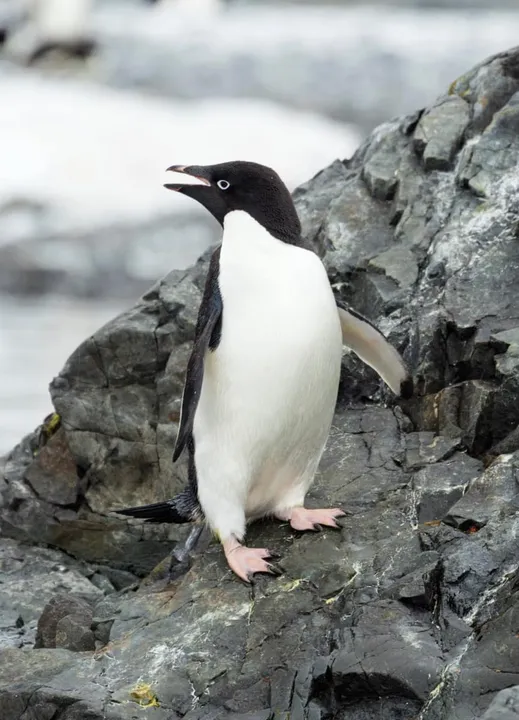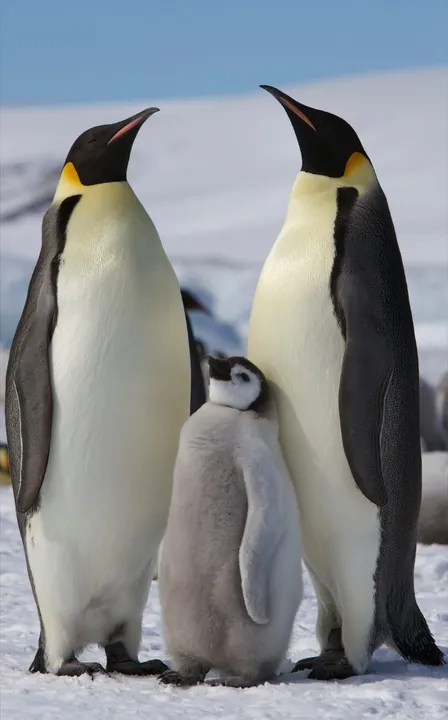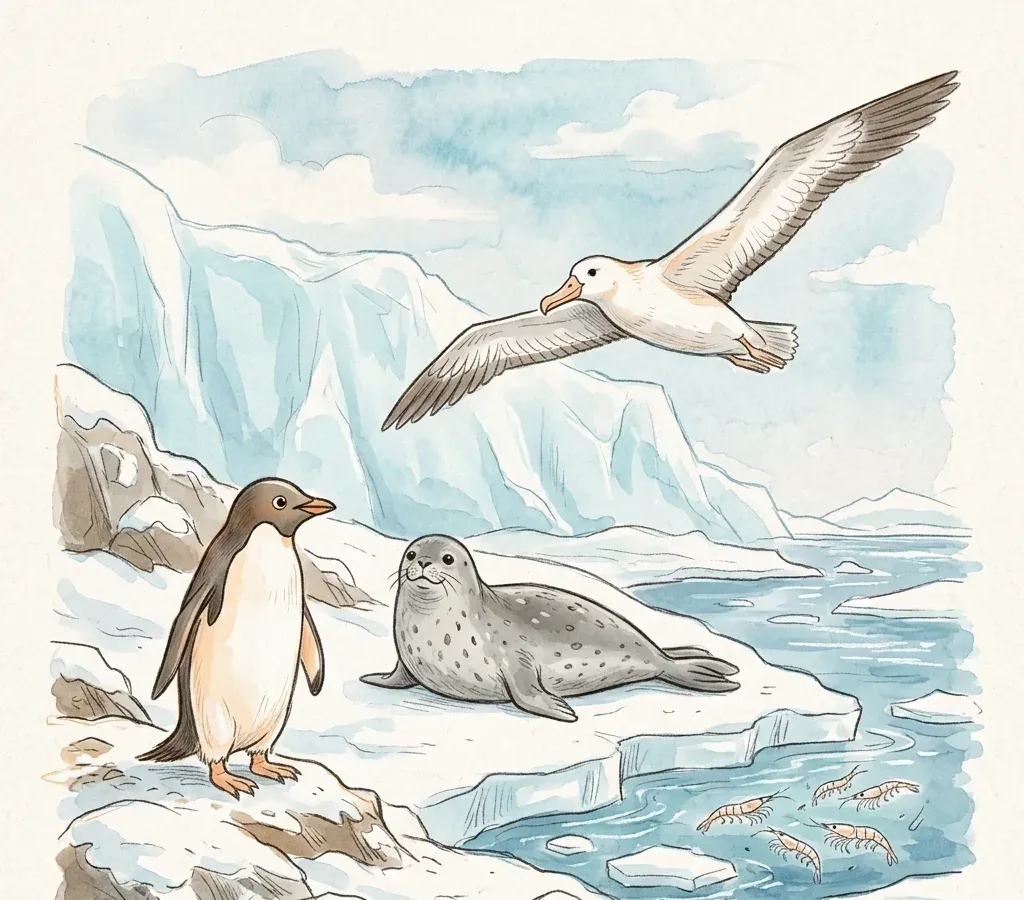
If Antarctica had only penguins left, the scene would be very quiet, and it would not last. Penguins can stand at the edge of that icy sea because a whole living web is working with them.
The ocean holds krill, fish, and squid, which feed many other animals; above them are Weddell seals, leopard seals, Antarctic fur seals, and orcas that often patrol farther offshore. The sky is not empty either. Albatrosses, petrels, and skuas all cut into the same story.
Penguins are just the face people remember most easily.
The deeper layers are often invisible, but they are the crucial ones. Phytoplankton grow with sunlight, feed zooplankton, and then help hold up krill and fish. Only with that foundation can the Antarctic Ocean support so many large animals.
If you think of penguins as the stars of a play, then sea ice, currents, tiny organisms, predators, and breeding grounds are the stage, lights, and backstage crew of the Antarctic food chain. Take away any of them, and the story stops being whole.
So the question of whether Antarctica has only penguins is a useful reminder: it is easy to notice the charming front door. The more impressive thing is the ecosystem behind it.
Penguins are fascinating, but Antarctica has never been their solo performance.
FAQ
What is the most important base of the Antarctic food chain?
Phytoplankton and zooplankton form a crucial lower layer. They support krill, fish, and the larger animals higher in the system.
What animals live in Antarctica besides penguins?
Antarctic waters and coasts also include Weddell seals, leopard seals, Antarctic fur seals, orcas, albatrosses, petrels, skuas, fish, and squid.
Are penguins the main characters of the Antarctic ecosystem?
They are highly visible, but not the only main characters. Penguins depend on sea ice, currents, breeding grounds, prey, and predators working together.