Penguins look as if they are always about to fall over when they walk.
That instinct is not very reliable. In 2000, Griffin and Kram published a short paper in Nature, “Penguin waddling is not wasteful” (DOI: 10.1038/35050167), and reached almost the opposite conclusion: the waddle is not waste. The waddle saves.
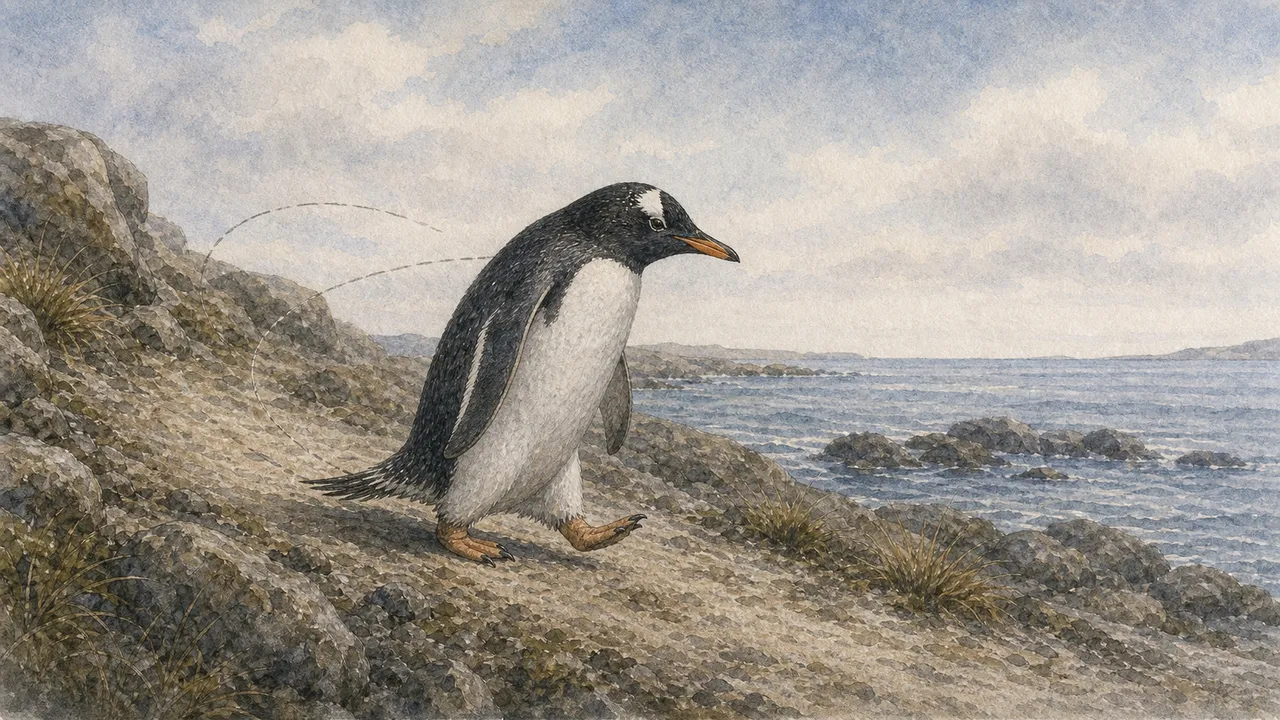
Emperor penguins on a force plate
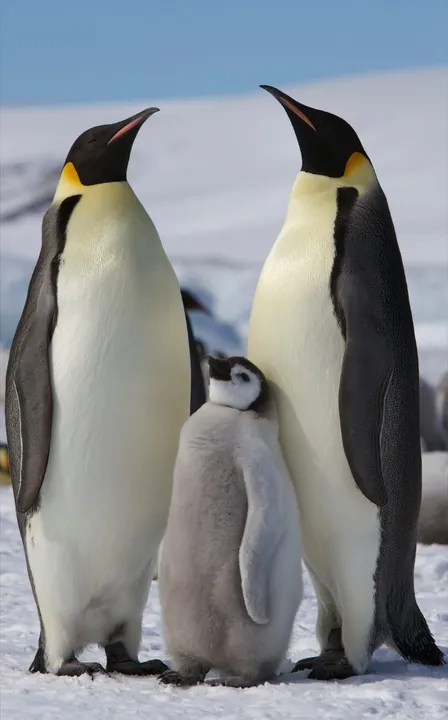
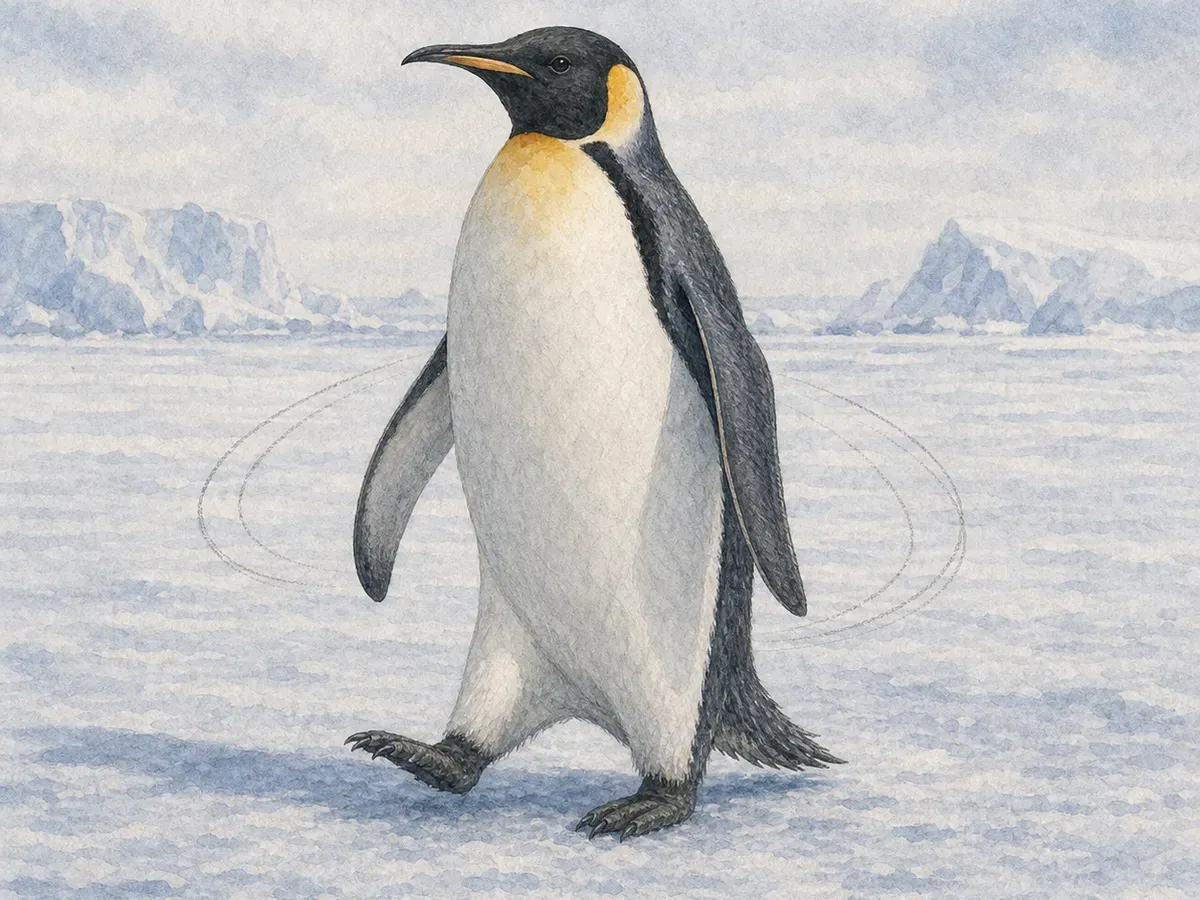
The researchers had 5 emperor penguins, Aptenodytes forsteri, walk across a force plate and measured vertical, fore-aft, and side-to-side forces. With each step, the penguin’s center of mass shifts sideways, which looks as if the body is taking a longer route than necessary.
Judged only by appearance, that side-to-side movement seems like effort thrown away.
The force-plate data showed otherwise. Penguins convert kinetic and potential energy into each other, like an inverted pendulum.
As the body rises to one side, it stores potential energy, then releases it into the next step. Scientific American, summarizing the study at the time, noted that emperor penguins could recover around 80% of their energy in each step, which is a high number.
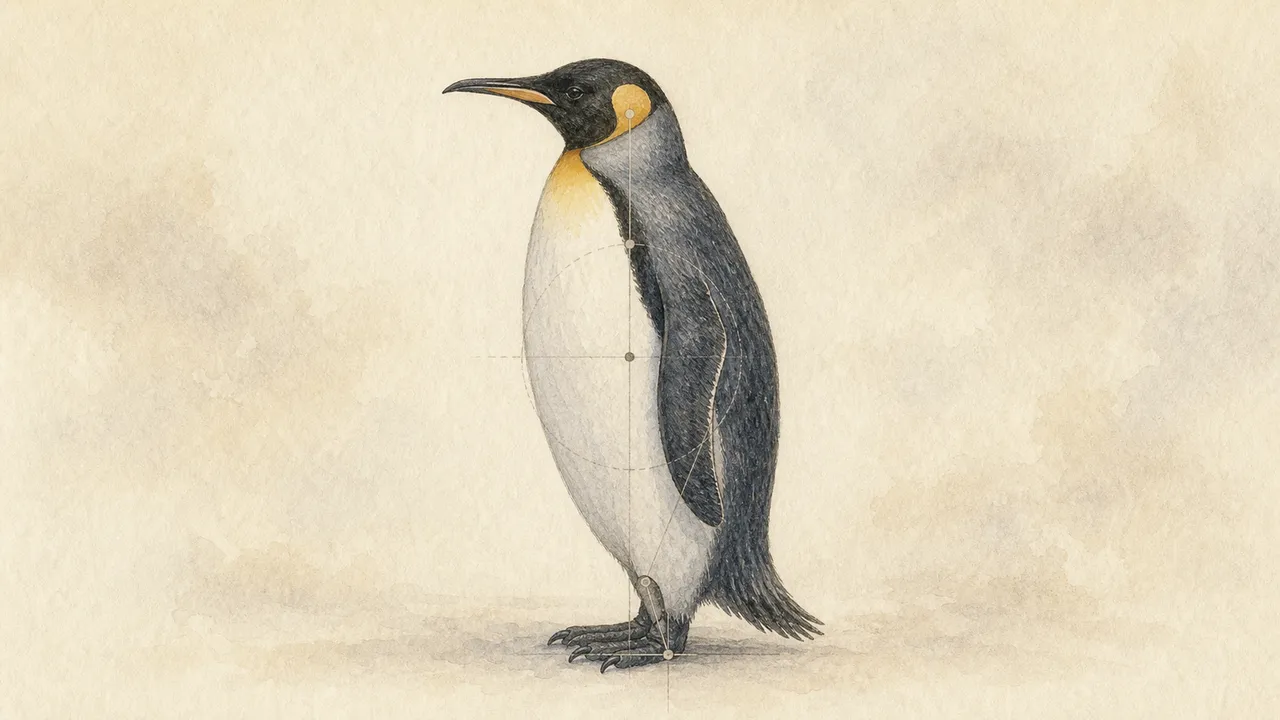
The expensive part is the short legs
For the same distance walked, penguins spend about twice as much metabolic energy as land animals of similar body size. Early intuition blamed the “waddle.” Griffin and Kram moved the cost to leg length.
Short legs mean the feet spend less time in contact with the ground, so muscles have to generate force quickly to hold the body up and move it forward. That is the cost.
Short legs are not bad design. For swimming, heat conservation, and standing on Antarctic sea ice, short rear-set legs have value.
A penguin is not a land runner. Its body mainly serves life underwater. Land is the narrow bridge it has to cross while incubating, moulting, and returning to the nest.
The waddle is the repair after the tradeoff
Once this sits inside evolution, penguin walking stops being so funny.
The wings have become flippers that push water, the body is shaped like a streamlined diver, and the legs are tucked far back. These traits make penguins efficient at sea and belong to the same body-plan story as penguin flightless evolution, but they also make it hard for them to stride on land like chickens or ducks.
Side-to-side sway is the repair a short-legged body can make. Sway, lift the center of mass, switch feet, recover part of the energy. The bird walks with a waddle because that is how it lowers losses within the body it has.
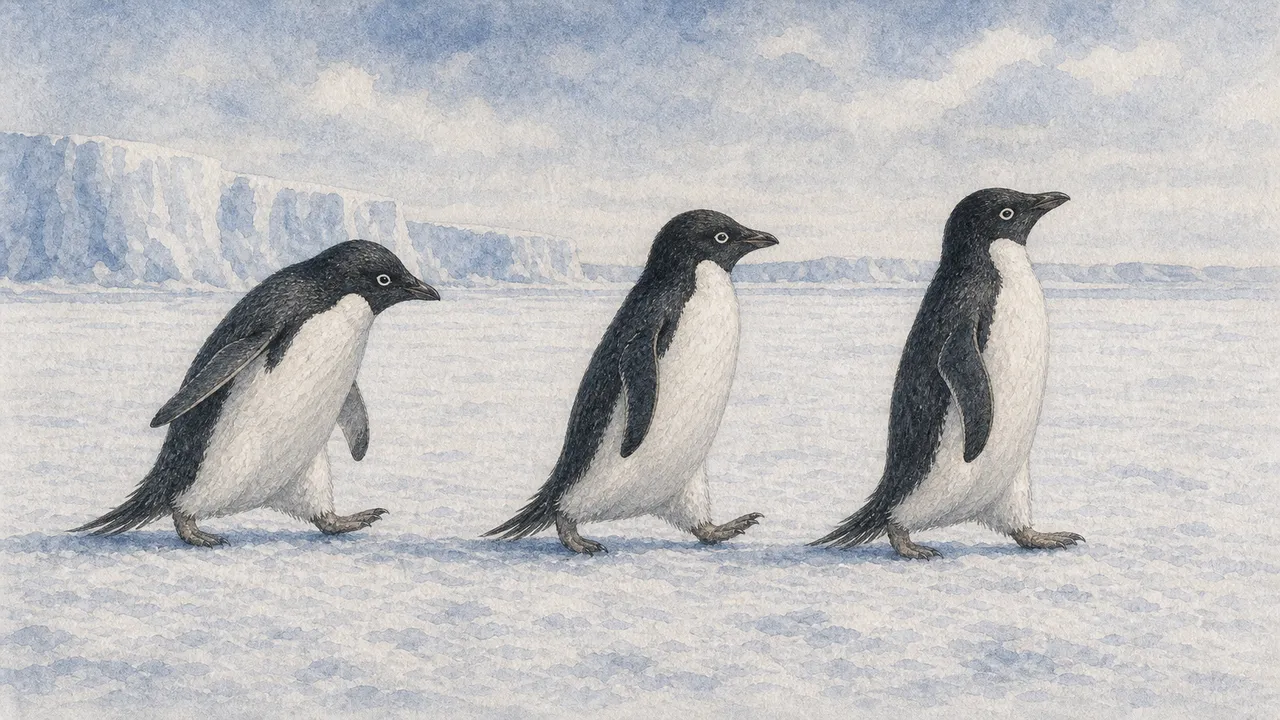
Looking back to the sea from the ice
When Ren and Hutchinson discussed penguin gait stability in 2008, they also put step length, step width, and lateral motion into a comparative frame. Walking is not only about saving energy; it is also about not falling over. For a penguin holding an egg or dragging a moulting body, stability itself is part of cost control.
So the better question is not: why do penguins walk so clumsily?
A better question is: how else could a body this strongly rebuilt for underwater life move on land? The answer is that swaying step.
References
- Griffin & Kram, 2000, Nature, DOI: 10.1038/35050167.
- Pinshow, Fedak & Schmidt-Nielsen, 1977, Science, penguin locomotion energetics.
- Ren & Hutchinson, 2008, Journal of Theoretical Biology, penguin gait consistency.
- Gatesy, 1999, Journal of Morphology, hind limb mechanics.
FAQ
Is a penguin waddle wasted energy?
No. Griffin and Kram 2000 showed that side-to-side sway lets penguins recover mechanical energy like an inverted pendulum.
How was emperor penguin gait measured?
The researchers had 5 emperor penguins walk across a force plate and measured vertical, fore-aft, and side-to-side forces to analyze center-of-mass movement and energy exchange.
Why is penguin walking still costly?
For the same distance, penguins use about twice the metabolic energy of land animals of similar size. The main cost is rapid force production from short legs, not the visible sway.
Are short penguin legs bad design?
No. Short rear-set legs help with swimming, heat conservation, and standing on ice, but they force a tradeoff when the bird has to move on land.