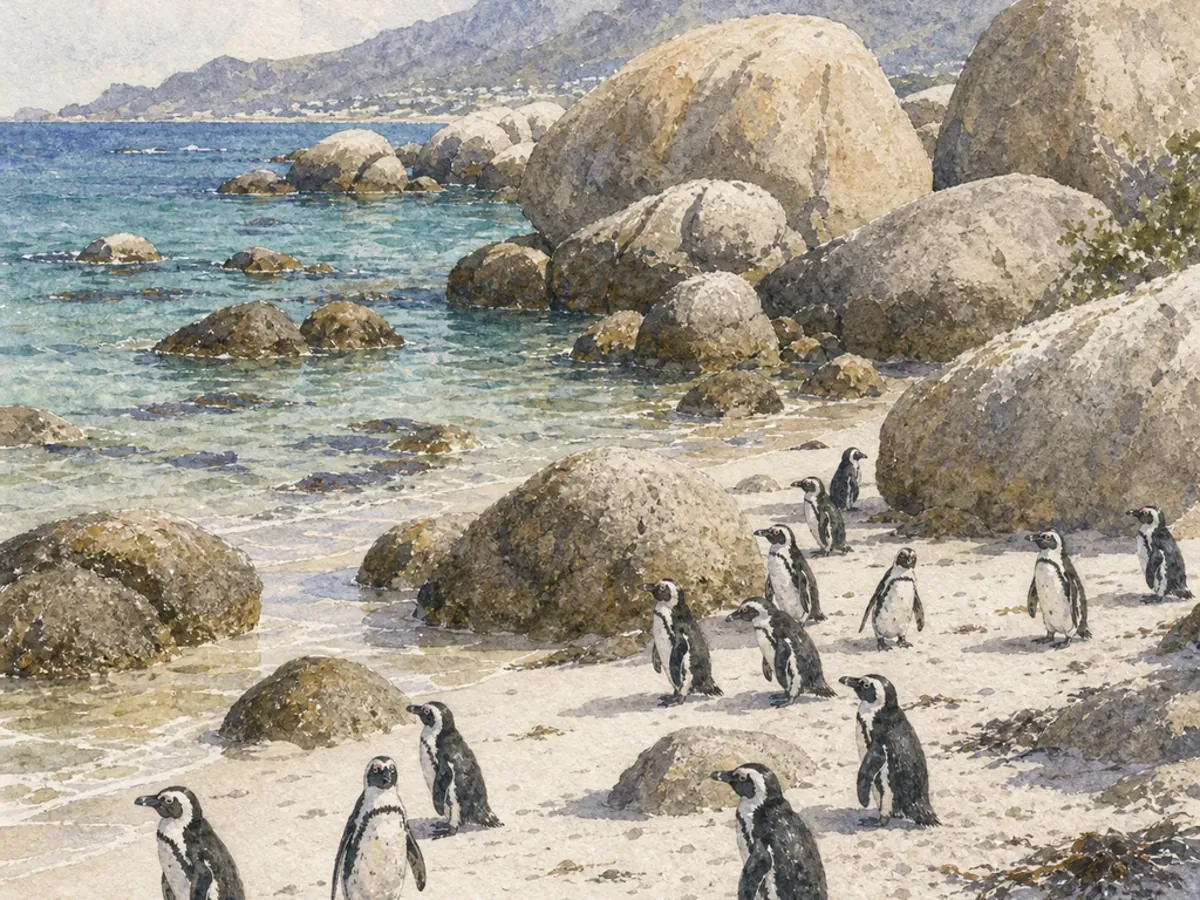
Boulders Beach is easy to misunderstand as a place where people can get in the water and play with penguins.
SANParks puts it plainly: this is a pay point inside Table Mountain National Park, and it is a protected nesting area for African penguins, Spheniscus demersus. The boardwalk lets people see them closely in order to keep human hands away from penguins.
For country context, read penguins in South Africa. This species’ conservation pressure is not something one beach can solve by itself.
How to get there
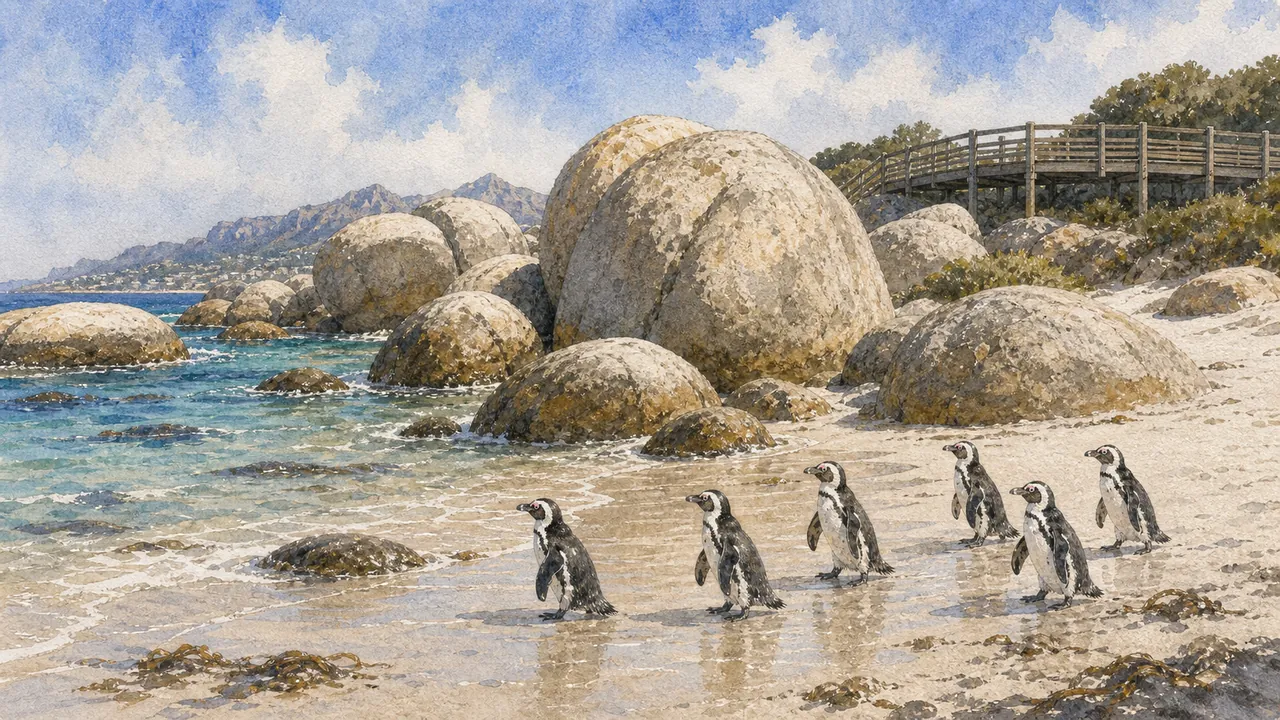
Boulders is in Simon’s Town, south of Cape Town. Driving from the city center usually takes about 45 to 60 minutes, and parking fills early on holidays and in summer. Public transport can get you by train to Simon’s Town, then on foot or by a short ride, but the schedule needs room.
Admission is the SANParks conservation fee. The 2026 gate-ticket page listed international adults at R245 and children at R120, with different rates for South African residents and SADC visitors. Opening hours follow the season, with earlier closing in winter.
What you can see
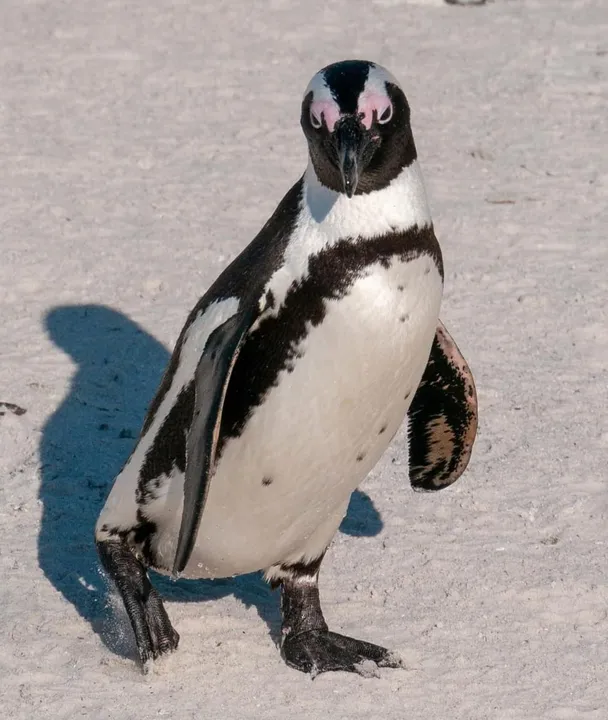
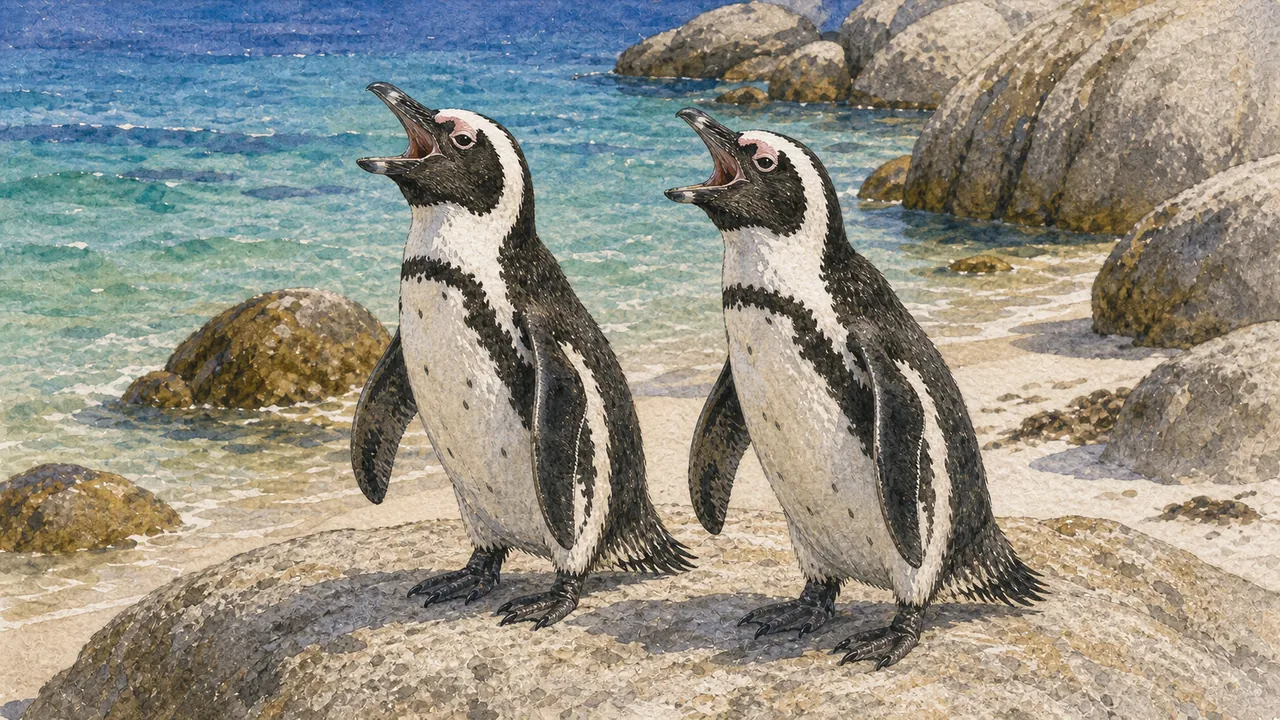
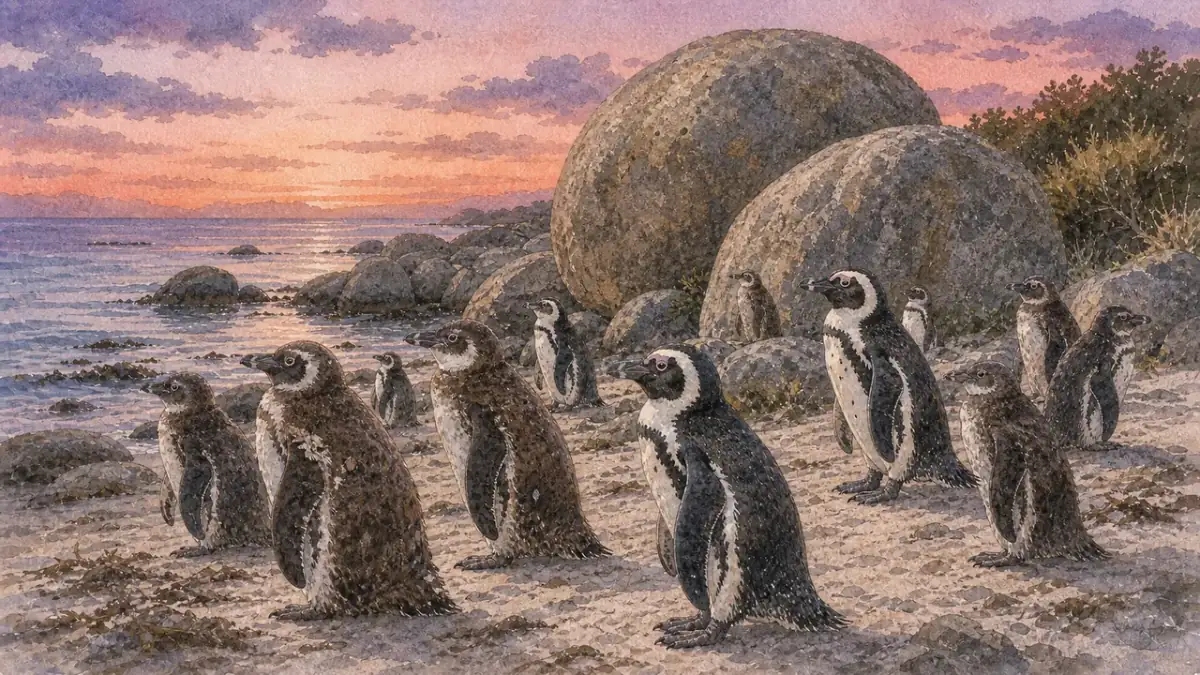
The main species is the African penguin. They are sharply black and white, have pink bare skin above the eyes, and make a rough call often compared to a donkey bray.
SANParks material says the Boulders population was established in 1983, reached about 3,900 birds in 2005, and fell to about 2,100 in 2011. The wider African penguin story is more urgent: about 150,000 pairs in 1956, and only about 26,000 pairs left in 2009. In 2024, the IUCN uplisted the species to Critically Endangered (CR).
Cuteness is only the first layer.
Spend long enough at close range and they stop looking interchangeable. To connect that observation to behavior research, read penguins have personalities too.
Why the rules are strict
The official site reminds visitors not to touch and not to feed. That is not politeness. A penguin’s bill is sharp, and penguins can change their behavior when people get too close.
Boulders sits beside False Bay. Fishing restrictions and protected-area management have helped the local population in the past, but today’s pressures come from a much larger seascape: shifting sardine and anchovy distributions, oiling, disease, and climate pressure all arriving together. SANCCOB’s rescue work often catches injured, dehydrated, or oiled birds. Behind the towels, water tubs, and examination tables is a long rescue chain.
What to pair with it
If you want to extend the theme, Stony Point / Betty’s Bay can fit into another day. It is another South African site for seeing African penguins in their home range, usually with lower visitor density than Boulders.
Boulders is a good first wild-penguin site. Its cost is also right in front of you: boardwalks, fees, warning signs, and rescue organizations all saying the same thing. People and penguins are already very close, so management cannot loosen.
References
- SANParks, Boulders Penguin Colony and Gate Tickets.
- SANCCOB African penguin conservation materials.
- IUCN / BirdLife African penguin assessment.
FAQ
Can you swim with African penguins at Boulders Beach?
Do not treat Boulders as a place to play with penguins. SANParks describes it as a protected nesting area, and visitors should stay on the boardwalk, not feed, and not touch.
Which penguin species lives at Boulders Beach?
The main species is the African penguin, Spheniscus demersus, with pink bare skin above the eyes and a rough braying call. Its IUCN status is Critically Endangered (CR).
Why does the Boulders Beach colony need protection?
SANParks material says the Boulders population reached about 3,900 birds in 2005 and fell to about 2,100 in 2011; wider pressure includes prey shifts, oiling, disease, and climate.