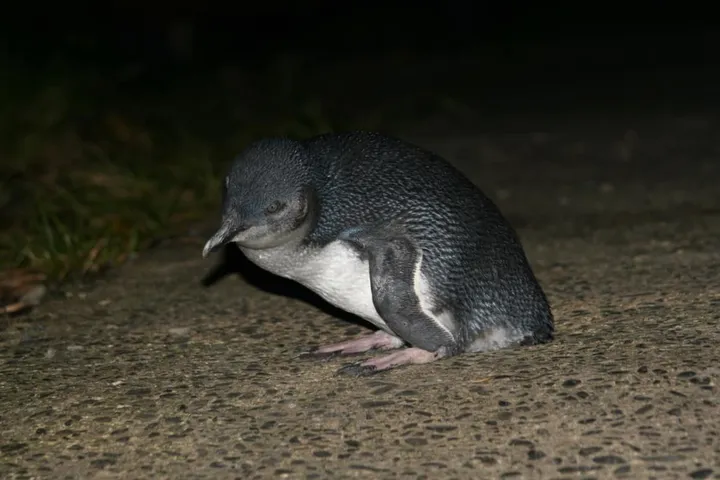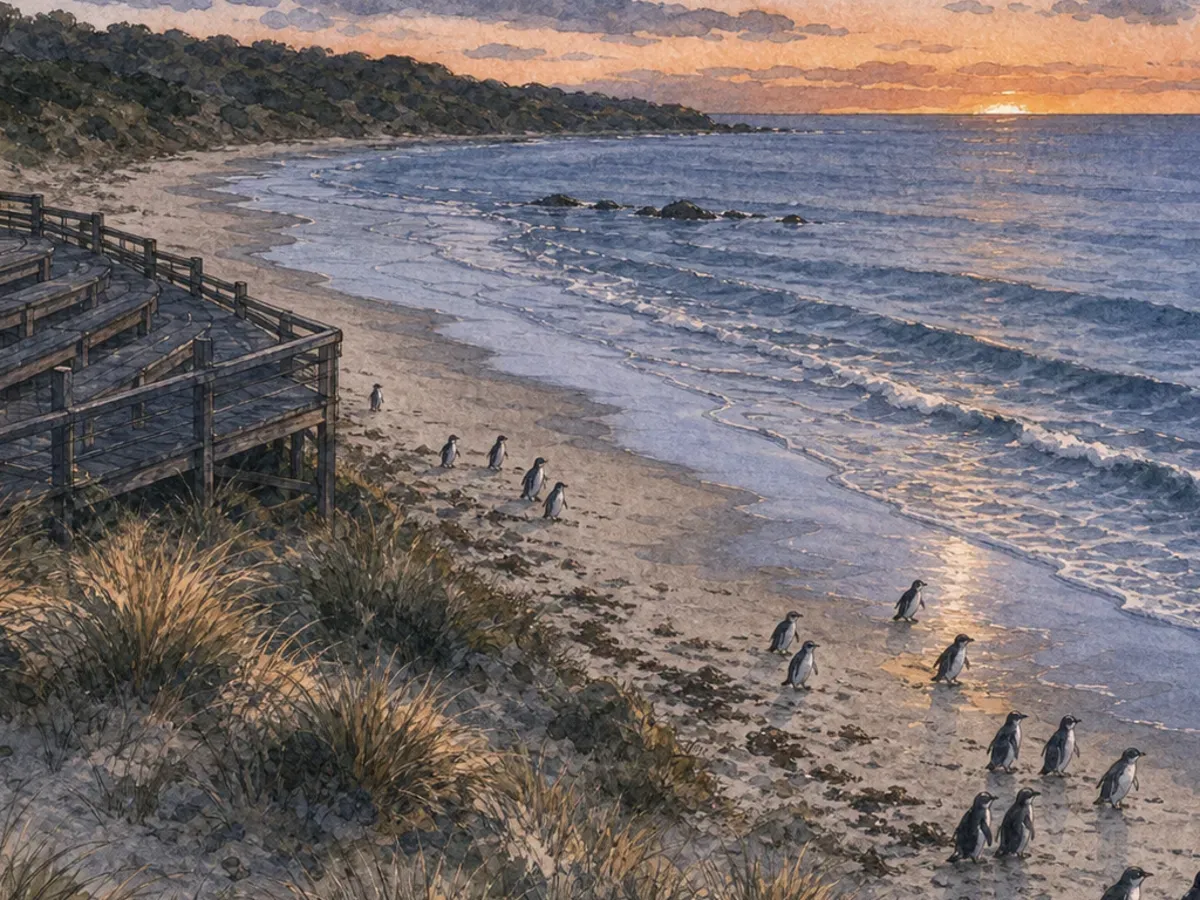
The Penguin Parade on Phillip Island happens every day.
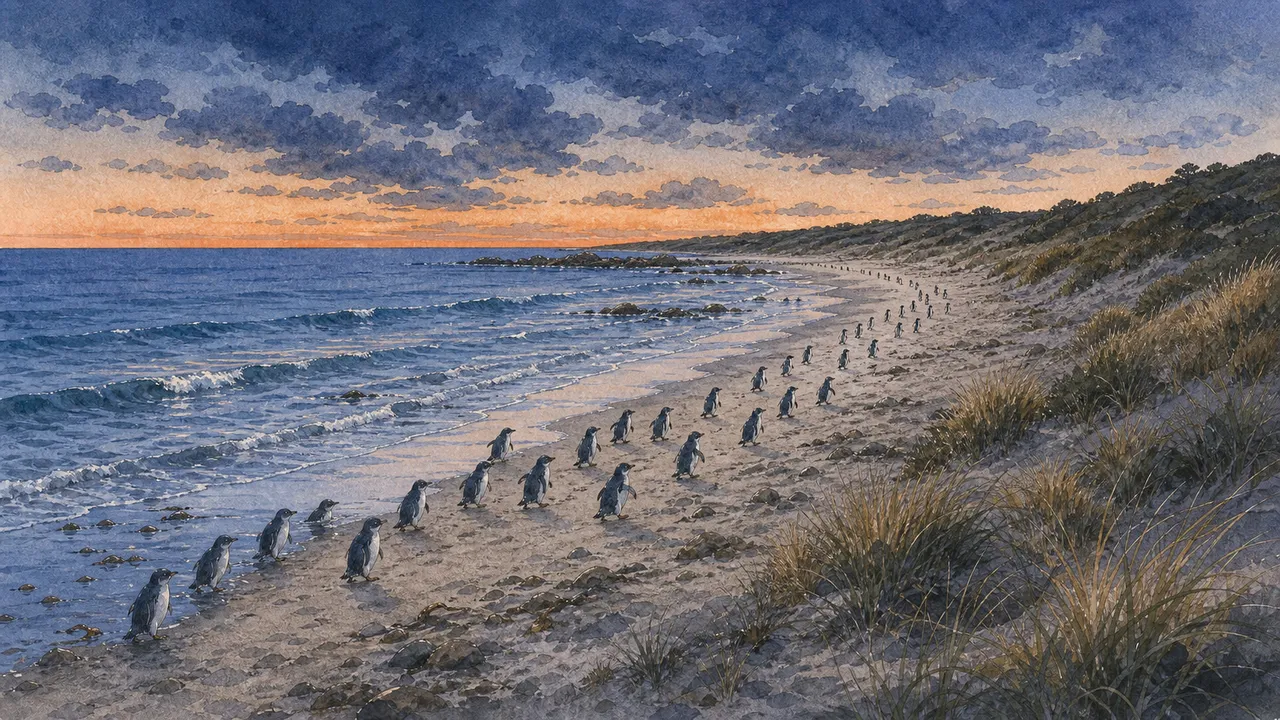
After sunset, little penguins, Eudyptula minor, first gather in small groups on the water. When the light drops, they rush across the beach together. They have just returned from Bass Strait and still have to cross the dunes back to their burrows.
How to time it
The official recommendation is to arrive at least 1 hour before the penguins. The Visitor Centre currently opens daily at 12:00, and penguin arrival time follows sunset, changing month by month.
Driving from Melbourne usually takes 90 to 120 minutes, with another roughly 20 minutes after crossing the bridge to reach the Penguin Parade. V/Line can get you to the island’s main town, Cowes, but the official site also notes that buses do not go to the Penguin Parade and there is no public transport back to Melbourne after the parade ends.
This trip needs a transport plan.
To place the trip in country context, read penguins in Australia. Phillip Island is one of the most stable and institutionalized little penguin viewing sites.
Which penguin you see
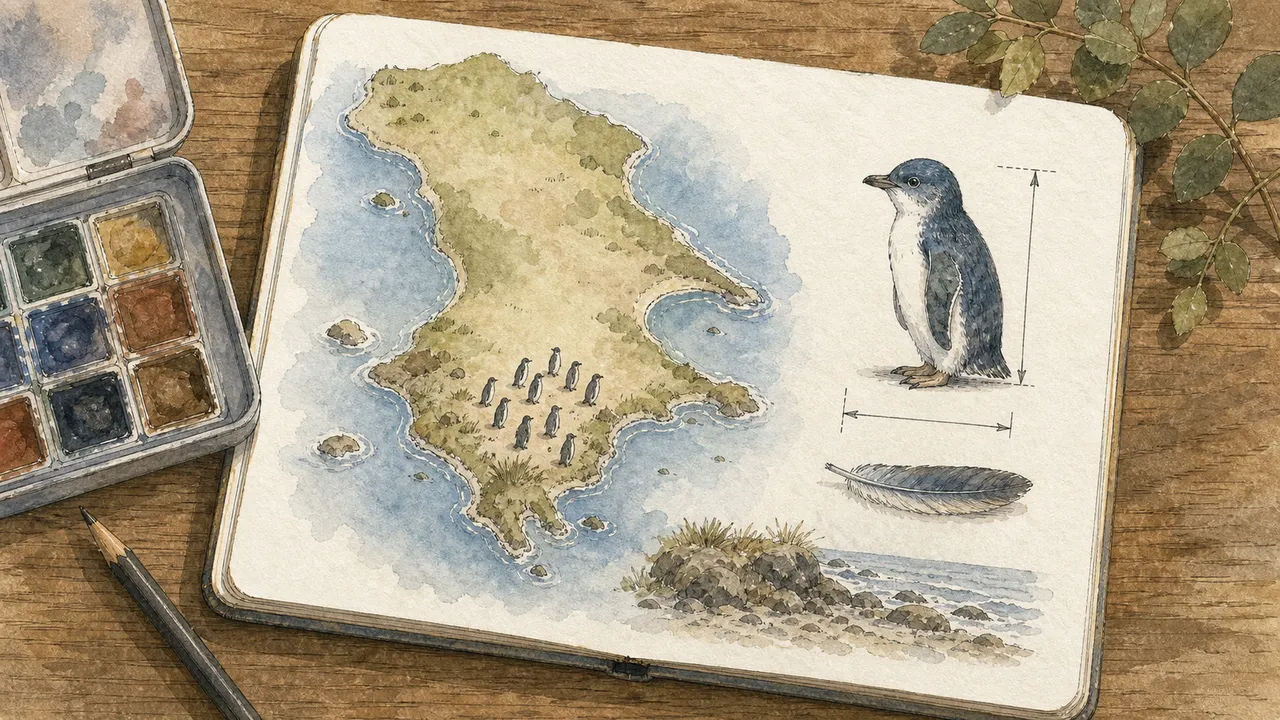
The species here is the little penguin, the only penguin that breeds on Australia’s mainland coast. Phillip Island Nature Parks’ education page says the Summerland Peninsula has about 40,000 breeding penguins, making it one of the world’s largest little penguin colonies.
They stand about 33 cm tall and weigh under 1 kg. They forage at sea during the day and return to their burrows after dusk.
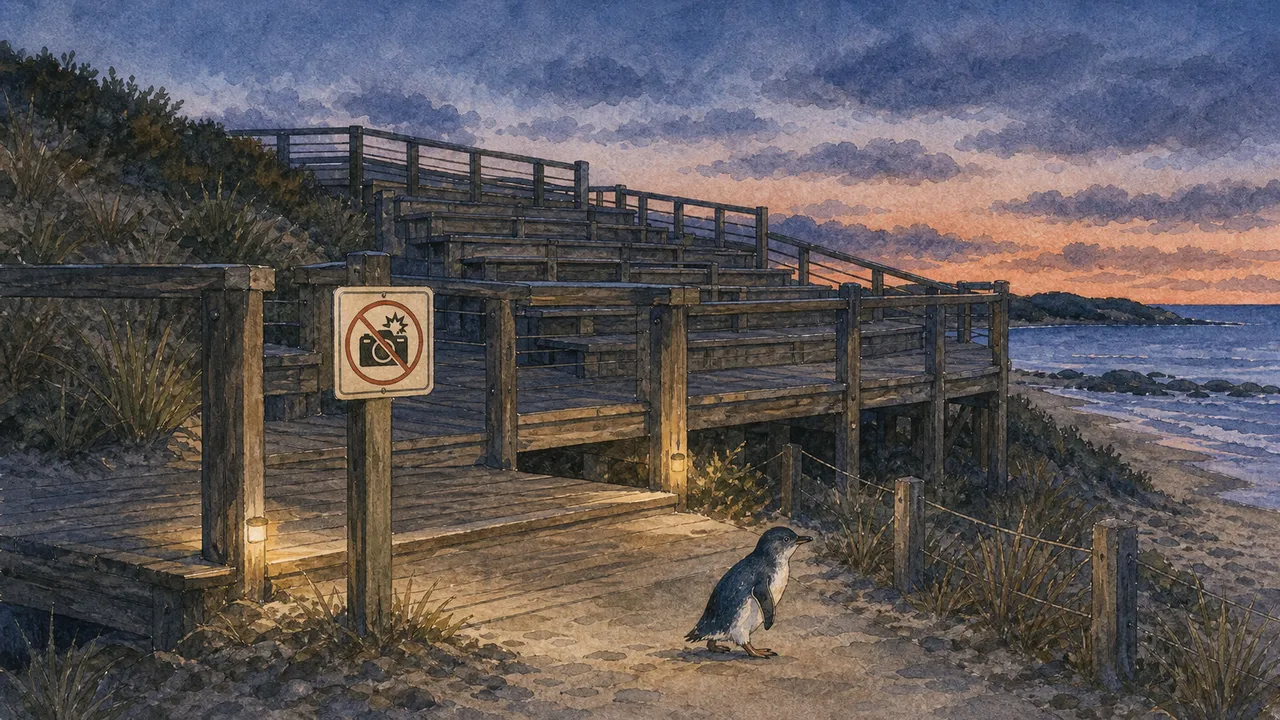
No photography is a core rule
The official important-information page is clear: photography and filming are strictly prohibited after sunset.
That rule disappoints some visitors, but it has a reason. Flash, screen light, and people chasing images can disturb penguins as they come ashore. Little penguins are most vulnerable while crossing the beach, and they already rely on groups and low light to reduce risk.
Put the phone away and your eyes get busier. The first groups usually move fast. Some later birds stop, turn their heads, gather again, and then follow fixed routes back to their burrows.
Tourism revenue goes back into conservation
Phillip Island Nature Parks is a self-funded conservation and research organization. Its official materials repeatedly say visitor revenue goes back into habitat restoration, research, education, and wildlife rescue.
That matters. Buying a ticket to see animals is only the surface. Behind it are boardwalks, burrow restoration, lighting control, research monitoring, and injured-wildlife reporting.
If you want to keep going, read the site’s why penguins waddle article and then look again at these little penguins moving under the boardwalk. They look slow, but every step is under time pressure.
For breeding and individual differences, continue to do penguins mate for life? and penguins have personalities too. Little penguin returns, pair bonds, and burrow use do not follow a single script.
References
- Phillip Island Nature Parks, Penguin Parade, Opening Times, Important Information.
- Phillip Island Nature Parks, Little Penguin education notes.
- Simpson et al., 2025, Ecology and Evolution, DOI: 10.1002/ece3.70787.
FAQ
Does the Phillip Island Penguin Parade happen every night?
Yes. After sunset, little penguins return from Bass Strait to Summerland Beach and cross the dunes to their burrows; arrival time changes with sunset by month.
Which penguin is seen at Phillip Island Penguin Parade?
The species is the little penguin, Eudyptula minor. Phillip Island Nature Parks says the Summerland Peninsula has about 40,000 breeding penguins, one of the world's largest little penguin colonies.
Why is photography banned at Phillip Island Penguin Parade?
The official rule bans photography and filming after sunset because flash, screen light, and image-chasing can disturb little penguins as they come ashore.