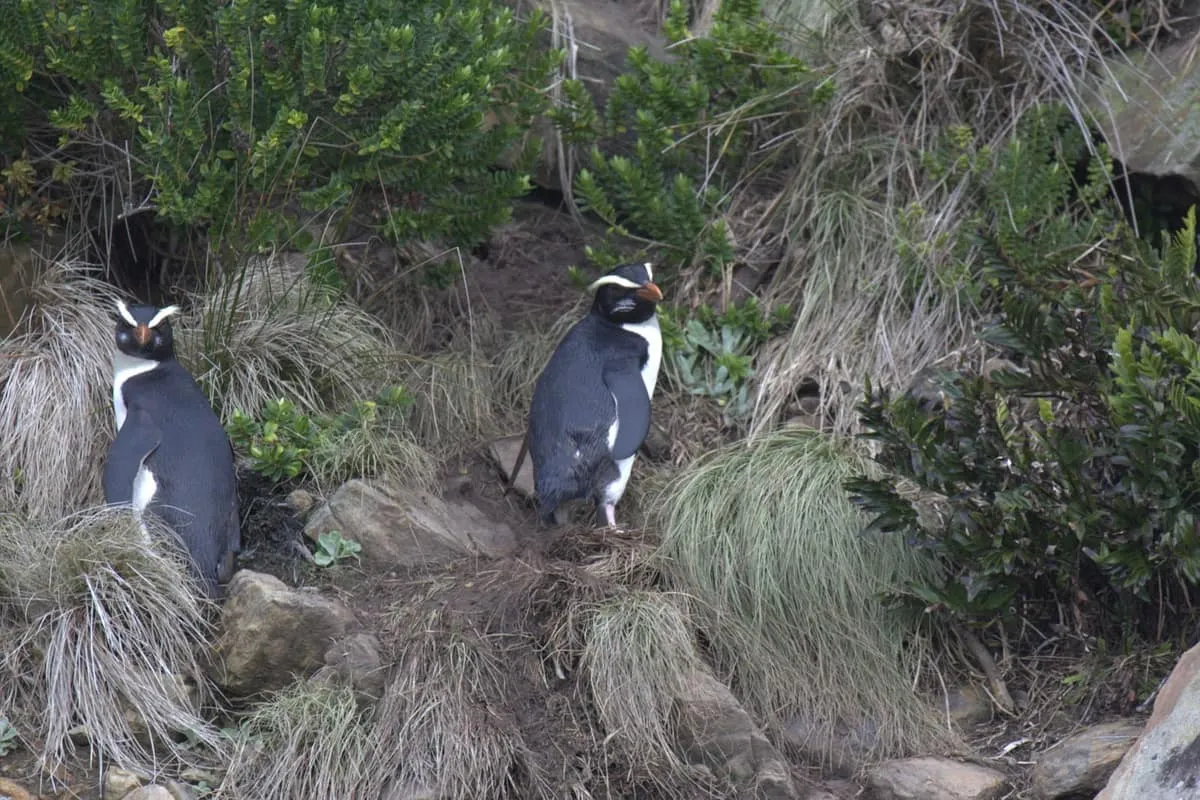
Before dawn, a Fiordland penguin may already be walking from wet tree roots toward the sea. Seen in that scene, it hardly matches the usual picture of penguins on white ice.
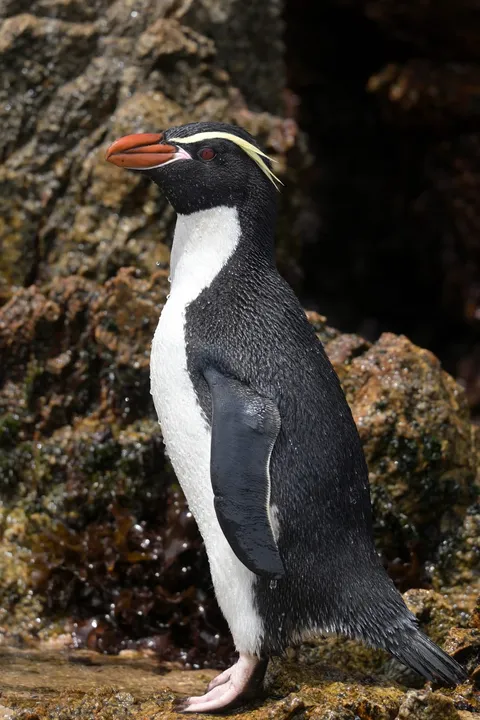
Fiordland penguins are about 52 to 60 cm tall and weigh about 2.5 to 4 kg. They live on the southwest coast of New Zealand’s South Island, Stewart Island, and nearby areas. They are crested penguins, with yellow brows and clean pale facial markings.
Their beauty is shaded rather than bright. They nest under roots, in rock crevices, and behind shrubs, choosing damp, quiet places that are not easy to reach.
They breed mostly from late southern winter into spring. Incubation takes about 33 days, and chicks fledge after around three months. Males stay longer in the early chick stage while females forage.
Beauty in the shadows
This low-profile strategy can work against weather, but not always against introduced predators or disturbance. Dogs, cats, stoats, habitat pressure, and people approaching breeding sites can all matter.
The common estimate is only about 5,000 to 6,000 mature individuals, and the species is often listed as Near Threatened. The number is not roomy.
Fiordland penguins do not win attention through huge colonies or dramatic ice. They survive by hiding well, moving early, and making fewer mistakes. The problem is that the quiet they need is becoming expensive.