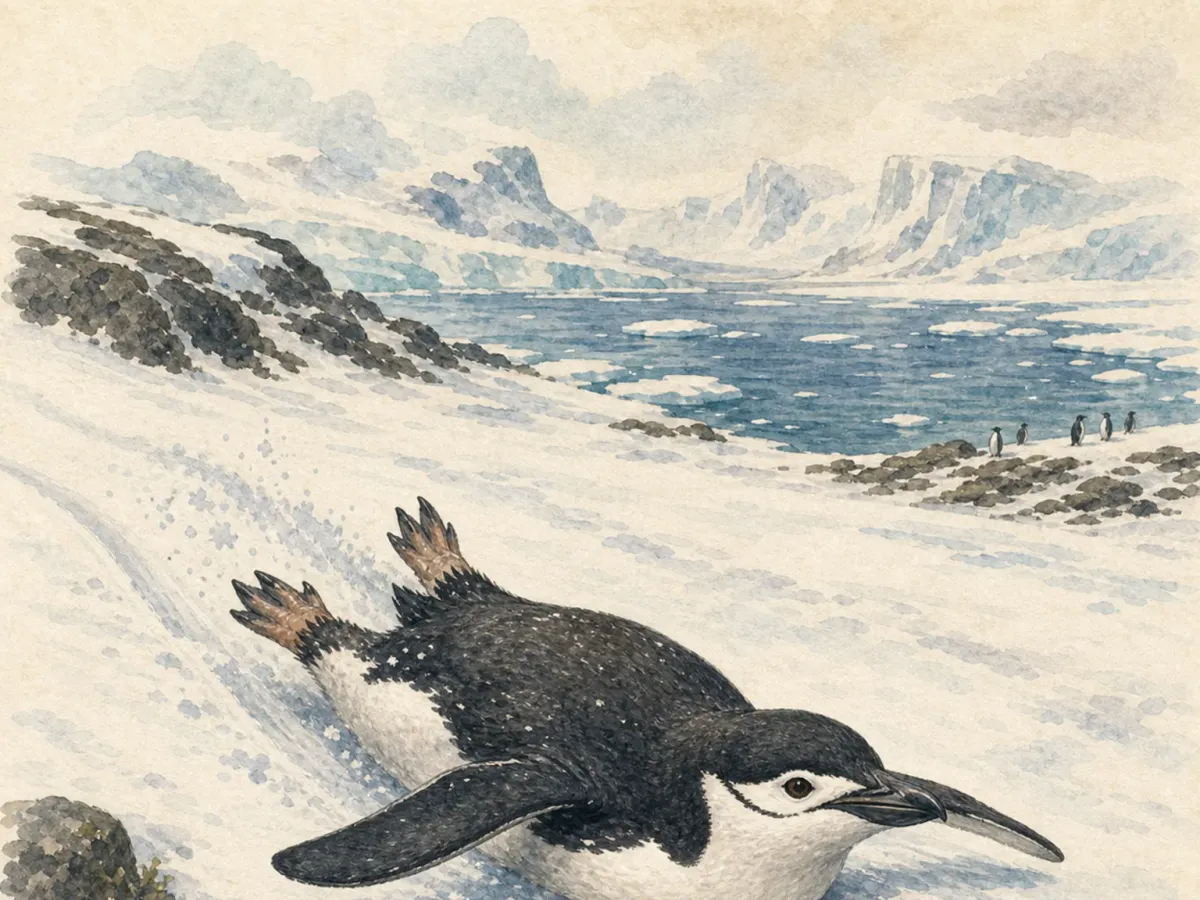
When penguins slide on snow or ice, the behavior is often called tobogganing.
It looks charming, but it is not only for show. On a smooth enough snow or ice surface, belly-sliding can help a penguin move faster and may cost less energy than waddling step after step.
Why walking looks slow
The penguin body is built around water. Feet sit far back, and the body is streamlined for swimming.
On land, that body produces the familiar waddle. The walk is not a failure of design. It is the land compromise of a swimming body. See penguin waddle biomechanics and do penguins have knees.
Tobogganing needs the right surface
Belly-sliding does not work everywhere. Smooth snow and ice are good surfaces. Rocks, mud, crowded nesting areas, and rough ground are not.
While sliding, penguins can use their feet and flipper-like wings to push, steer, and stop. For birds moving between sea ice and breeding areas, it can be a practical way to travel.
If you see this behavior in the wild, keep distance and do not move into a penguin’s path for a photo. The observation rules are covered in how to watch penguins ethically.
FAQ
Do all penguins slide on their bellies?
No. It is most useful where snow or ice surfaces are suitable.
How do penguins steer while sliding?
They can use feet and flipper-like wings to help push, brake, and steer.
Is sliding always better than walking?
No. It works on smooth snow or ice, not on rocks, mud, crowded nesting areas, or rough ground.