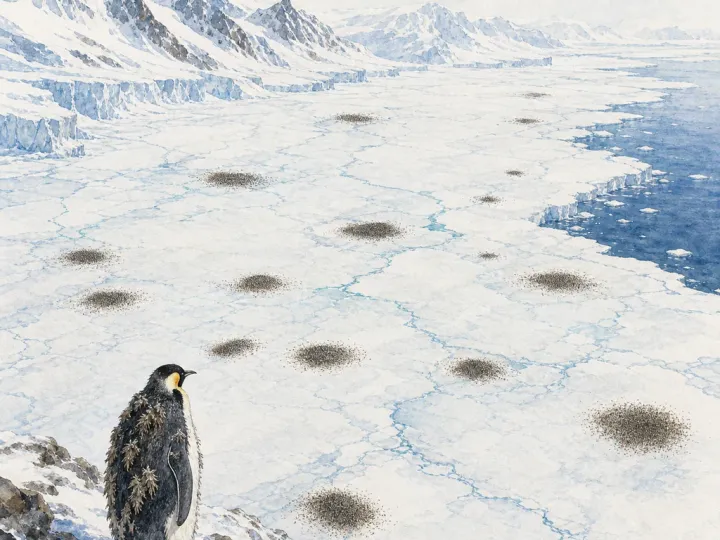
Why Emperor Penguin Moult Depends on Stable Sea Ice
Emperor penguins cannot swim for weeks during moult; the 2026 Marie Byrd Land satellite study shows why fast-ice risk is not only a breeding-season problem.
6/3

Emperor penguins cannot swim for weeks during moult; the 2026 Marie Byrd Land satellite study shows why fast-ice risk is not only a breeding-season problem.

Fast ice is sea ice fixed to coasts, ice walls, ice-shelf fronts, shoals, or grounded icebergs; for emperor penguins, it can be the floor that breeding, chicks, and moult depend on.
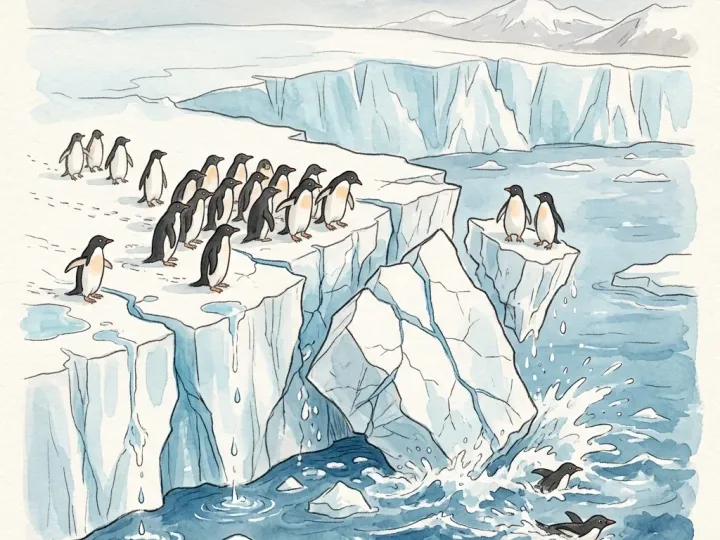
Climate change first alters sea ice, krill, and heavy rain, then changes penguin foraging distance, breeding timing, and chick survival; population decline is usually the last result we notice.
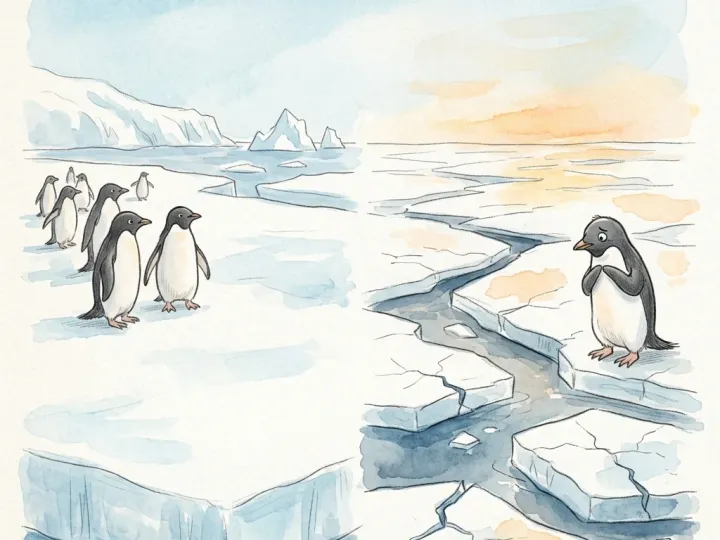
The National Snow and Ice Data Center (NSIDC) says the four lowest Antarctic summer sea-ice extents in the satellite record have occurred from 2022 through 2025, raising pressure on emperor penguin breeding.