If a species places almost its whole breeding future on one island, it is hard to call it carefree. Royal penguins breed mainly on Macquarie Island and nearby islets, with the global core range almost entirely there.
Inside a colony, it looks like a huge success. On a map, it looks tense.
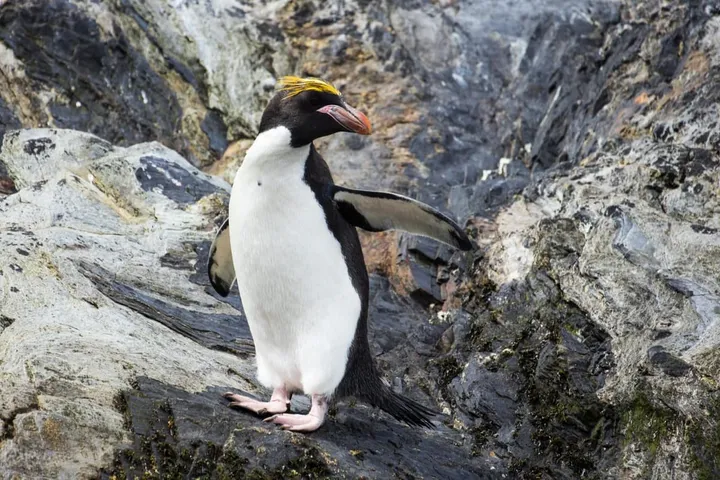
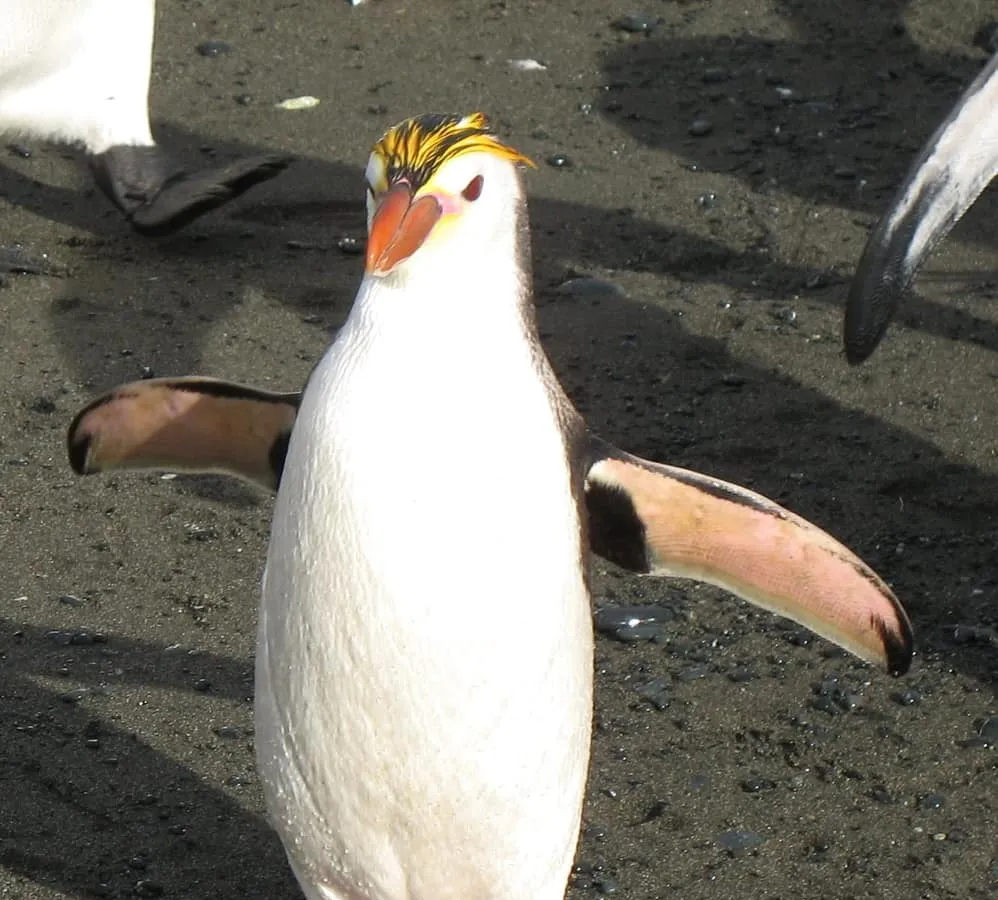
Royal penguins are about 65 to 76 cm tall and 4 to 6 kg in weight. They are crested penguins and are often compared with macaroni penguins because the yellow crests are similar. The royal penguin’s face is usually whiter, giving the bird a cleaner, paler look.
They breed mostly in southern spring and summer, lay two eggs, incubate for about 35 days, and chicks fledge after around two months. Food is mainly krill, small fish, and cephalopods. With about 850,000 breeding pairs, the species is still listed as Least Concern.
The weight of one island
The problem is concentration. Concentration can be efficient, but it is also fragile. If disease, extreme weather, food shifts, or introduced risks reach the core breeding site, there are few other stages to share the impact.
Royal penguins show why conservation cannot look only at total numbers. It also has to ask where the risk sits.
Their white face is memorable not just because it is beautiful, but because the calm surface carries the weight of a species leaning heavily on one place.