Original source: British Antarctic Survey
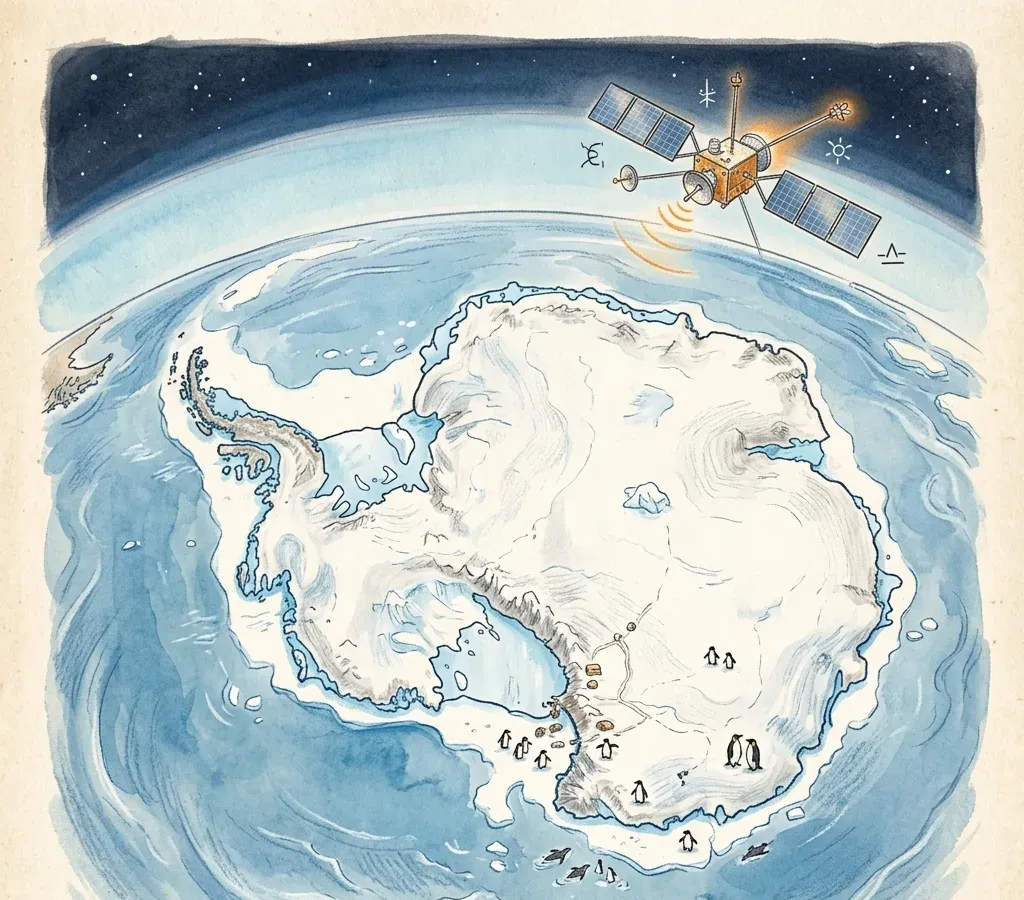
British Antarctic Survey (BAS) researcher Peter T. Fretwell published a study in Communications Earth & Environment on 25 February, using satellite imagery from 2019 to 2025 to identify emperor penguin moulting sites off Marie Byrd Land in West Antarctica. The 2025 images showed only 25 small groups, down from 247 groups in 2023 and 67 in 2024.
It also revealed the harder part: in 2025 imagery, only 25 small groups remained, a sharp gap from the hundreds of groups commonly seen in the past. Moulting is already a sensitive period. Penguins cannot enter the water then, and have to stay on stable ice until their feathers are replaced.
That means the fate of the whole group is pressed onto a sheet of ice that keeps getting thinner.
Fretwell concluded that satellite imagery can track emperor penguin moulting locations and movement. The study also set out unresolved questions: where the birds absent from the 2025 study area went to moult, and how changes in moulting habitat may affect Ross Sea breeding populations.
FAQ
What did satellites reveal about emperor penguin moulting sites?
A British Antarctic Survey (BAS) study identified several gathering sites used by emperor penguins during the moulting season.
How many emperor penguin moulting groups appeared in 2025 imagery?
The article says 2025 imagery showed only 25 small groups, a sharp gap from the hundreds of groups commonly seen in the past.