Original source: Nature
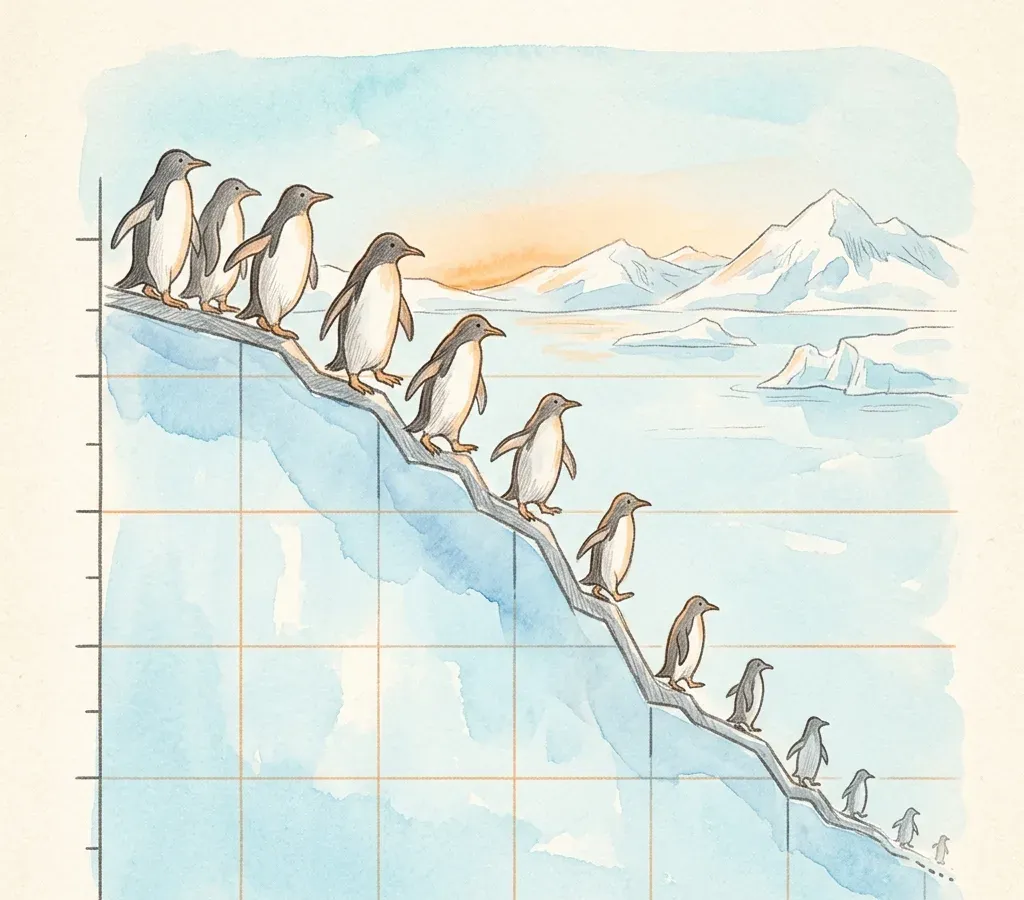
British Antarctic Survey (BAS) researcher Peter T. Fretwell and colleagues reported in a 2025 study in Communications Earth & Environment that 16 emperor penguin breeding colonies in West Antarctica declined by an average of 22% from 2009 to 2023. The study DOI is 10.1038/s43247-025-02345-7, and the decline exceeded earlier model projections under a high-emissions scenario.
The bad script meant to warn people may already be lagging behind reality.
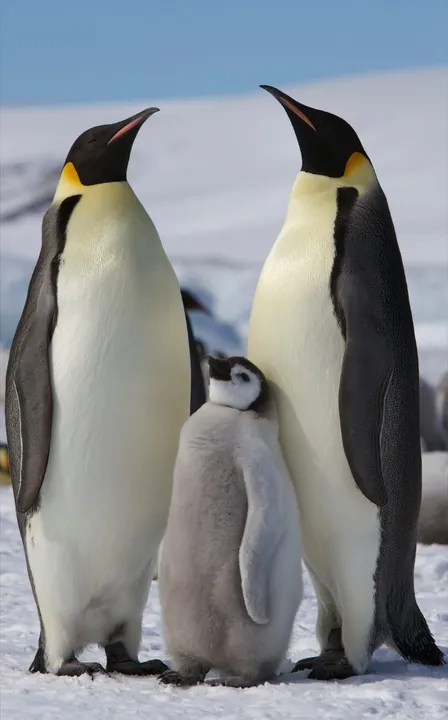
Emperor penguins have long seemed like one of Antarctica’s toughest groups: cold-tolerant, enduring, and built around an unusually demanding breeding rhythm. It is easy to assume, almost by instinct, that they still have time. This study pushes hard against that idea.
Sea ice breaks earlier, chick-rearing platforms grow thinner, weather becomes less predictable, and pressure builds year after year. The foundation of their lives is lowering. The penguins still return to breed. The ice under them is no longer as reliable as it used to be.
Fretwell’s team stated that the estimate covers a specific region and should not be treated as a continent-wide population trend. The paper concludes that continued satellite monitoring will be central to judging whether regional emperor penguin populations keep declining.
FAQ
How much did emperor penguin populations decline in the 2025 study?
The article cites a 2025 Communications Earth & Environment study by Fretwell et al. finding a 22% decline between 2009 and 2023.
Why is the emperor penguin decline faster than expected?
The article says the decline outran previous model projections under a high-emissions scenario, while sea ice breaks earlier and chick-rearing platforms become less reliable.