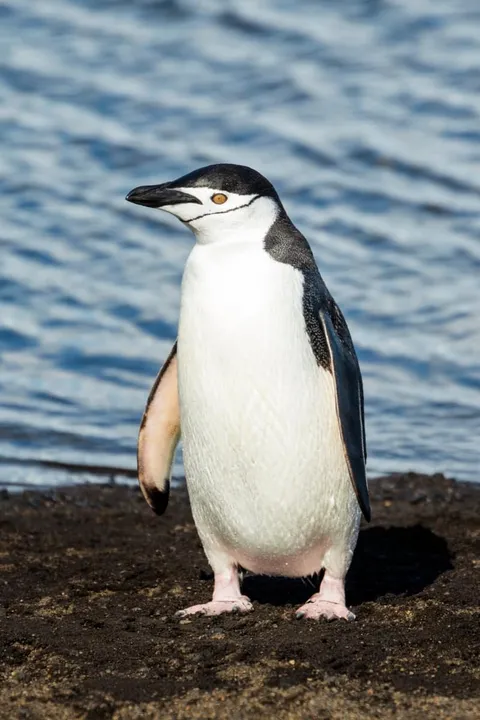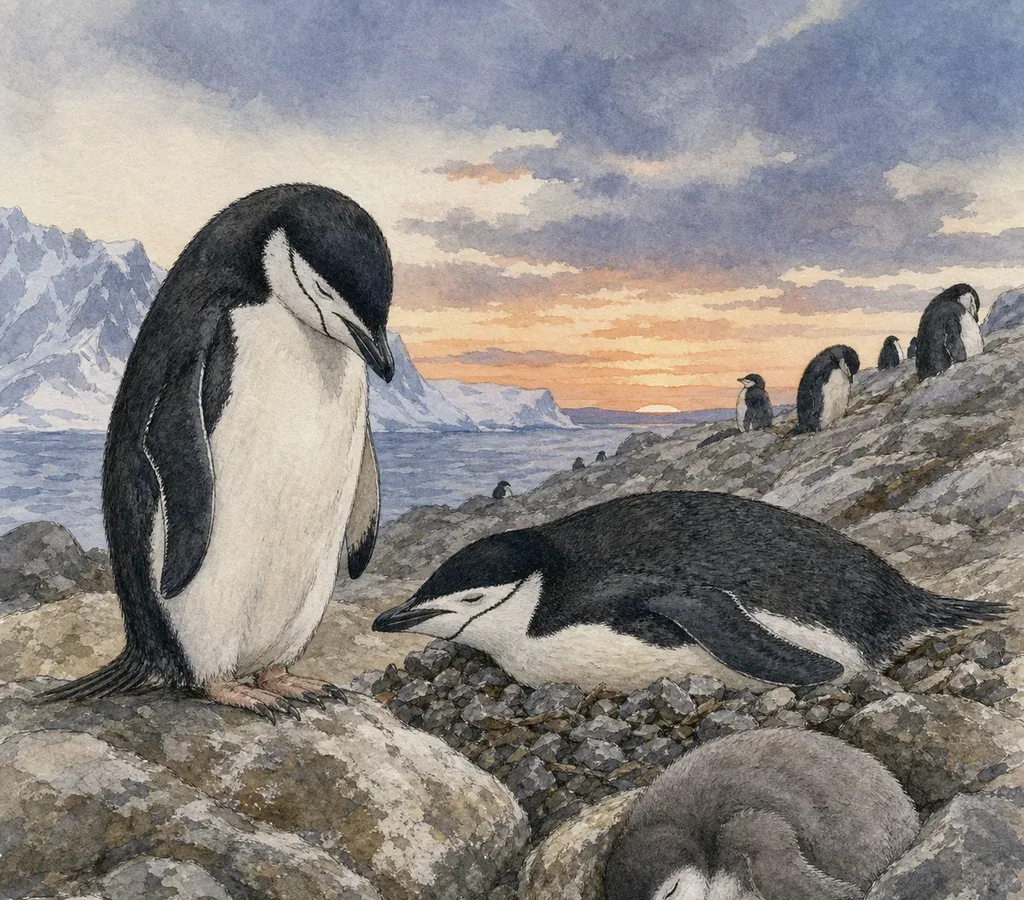
Penguins sleep, but not in just one neat posture.
They may rest standing up, lie down, tuck the body close to the ground, or sleep near a nest, burrow, or group edge. The safest position depends on the species and the place.
The most memorable example comes from nesting chinstrap penguins. Researchers recorded them building up sleep through many microsleeps that lasted only seconds. Instead of one long block, they slept, woke, and slept again.
That sounds exhausting, but it makes sense at a nest. An egg or chick needs guarding, neighbors may push in, and predators cannot be ignored. Deep, uninterrupted sleep would carry a cost.
Microsleep is not laziness, and it is not a magic trick. It is a compromise that helps a bird rest while still watching a risky breeding site.
Penguin sleep changes with context. An open colony, a burrow, an icy edge, and a rocky shore all create different levels of safety. The sleep style changes with them.
The quiet penguin you see may be taking only a short pause. In a seabird colony, sleep is sometimes less like a bedtime and more like grabbing a few seconds while nothing urgent is happening.
For the deeper science, read the full explainer on penguin microsleep.
FAQ
Can penguins sleep standing up?
Yes. Some penguins can rest while standing, though they may also lie down or sleep near a nest, burrow, or group.
Do penguins sleep for long stretches?
It depends. Safety, breeding stage, predator pressure, and colony activity all affect how long and how deeply a penguin can sleep.
Do all penguins sleep in seconds-long bursts?
No. The famous microsleep research comes from nesting chinstrap penguins, not every penguin in every setting.