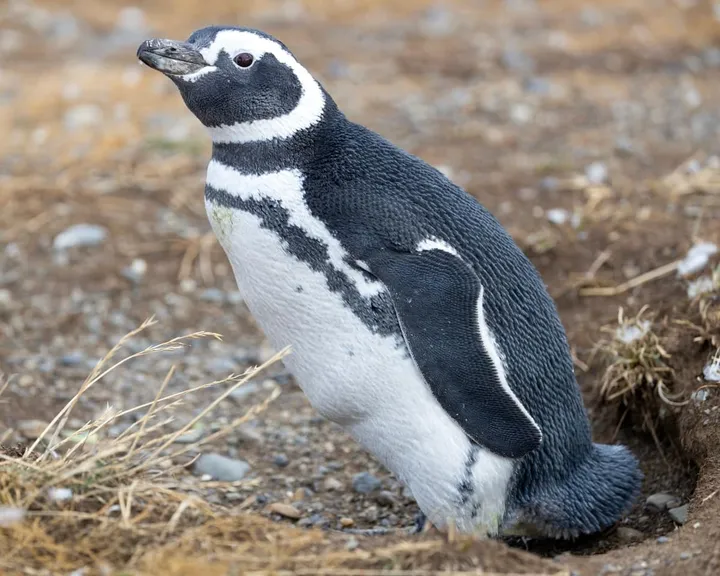
The scale of Punta Tombo can make people drop their guard.
There are burrows beside the path and burrows under the shrubs. Magellanic penguins cross in front of you, walk toward the sea, then return by another route. They are not moving along a display route arranged for visitors; this whole stretch of Patagonian coast is their place.

How to get there
Punta Tombo is in Argentina’s Chubut Province, about 110 km south of Trelew and Rawson and about 170 km from Puerto Madryn. It is reachable by car, but many travelers join a day tour from Puerto Madryn or Trelew.
To place it in country context, start with penguins in Argentina. Punta Tombo is the wild penguin site most often used as Argentina’s headline example.
Local visitor information lists tickets at AR$25,000 for international adults, AR$10,000 for Argentine adults, and AR$5,000 for Chubut residents, though rates can change. Opening arrangements follow the penguins’ life cycle and are generally concentrated from September to April.
Why it is famous
Punta Tombo is often called the world’s largest, or one of the largest, Magellanic penguin, Spheniscus magellanicus, colonies. UNESCO Patagonia Azul material says Punta Tombo holds a large share of the world’s Magellanic penguins.
But “largest” is not a safety word.
The long-term Magellanic Penguin Project at Ecosystem Sentinels began in the late 1970s to early 1980s, partly because there had been interest in using penguins commercially. Researchers later recorded that the Punta Tombo population has declined by about 40% since 1987. Overfishing, oiling, prey shifts, and climate are all part of the picture.
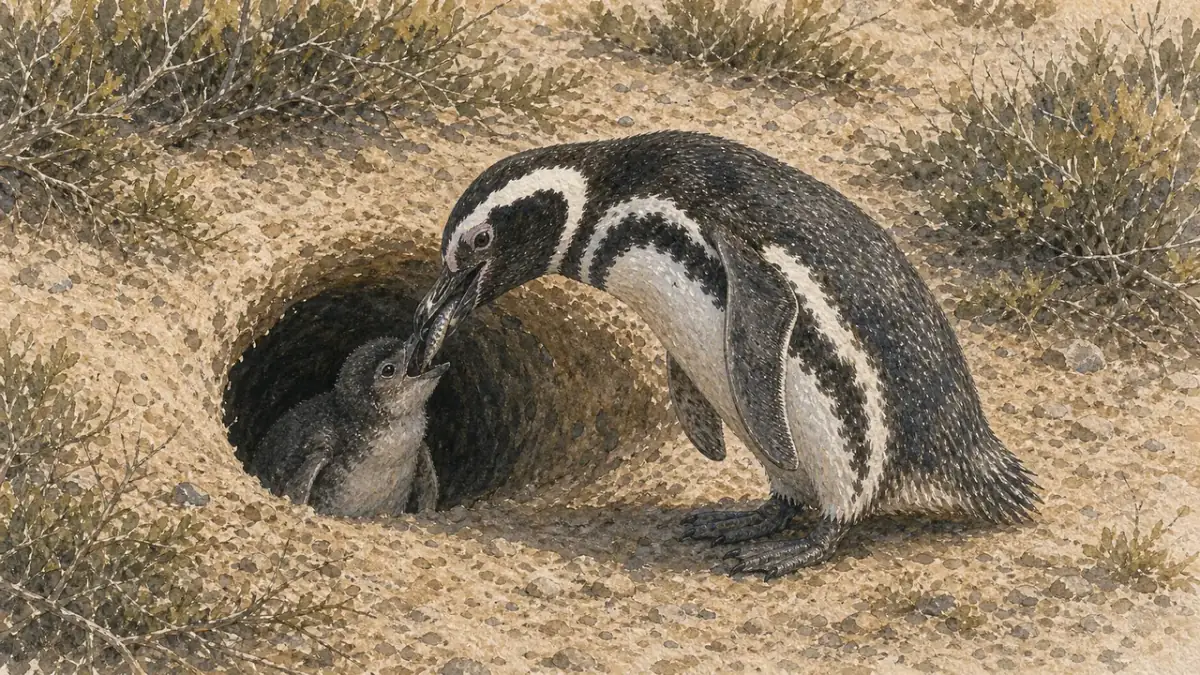
What the trails do
The purpose of the trail is to concentrate human weight.
Some Magellanic penguin burrows sit right beside the path. A foot in the wrong place can collapse a burrow; crouching too long can make a parent hesitate to return and feed its chick. Local management material also notes that visitor flow may be adjusted according to bird behavior and life cycle.
This site is useful to compare with Magdalena Island. Punta Tombo is an open mainland-coast trail, while Magdalena is a short landing on a strait island. Both let people see Magellanic penguins closely, and both rely on route limits to protect burrows.
Magellanic penguin returns to nest sites and mates also pair naturally with do penguins mate for life?. Past the romantic version, the research is about breeding success, return behavior, and separation.

When to go
Adults begin returning in September. October to November often brings incubation and burrow guarding. Chick activity increases from December to February, and March to April moves into fledging and the end of the seasonal cycle. Each year’s rhythm can shift with sea conditions and food.
If choosing one window, most visitors aim for October to February. The real point is to check the current season’s notices before leaving, not only old trip reports.
References
- PuntaTombo.com visitor information.
- Ecosystem Sentinels, Magellanic Penguin Project.
- UNESCO MAB, Patagonia Azul Biosphere Reserve.
- Wikidata, Punta Tombo coordinates.
FAQ
Which penguin species is at Punta Tombo?
Punta Tombo is a Magellanic penguin, Spheniscus magellanicus, colony using Patagonian coastal shrubs and burrows for breeding.
Why is Punta Tombo famous?
It is often called the world's largest, or one of the largest, Magellanic penguin colonies. Long-term research has also recorded about a 40% decline since 1987.
When is the best time to visit Punta Tombo?
Opening generally concentrates from September to April. Many visitors aim for October to February, but current season notices matter more than old trip reports.